
Reviewed · UFFIZI GALLERY TOURS
Small-Group: Uffizi & walking tour of Florence skip the line
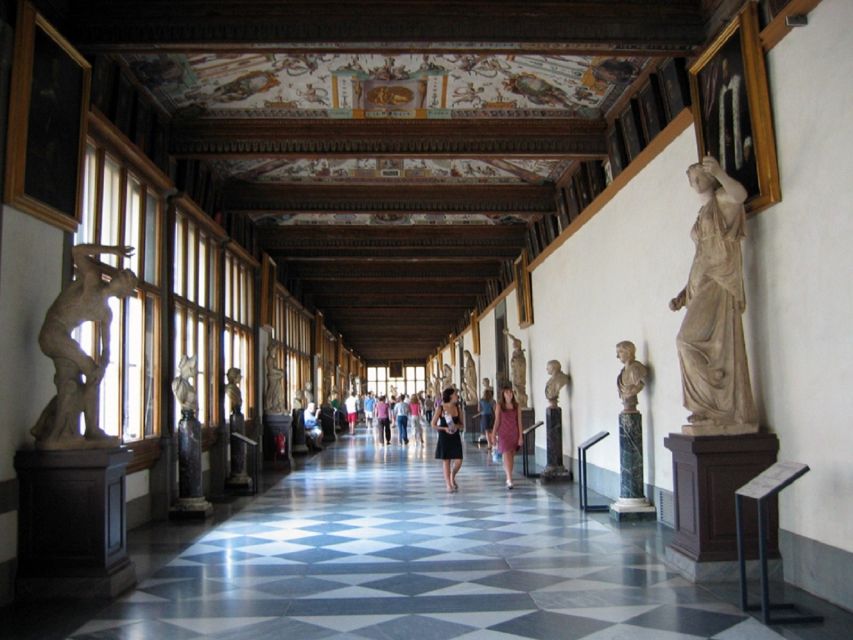
Florence rewards you when you arrive with a plan. This small-group skip-the-line day links a quick city-orientation walk with a guided visit to the Uffizi Gallery, so you don’t waste time hunting for the best angles. You’ll start in the historic center, trace major public squares, and end up inside one of the world’s most important art collections with a guide who connects what you see to the people who made it.
I like two things most: the Florence walking portion gives you context fast, and the Uffizi guided visit focuses your attention on the artworks and the craft behind them. The main thing to consider is the split schedule—your day is divided into a short morning walk and an afternoon museum visit—so you’ll need patience during the gap and good punctuality at both times.
In This Review
- Key highlights at a glance
- How the 10:00 walk and 3:15 Uffizi schedule really plays out
- Meeting at Piazza della Repubblica: quick start, clear logistics
- The first hour on foot: Florence’s key squares in a tight loop
- Brunelleschi’s Dome and Ponte Vecchio: where to look beyond the photo
- Inside the Uffizi: what “skip-the-line” buys you
- Cimabue to Michelangelo: how the guide turns masterpieces into craft
- Uffizi free time: how to use it without getting lost
- Who this tour is best for (and who should reconsider)
- Group size, languages, and pacing you can feel
- Price and value: is $175.59 a good deal?
- First Sundays and the reality of free Uffizi entry
- My take: should you book it?
- FAQ
- How long is the Florence Uffizi skip-the-line tour?
- What places does the guided walking portion cover?
- Does the tour include skip-the-line entry for the Uffizi Gallery?
- Is this a small group?
- What languages are offered for the tour guide?
- Where is the meeting point?
- Where does the tour end?
- Is the tour suitable for wheelchair users?
- Are pets allowed on this tour?
- Is Uffizi free on the first Sunday of the month?
Key highlights at a glance
- Skip-the-line Uffizi entry so you can spend your energy on art, not queues
- Small group (up to 9) for a more human pace and better Q&A time
- Two-part day: a 10:00 street walk plus a 3:15 Uffizi guided visit with free time
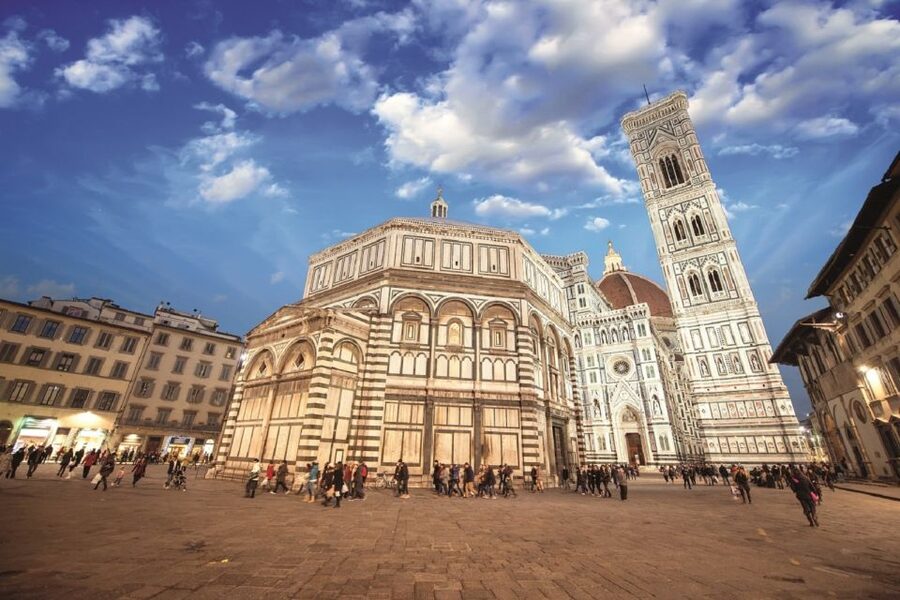
- Florence’s big landmarks on foot: Piazza Duomo, Piazza della Signoria, and Ponte Vecchio
- Art history names you’ll actually remember: from Cimabue to Michelangelo, plus iconic works like the Birth of Venus
More ways into the Uffizi, ranked by Florence visitors
How the 10:00 walk and 3:15 Uffizi schedule really plays out

The tour is designed in two clear segments, and that structure is the key to getting value. The first part starts at 10:00 am and lasts about 1 hour, and it’s focused on helping you understand where you are in Florence. The second part begins at 3:15 pm with your Uffizi Gallery visit, and the guided museum time is roughly about two hours, followed by time for you to explore on your own.
Why this split schedule matters: Florence is too big to “wing” the art part and still feel satisfied. Starting with a short walk means you get bearings—squares, major streets, and the river area—so later, when you’re inside the Uffizi, you’re not just staring at canvases. You’re also better at imagining the city and the Renaissance world those artists lived in.
The drawback is simple: you’ll have a chunk of free time between segments. That can be great if you like strolling, getting coffee, and planning your afternoon. But if you want a single continuous tour with no waiting, you may find this timing annoying. For most people, the fix is planning your gap around rest and food rather than trying to cram more big sights.
Meeting at Piazza della Repubblica: quick start, clear logistics
You meet at Piazza della Repubblica, in front of the Colonna dell’Abbondanza. The tour operator’s staff wear a green t-shirt with the My tour logo, which makes it easier to spot your group at the start. The tour ends back at the meeting point, so you’re not stuck trying to find a far-off pickup later.
I like meeting points that don’t require guesswork. This one is in a central area, so after the Uffizi portion, you can regroup easily and keep your evening plans simple. Also, because the walking segment is short, being at the right spot on time really helps—you don’t want to miss the orientation moments that set up the rest of the day.
A practical note: wear comfortable shoes. Florence streets are often uneven, and even a one-hour walk can feel longer once you start paying attention to details and stopping for explanations.
The first hour on foot: Florence’s key squares in a tight loop

The walking portion is a fast history route. You’ll pass through major public areas tied to power, religion, and civic life—exactly the kind of places that shaped Florence long before it became known for art.
Here’s what you should watch for during this hour:
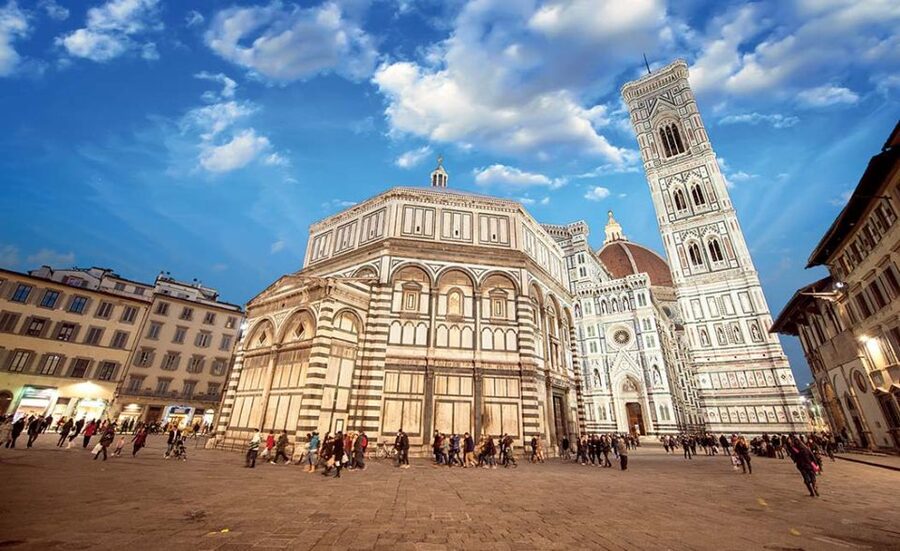
- Piazza Duomo: this is where you feel the religious center of the city, and it connects directly to Renaissance-era ambition.
- Brunelleschi’s Dome area: the guide will help you notice why this dome mattered so much—engineering and symbolism in one package.
- Piazza della Signoria: think politics and art in the open air. It’s a square where Florence shows off who it is.
- The path toward Ponte Vecchio: this river crossing is one of the quickest ways to understand Florence’s geography and why certain neighborhoods became important.
I really like that this isn’t just a “you’ll see these famous places” walk. It’s designed to offer short anecdotes—small stories that make the monuments feel less like postcard backdrops and more like chapter headings.
Brunelleschi’s Dome and Ponte Vecchio: where to look beyond the photo
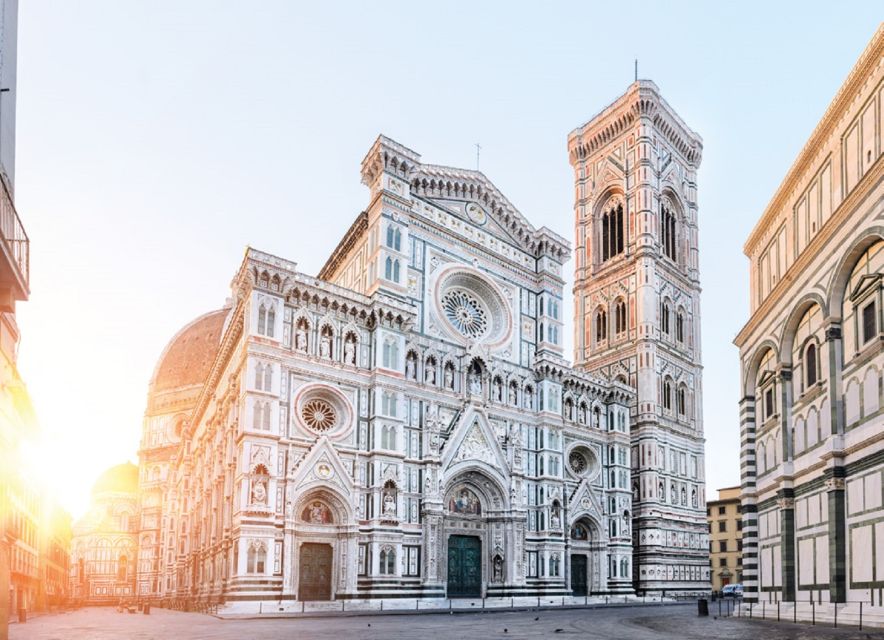
Two sights you’ll almost certainly remember afterward are Brunelleschi’s Dome and Ponte Vecchio. They’re famous for a reason, but what makes the tour helpful is where your attention gets directed.
With Brunelleschi’s Dome, the point isn’t only to admire the shape. Your guide’s job is to connect it to Florence’s Renaissance confidence: this is a city that believed problems could be solved with intellect, math, and bold design. Even if you’re not a construction nerd, you’ll still get the human story of why such a structure was worth the effort.
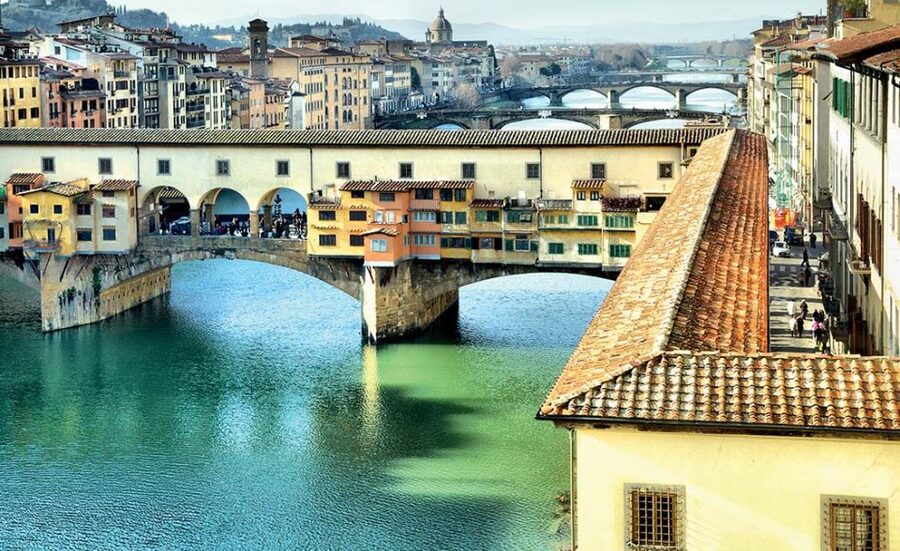
With Ponte Vecchio, the value is the river-level perspective. It’s not just a bridge; it’s a slice of how Florence organized commerce and daily life. When you see it as part of the tour’s overall line of sight—from squares to streets—you’ll understand why it’s such an iconic meeting point.
Small tip: during the walk, don’t spend the whole time filming. Take a second to look around—street rhythm, building heights, and sightlines. That’s the stuff a guide helps you notice.
Inside the Uffizi: what “skip-the-line” buys you
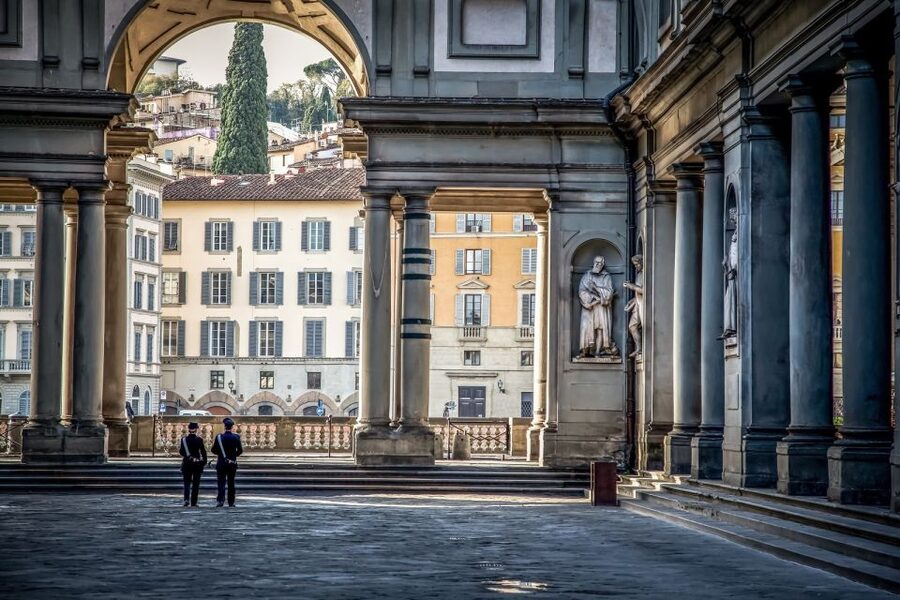
The headline feature here is skip-the-ticket line access for the Uffizi Gallery. In practical terms, this means you should spend less time stuck outside and more time in the building—exactly when the museum is at its most productive for a guided visit.
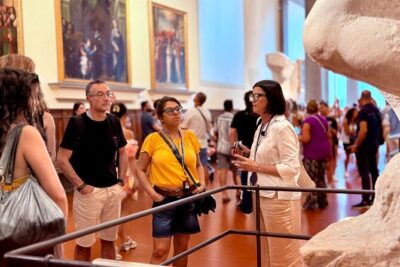
Once you’re inside, you’ll follow your guide through the Uffizi courtyard area and into the museum viewing spaces. This is a useful step because the Uffizi can feel overwhelming on arrival. A guide gives you a route and a method: where to look first, what to notice in composition and technique, and how each work fits the Renaissance story.
Also, remember the tour is semi-private with a small group capped at 9 participants. That matters here. Museums can be noisy and crowded, and with fewer people, your guide can slow down when someone has a question or when you need one more minute to find the details they’re pointing out.
Stretch your legs on more Florence walking tours




Cimabue to Michelangelo: how the guide turns masterpieces into craft
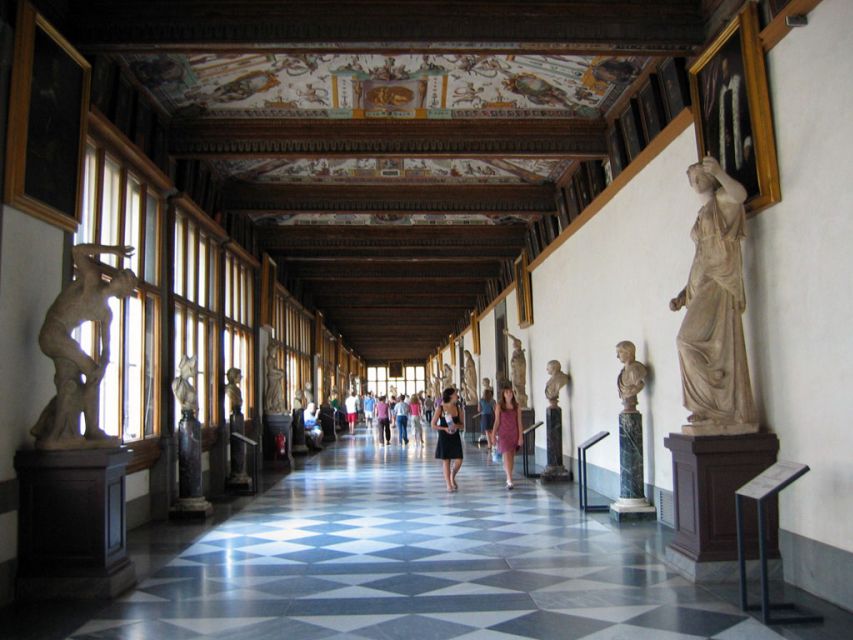
The Uffizi part isn’t framed as a checklist. It’s described as a guided experience that connects artists to their methods—craftsmanship, techniques, and tools—and that’s what helps the museum feel alive instead of like a warehouse of famous names.
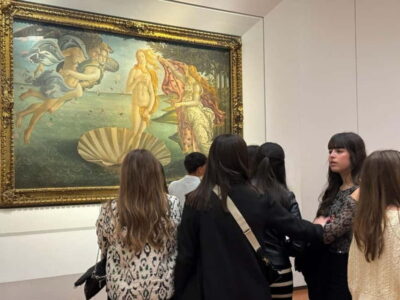
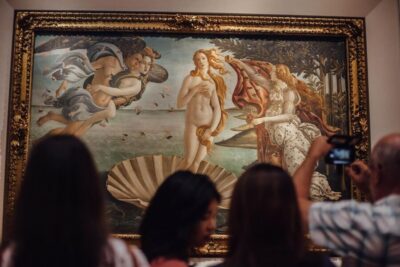
Your guide will cover major artists including Cimabue and Michelangelo, and you’ll also hear stories that connect the works to the Renaissance world. A highlight you’ll likely discuss is the Birth of Venus. Even if you’ve seen it before in books or on the internet, this is where you get to understand scale, expression, and what Renaissance patronage and artistic ambition were trying to communicate.
What I like about this approach: you’re not just told what you’re looking at. You’re taught how to look. Your eyes move more intentionally—at anatomy, drapery, light, and arrangement—because the guide gives you a reason to focus.
If you’re the type who feels overwhelmed in big museums, this is where a guided route pays off. The Uffizi is too important to treat randomly.
Uffizi free time: how to use it without getting lost
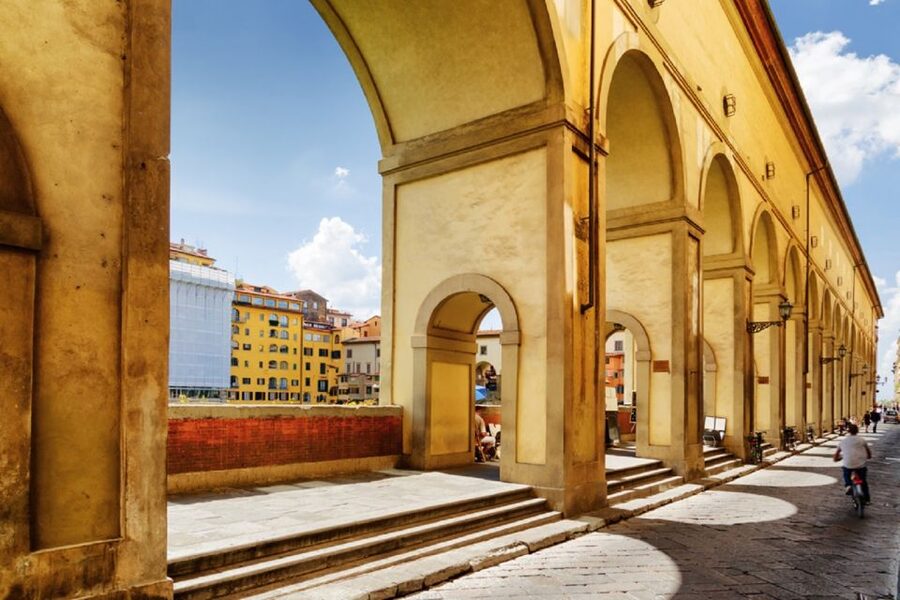
After the guided visit, you get time for your own pace inside the Uffizi. That free time is part of the value: you can return to artworks that caught your attention during the tour and spend longer there.
Here’s how I’d use the free time:
- Re-check your favorite 2–3 works from the guided portion. Look again, this time slower.
- If a room felt too crowded during the tour, step back and try to view from a different spot. Small angle changes can make a big difference.
- Use your guide’s route as your anchor, then wander outward only if you feel oriented. The Uffizi is full of surprises, but you don’t want to spend 45 minutes “finding your way” when you’re really there to look.
The goal is to leave with more than a photo memory. You want a handful of paintings and a few stories you can explain to friends over dinner.
Who this tour is best for (and who should reconsider)
This works well for people who:
- want a guided art day but also want time to roam afterward
- like structured orientation in the morning so Florence feels easier to navigate later
- prefer small-group attention (max 9)
- enjoy art history when it’s tied to technique and storytelling
It may be less ideal if:
- you strongly dislike split schedules. The morning walk and afternoon museum visit are separated by several hours.
- you need wheelchair-friendly access. This tour is not suitable for wheelchair users, so plan accordingly.
- you travel with pets. Pets aren’t allowed.
If you’re traveling solo or as a couple, the group size is a big plus. You still get a guide, but you won’t feel boxed in like you would on a bigger bus-style tour.
Group size, languages, and pacing you can feel
You’ll choose a guide language from Italian, Spanish, or English, and the tour uses a monolingual guide based on your selection. That matters because you’ll get clearer explanations and less of that “half-translated” feeling that can happen in mixed-language groups.
The small-group limit—9 participants—also affects pacing. In a place like Florence, traffic and crowds vary block to block. A smaller group lets the guide manage pauses for photos and discussion without losing everyone.
For best results, come with the right mindset: this is a guided experience with intentional stops, not a free-for-all museum sprint.
Price and value: is $175.59 a good deal?
At $175.59 per person for a 7-hour experience, this isn’t a budget tour. So the question is value.
For your money, you’re paying for:
- a guided walking tour covering the city’s standout landmarks and connecting them to the broader story
- skip-the-line access for Uffizi so your museum time starts efficiently
- a guided Uffizi visit that focuses on masterpieces and on how art is made
- free time inside the museum, so you can follow your own favorites
If you were trying to do this on your own, you’d likely spend time figuring out where to start in the city, then separately manage tickets and timing at the Uffizi. You might save some money, but you’d probably lose some guidance—the kind that turns a famous museum into something you actually understand.
Where the price can feel high is when you’re a very independent traveler who doesn’t care about explanations and is perfectly happy wandering freely. If that’s you, you might feel better opting out of a guided format.
If you want your day to make sense and want a clear route through big-name sights and major artworks, the cost can feel fair.
First Sundays and the reality of free Uffizi entry
There’s one special case: the first Sunday of each month has free entrance, but tickets can’t be reserved ahead of time, so entry is not guaranteed. If you’re traveling during that window, this is worth taking seriously.
In plain terms, free access can be great, but it’s also unpredictable. A skip-the-line tour format helps remove some uncertainty, but the first Sunday policy itself is still the wildcard.
If you care most about reliability, plan your visit for a non-first-Sunday day.
My take: should you book it?
I’d book this if you want two things at once: a Florence orientation walk plus a guided Uffizi visit that helps you see more than just famous titles. The combination of skip-the-line, a small group, and a guide who connects artworks to their craft makes it easier to enjoy the museum without feeling rushed.
I’d think twice if you hate split days or you need full wheelchair accessibility. Also, if you’re visiting on the first Sunday, make sure you understand the entry gamble from the free-entry system.
If your ideal Florence day is structured but not rigid—big sights in the morning, major art in the afternoon—this tour fits that style well.
FAQ
How long is the Florence Uffizi skip-the-line tour?
It’s listed as a 7-hour activity. The walking part is about 1 hour starting at 10:00 am, and the Uffizi visit starts at 3:15 pm.
What places does the guided walking portion cover?
You’ll walk past major Florence sights including Piazza Duomo, Piazza della Signoria, and Ponte Vecchio.
Does the tour include skip-the-line entry for the Uffizi Gallery?
Yes. The tour includes skip the ticket line for the Uffizi Gallery.
Is this a small group?
Yes. The group is limited to up to 9 participants.
What languages are offered for the tour guide?
The live guide is available in Italian, Spanish, and English.
Where is the meeting point?
You meet in front of Colonna dell’Abbodanza, Piazza della Repubblica. The staff wear a green t-shirt with the My tour logo.
Where does the tour end?
It ends back at the meeting point.
Is the tour suitable for wheelchair users?
No. It’s listed as not suitable for wheelchair users.
Are pets allowed on this tour?
No. Pets are not allowed.
Is Uffizi free on the first Sunday of the month?
Entrance is free on the first Sunday of each month, but tickets can’t be reserved ahead of time, so entry is not guaranteed.
More Florence Tours to Weigh Up
- The Best tour in Florence: Renaissance & Medici Tales – guided by a STORYTELLER
★ 5.0 · 12,316 reviews - The Best Tour in Florence: Renaissance and Medici Tales
★ 5.0 · 10,810 reviews - Florence: Chianti Wineries Tour with Wine Tasting
★ 4.5 · 10,071 reviews - Florence: Duomo Cathedral 60-Minute Guided Tour
★ 3.7 · 6,829 reviews - Florence: Hop-on Hop-off Bus Tour: 24, 48 or 72-Hour Ticket
★ 4.0 · 6,283 reviews
More Florence Tours We Have Reviewed
- Florence: Skip-The-Line Uffizi Gallery Timed Entry Ticket
★ 4.5 · 27,832 reviews - Tuscany Day Trip from Florence: Siena, San Gimignano, Pisa and Lunch at a Winery
★ 5.0 · 21,634 reviews - Florence: Timed Entry to Michelangelo’s David + Audio App
★ 4.6 · 19,496 reviews - Florence: Leonardo Interactive Museum Entry Ticket
★ 4.5 · 12,957 reviews - Florence: Michelangelo’s David Skip-the-Line Entry Ticket
★ 4.5 · 12,764 reviews
The Uffizi, A Few More Ways In
- Florence: Skip-The-Line Uffizi Gallery Timed Entry Ticket
★ 4.5 · 27,832 reviews - Florence: Uffizi Priority Ticket & Masterpieces Audio App
★ 4.2 · 6,402 reviews - Uffizi Gallery: Renaissance Masterpieces Guided Tour
★ 4.6 · 6,070 reviews - Uffizi Gallery Small Group Tour with Guide
★ 4.5 · 4,923 reviews - Uffizi & Accademia Timed Entry: Small Group Duomo Walking Tour
★ 4.5 · 3,630 reviews
Fresh from our Florence review desk
- Small-Group Pasta Cooking Class and Market Tour in Florence★ 5.0 · 3 reviews
- Palatina Gallery and Pitti Guided Tour in Florence★ 5.0 · 3 reviews
- Tuscan Evening Tour: Fiat 500, 8:30 to 10 PM★ 5.0 · 3 reviews
- Journey into Art: Florence’s Accademia★ 4.5 · 3 reviews
- Paint and Drink Florentine Hills★ 5.0 · 3 reviews
- Truffle hunting and lunch experience, with Vinci and winery.★ 4.5 · 3 reviews
Uffizi Gallery Tours, compared.
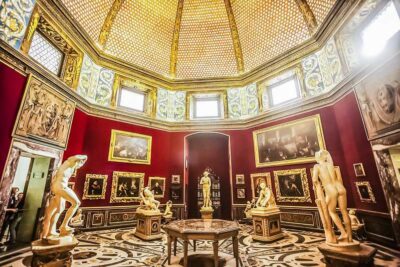 ★ 4.5Skip-The-Line Uffizi Gallery Timed Entry TicketFrom $3027,832 reviews
 ★ 4.2Uffizi Priority Ticket & Masterpieces Audio AppFrom $316,402 reviews
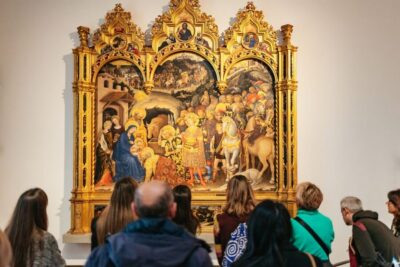 ★ 4.6Uffizi Gallery: Renaissance Masterpieces Guided TourFrom $886,070 reviews
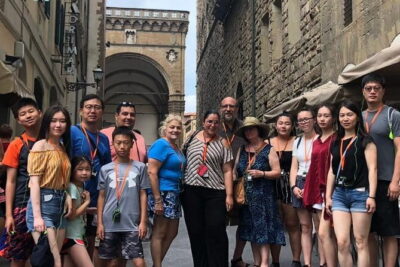 ★ 4.5Uffizi Gallery Small Group Tour with GuideFrom $764,923 reviews
 ★ 4.5Uffizi & Accademia Timed Entry: Small Group Duomo Walking TourFrom $503,630 reviews
 ★ 4.2Uffizi Gallery Timed Entry Ticket & Audio GuideFrom $332,794 reviews
 ★ 4.8Uffizi Gallery and Accademia Gallery Guided TourFrom $1402,028 reviews
 ★ 4.7Uffizi Gallery Small-Group Guided Tour with TicketFrom $762,003 reviews
Browse the lists this tour appears in