
Reviewed · EVENING EXPERIENCES
Sunset Walking Tour
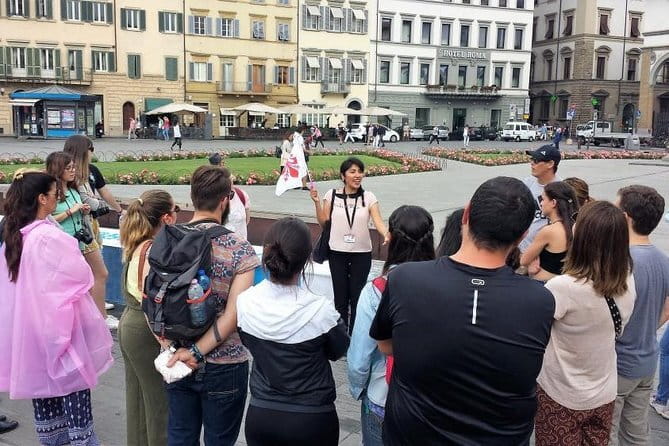
Sunset turns Florence into a different city. This small-group sunset walking tour starts at Piazza Santa Maria Novella and aims for the quieter streets as the light softens. I like that it’s max 20 people, so you get more time with your guide than in the big-daytime crush.
I also like the route’s mix of big-name sights and calmer back streets: Via Tornabuoni, Via della Vigna nuova, a pause by Palazzo Strozzi, and a classic view moment as you cross Ponte Santa Trinita toward Ponte Vecchio. Guides have been noted as engaging and funny, with at least one credited by name as Ludi (spelled Ludji by some) for crowd control and pacing.
One possible drawback to plan for: meeting-point timing can be touchy, and one account flagged an unexpected on-the-spot guide payment. Arrive a little early by the exact meeting point area, and confirm what’s included with your booking info before you start.
In This Review
- Key highlights at a glance
- 6:00 pm in Florence: why this sunset walk feels worth it
- Where you start at Santa Maria Novella (and how not to lose the group)
- Santa Maria Novella: history you can see from the steps
- Down Via Tornabuoni and Via della Vigna nuova: the elegant street stretch
- Palazzo Strozzi: why this stop matters more than a quick photo
- Ponte Santa Trinita: the bridge view that sets up Ponte Vecchio
- Oltrarno in the evening: artisans, gardens, and the local side
- Piazza Pitti and the hill-fortress feeling
- Ending at Ponte Vecchio: what to do next with your remaining time
- Price and group size: is $3.48 a smart deal?
- Who this sunset walk suits best (and who should rethink it)
- Quick ways to get more out of your guide-led walk
- Should you book this sunset walking tour?
- FAQ
- Where does the sunset walking tour start?
- What time does the tour begin, and how long is it?
- Where does the tour end?
- How big is the group?
- Is the tour guided in English, and how do I get the ticket?
- Is it possible to bring a service animal, and is it near public transportation?
- What if the weather is poor?
Key highlights at a glance
- Sunset timing: warm light, nicer photos, and fewer daytime crowds
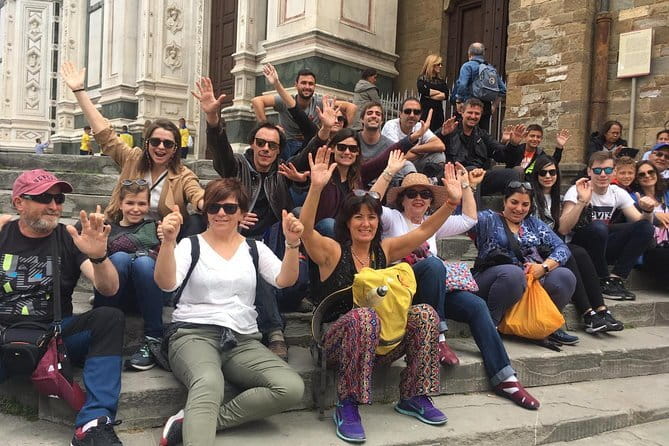
- Small group (max 20): easier pace and more guide attention
- Signature route: Santa Maria Novella → Via Tornabuoni → Palazzo Strozzi → Ponte Santa Trinita
- Oltrarno after-hours feel: artisan shops and a more local neighborhood vibe
- Classic finish: Piazza Pitti views, then an end at Ponte Vecchio
Stretch your legs on more Florence walking tours
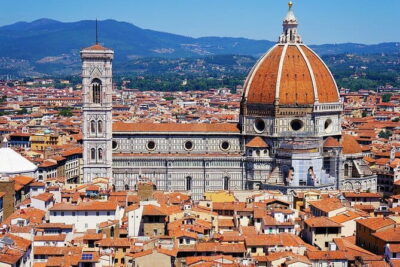
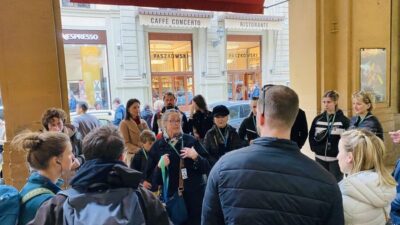
6:00 pm in Florence: why this sunset walk feels worth it
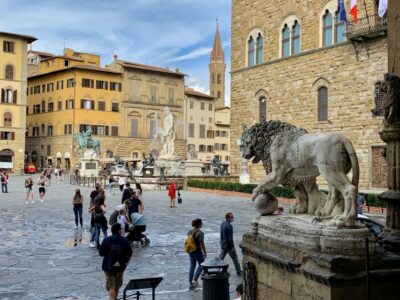
Florence at sunset is when the city stops performing and starts breathing. Daytime crowds pack the major streets, but at 6:00 pm the light changes and the walk becomes calmer, with more room to actually look up at the architecture. You also get the fun of seeing viewpoints in the gentle last light, not under harsh midday sun.
This tour is built for that exact window: around 2 hours, starting at 6:00 pm. That timing matters because the route includes several landmark zones where people usually gather, especially the Ponte Vecchio area. Here, you’re moving through them at a different rhythm, and that alone can make the experience feel smoother.
The second “worth it” factor is scale. With a maximum of 20 people, the guide can keep a tighter group together on narrow sidewalks and busy corners. You’re not just being herded from one poster to the next; you can actually hear the story because the group isn’t too large to manage.
Where you start at Santa Maria Novella (and how not to lose the group)
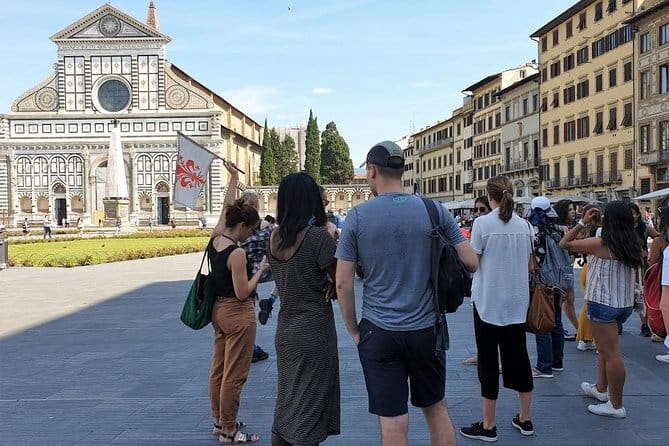
The meeting point is right at P.za di Santa Maria Novella, 4n. The tour starts in the middle of Piazza Santa Maria Novella, and you’ll be walking off from there. Since this is a walking tour, small delays can snowball fast—Florence sidewalks and square corners fill up quickly.
My practical advice: treat this as “show up early,” not “show up on time.” One complication that’s appeared in past accounts is confusion around locating the group if someone arrives late or doesn’t spot the guide quickly. If you’re the type who likes a buffer, give yourself extra minutes to check where you’ll be standing.
Also, don’t rely on memory for the meeting spot. Use your map app and plan to confirm the exact location in person before the start time. If anything feels off, use the contact number provided in the booking confirmation so you’re not wandering in circles at dusk.
Santa Maria Novella: history you can see from the steps
The first chunk of the walk begins with an explanation of Florence’s story right in front of the Church of Santa Maria Novella. You’re not walking away immediately into side streets; you’re getting context while the church and square are still your “anchor points.”
That approach is smart for a sunset tour. When the city is changing minute by minute, you want a clear base understanding early. Standing at Santa Maria Novella helps you connect what you’re seeing later—palaces, bridges, and neighborhood character—with the forces that shaped Florence over time.
If you like history that sticks, this is the sort of start that helps. Instead of learning names in a vacuum, you’re learning them next to the stone, doors, and facades that still define the skyline.
Down Via Tornabuoni and Via della Vigna nuova: the elegant street stretch
After Santa Maria Novella, the walk moves into the elegant Via Tornabuoni corridor. Streets like this are more than “pretty scenery.” They’re where you start noticing Florence’s layering: commercial life next to aristocratic grandeur, and quiet side lanes that hint at how people once moved between work and prestige.
Then comes Via della Vigna nuova, which helps break up the feel of the walk. Even within a couple of streets, Florence changes tone. That’s one of the benefits of guided routing here: you’re not only hitting famous landmarks, you’re also getting the “in-between” spaces that make the city feel lived-in.
The payoff is how smoothly the guide connects style and power. You begin to see why certain buildings, family wealth, and design choices show up where they do. This is the part of the tour that tends to turn a basic “sightseeing walk” into something that feels like a guided path through how Florence works.
Palazzo Strozzi: why this stop matters more than a quick photo

Next, the tour pauses in front of Palazzo Strozzi, described as one of the most beautiful Italian Renaissance buildings you’ll encounter on the route. It’s exactly the kind of stop that rewards a short explanation.
A palazzo isn’t just a grand wall. It’s an idea made solid: status, wealth, politics, and family ambition expressed through proportion and design. If you glance at it without context, it’s easy to move on. With a guide pointing out what to watch for, it becomes a reference point for the rest of your walk.
This is also a good “breather” moment. You’re still in motion, but stopping in a landmark spot lets you reset—especially as the light shifts and you start thinking about bridges and viewpoints ahead.
As the light drops, more Florence evenings


Ponte Santa Trinita: the bridge view that sets up Ponte Vecchio
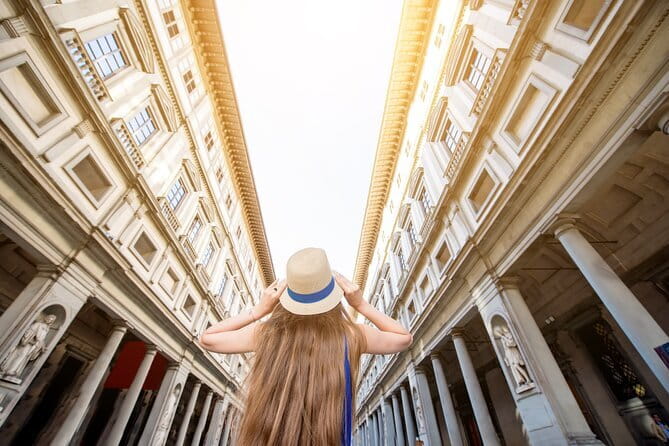
Crossing Ponte Santa Trinita is one of the best “seeing Florence in layers” moments. The bridge is Renaissance-era, and the route description specifically calls out the views, including a beautiful line toward Ponte Vecchio.
Bridges are also where Florence reveals its geometry. You can see how the river divides neighborhoods and how main streets funnel foot traffic toward key crossings. At sunset, that geometry looks especially sharp because the warm sky softens harsh contrast while still giving depth to the skyline.
The tour’s routing choice is smart here. You’re not just walking to Ponte Vecchio and leaving it at that. You’re building a visual story: you’ll cross, look, connect viewpoints, and then continue on the other side into Oltrarno.
Oltrarno in the evening: artisans, gardens, and the local side
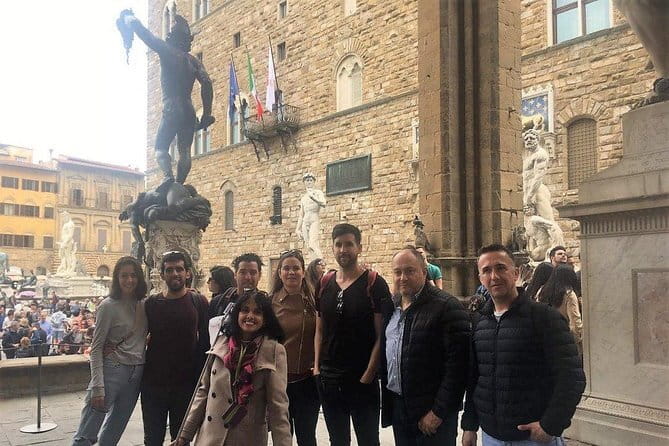
Once you reach Oltrarno, the whole vibe shifts. This is where Florence often feels less like a stage set and more like a neighborhood you could wander after dinner. The tour highlights monuments, gardens, museums, and monumental buildings, plus shops of artisans and craftspeople—especially goldsmiths and similar makers.
Even if you’re not planning to shop, this area is valuable because it changes what you expect from Florence. On a daytime walk, you can end up stuck in a loop of the same high-traffic zones. Oltrarno gives you texture: the sense that people still live around these historic walls and keep working in the city’s older rhythms.
A guide-led walk through Oltrarno also helps you avoid the common mistake of treating it like a museum district only. You can look at the architecture, but you’re also noticing the human scale—doorways, small streets, and the kind of business activity that makes the neighborhood feel functional, not staged.
And sunset helps here, too. The later the light, the more the smaller details read clearly—stone tones, window shapes, and the way the street bends around a corner.
Piazza Pitti and the hill-fortress feeling
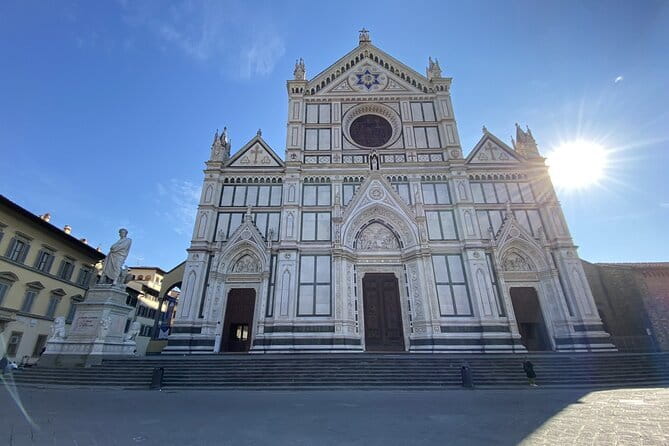
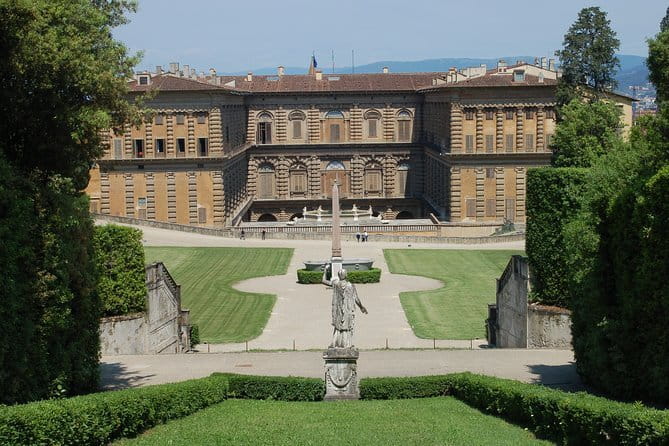
The tour arrives at Piazza Pitti, where you can observe the Pitti Palace, described as a fortified building on a small hill. This is another stop where a little context changes everything.
Palace-on-a-hill design reads instantly as power. It’s not subtle. From the square, you can sense the statement being made: control the vantage point, watch the city from above, and physically dominate the river-view geography.
Also, pacing matters. After the more intimate feel of Oltrarno’s lanes and shops, Piazza Pitti feels like a “reset to scale.” It’s a clean transition from local streets back to monumental Florence, preparing you for the final classic finish at Ponte Vecchio.
Ending at Ponte Vecchio: what to do next with your remaining time
The tour ends at Ponte Vecchio, which is the obvious finale for many first-timers. But the best part is what you can do immediately after, based on your mood.
The route description gives you two easy options. You can cross the bridge and walk toward Piazza della Signoria, or you can stay in Oltrarno and lean into its evening atmosphere. This flexibility matters because sunset hours can be short—sometimes you want more views, sometimes you want dinner and quiet streets.
Practical tip: Ponte Vecchio can get crowded fast once the light fully fades. If you’re staying for the view, plan to spend a few minutes, then consider moving away from the densest middle sections if you want a more relaxed walk to your next stop.
Price and group size: is $3.48 a smart deal?
The price is listed as $3.48 per person, with tours typically booked about 28 days in advance. On the surface, that’s shockingly low for a guided, English-language 2-hour walking tour. That makes it especially appealing if you’re value-minded and want structure without paying museum-ticket prices.
But here’s the balanced take: this is priced like a simple guided street experience. You’re not buying entry to paid attractions during the walk, so the value comes from interpretation—how well your guide connects the dots between Santa Maria Novella, the Renaissance street stretches, major palaces, and the shift into Oltrarno.
Also, one account flagged an unexpected moment around paying the guide. I can’t treat that as a universal rule from the details you have here, but it’s enough reason to double-check what’s included in the booking before you arrive, especially if you expect the ticket to cover everything.
Still, the overall formula looks good: a small group, a focused route, and a sunset schedule that helps you experience Florence without spending your evening in the biggest crowds.
Who this sunset walk suits best (and who should rethink it)
This tour is ideal if you want:
- A guided route that connects landmarks with neighborhood context
- Sunset timing to dodge the worst daytime congestion
- A manageable length (around 2 hours) that fits into a first or second day in Florence
It’s also a nice pick if you like architecture and city layout, because the route repeatedly uses bridges and squares to “show the map in real life.”
You might want to rethink it if you’re the kind of person who hates group pacing. Even with a max-20 group, you’re moving as a unit from one viewpoint to the next. And because one issue that’s appeared is meeting-point confusion, it’s not a great match for anyone who’s likely to arrive late without checking the exact start spot.
Quick ways to get more out of your guide-led walk
Since this is a short tour, the guide’s role matters. Here are practical ways to make the experience feel richer without slowing everything down:
- Ask for one or two “watch-for” details at each landmark stop, like what to notice on the facade or why the view from the bridge is meaningful.
- If you’re into art beyond architecture, it’s worth paying attention to any contemporary references your guide brings up, since one guide has been noted for including Anselm Kiefer in the tour conversation.
- When you reach Ponte Santa Trinita and then Ponte Vecchio, take your photos quickly, then step aside to keep listening. Sunset views are great, but the stories are the value.
Should you book this sunset walking tour?
I’d book it if you want a small-group guided Florence experience that uses sunset timing to reduce friction. The route connects big sights like Palazzo Strozzi and Ponte Vecchio with a genuinely different neighborhood feel in Oltrarno, and that mix is hard to recreate on your own if you don’t know where to look.
Skip it only if you strongly prefer self-guided wandering, or if you’re likely to show up at the meeting point late and hope it all sorts itself out. For the rest of us, arriving on time and using the guide as your translator for what you’re seeing can turn a “nice walk” into a memorable evening in Florence.
FAQ
Where does the sunset walking tour start?
The tour starts at P.za di Santa Maria Novella, 4n, 50123 Firenze FI, Italy, beginning in the middle of Piazza Santa Maria Novella.
What time does the tour begin, and how long is it?
It starts at 6:00 pm and lasts about 2 hours.
Where does the tour end?
The tour ends back at the meeting point.
How big is the group?
The group is limited to a maximum of 20 travelers.
Is the tour guided in English, and how do I get the ticket?
Yes, the tour is guided in English. You use a mobile ticket.
Is it possible to bring a service animal, and is it near public transportation?
Service animals are allowed, and the meeting area is near public transportation.
What if the weather is poor?
The experience requires good weather. If it’s canceled due to poor weather, you’ll be offered a different date or a full refund.
More Florence Walks
- Florence: Highlights Walking Tour with Expert Guide
★ 4.6 · 4,662 reviews - Uffizi & Accademia Timed Entry: Small Group Duomo Walking Tour
★ 4.5 · 3,630 reviews - Florence: Duomo Complex with Tickets & City Walk Guided Tour
★ 4.7 · 2,057 reviews - Florence: Guided Walking Tour
★ 4.6 · 1,602 reviews - Florence: Renaissance and Medici Tales Guided Walking Tour
★ 4.8 · 1,549 reviews
More Florence Tours to Weigh Up
- The Best tour in Florence: Renaissance & Medici Tales – guided by a STORYTELLER
★ 5.0 · 12,316 reviews - The Best Tour in Florence: Renaissance and Medici Tales
★ 5.0 · 10,810 reviews - Florence: Chianti Wineries Tour with Wine Tasting
★ 4.5 · 10,071 reviews - Florence: Duomo Cathedral 60-Minute Guided Tour
★ 3.7 · 6,829 reviews - Florence: Hop-on Hop-off Bus Tour: 24, 48 or 72-Hour Ticket
★ 4.0 · 6,283 reviews
More Florence Tours We Have Reviewed
- Florence: Skip-The-Line Uffizi Gallery Timed Entry Ticket
★ 4.5 · 27,832 reviews - Tuscany Day Trip from Florence: Siena, San Gimignano, Pisa and Lunch at a Winery
★ 5.0 · 21,634 reviews - Florence: Timed Entry to Michelangelo’s David + Audio App
★ 4.6 · 19,496 reviews - Florence: Leonardo Interactive Museum Entry Ticket
★ 4.5 · 12,957 reviews - Florence: Michelangelo’s David Skip-the-Line Entry Ticket
★ 4.5 · 12,764 reviews
Fresh from our Florence review desk
- Small-Group Pasta Cooking Class and Market Tour in Florence★ 5.0 · 3 reviews
- Palatina Gallery and Pitti Guided Tour in Florence★ 5.0 · 3 reviews
- Tuscan Evening Tour: Fiat 500, 8:30 to 10 PM★ 5.0 · 3 reviews
- Journey into Art: Florence’s Accademia★ 4.5 · 3 reviews
- Paint and Drink Florentine Hills★ 5.0 · 3 reviews
- Truffle hunting and lunch experience, with Vinci and winery.★ 4.5 · 3 reviews
Evening Experiences, compared.
 ★ 5.0Winner 2025 Florence Sunset Food & Wine Tour by Eating EuropeFrom $1495,015 reviews
 ★ 4.6Evening Classical Music ConcertFrom $41574 reviews
 ★ 4.6Statue of David Evening TourFrom $41442 reviews
 ★ 4.5Florence Evening Food Tour with Florentine Steak & Tuscan WineFrom $79376 reviews
 ★ 4.7From Florence: Chianti Wine Tastings at Sunset Day TripFrom $151274 reviews
 ★ 5.0Florence Sunset Food Tour with Wine & Dine at a Tuscan farmhouseFrom $140194 reviews
 ★ 4.5Academia Gallery: Statue of David Evening TourFrom $45181 reviews
 ★ 4.5Chianti Wine Tastings Day Trip at Sunset from FlorenceFrom $155171 reviews
Browse the lists this tour appears in