
Reviewed · WALKING TOURS
The Best of Florence Private Walking Tour with a Local Guide
Florence clicks into place fast. This private walk is built for people who want the big names and the street-level details in just a couple of hours, with Medici and Michelangelo context that makes the sights make sense. I love the way the route strings together the most important squares without feeling rushed, and I also like getting practical food and shopping tips from a real local guide. The one thing to consider is that it’s short by design, so if you want museums, long stops, or deep art study, you’ll likely need something longer.
You’ll meet near Piazza di San Giovanni and finish by Ponte Vecchio, so you’re planted right in the historical center. It’s private (just your group) with a flexible pace, plus a mobile ticket. Based on the demand pattern, this is a plan-ahead tour—book early if your dates are fixed, since it’s commonly reserved well in advance.
In This Review
- Key highlights
- A 2-Hour Florence Hit List, Minus the Guesswork
- Piazza del Duomo: Baptistery Doors, Dome Views, and Giotto’s Bell Tower
- Old Towers and the Roman Roots of Piazza della Repubblica
- Orsanmichele: The Worker Church with Renaissance Statues
- Piazza della Signoria to the Uffizi Steps: Medici Power in Stone
- Ponte Vecchio and the Vasari Corridor Overhead
- Palazzo Pitti Finale by the Medici’s Doorstep
- Price, Timing, and What You Actually Get for $161
- Who This Private Walk Fits Best (and Who Might Want Something Longer)
- Should You Book FlorencePass Best of Florence?
- FAQ
- How long is the Florence private walking tour?
- Is this a private tour or a group tour?
- Where does the tour start and where does it end?
- Does the tour include admission tickets?
- What major sights are included in the walk?
- Is a mobile ticket provided?
- How far in advance should I book?
- What is the cancellation policy?
Key highlights
- Duomo complex overview: Baptistery doors, Santa Maria del Fiore’s marble work, dome scale, and Giotto’s tower
- Medieval-to-Roman street story: old towers, medieval life reminders, and a piazza rooted in Roman Florence
- Orsanmichele’s worker legacy: a building that shifted from marketplace to church linked to Florentine trades
- Medici power in Piazza della Signoria: Palazzo Vecchio, 16th-century sculpture, and the political vibe
- Ponte Vecchio plus Vasari Corridor: the 1340s bridge and the 1565 overhead passage tied to Cosimo de’ Medici
Stretch your legs on more Florence walking tours
A 2-Hour Florence Hit List, Minus the Guesswork
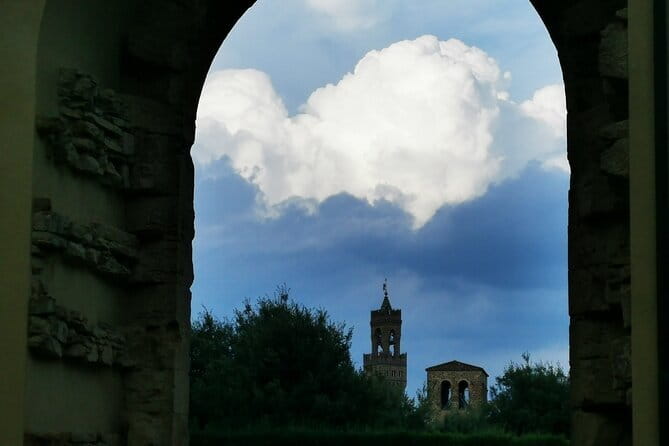
This is the kind of tour that helps you start well in Florence. You’re not wandering with a map app trying to connect dots; your guide does the connecting for you—who mattered, what changed, and why the city looks the way it does.
At about two hours, it’s ideal for your first day or for a morning/afternoon when you want maximum orientation. The private format matters here: you can move at a pace that works for your group, ask follow-ups, and linger when something catches your eye (and the guide can steer you toward quieter corners when the crowds grow).
You’ll also leave with something more useful than photos: a sense of where to eat and shop. Florence is great, but it’s also easy to end up in the wrong kind of busy. This tour is designed to give you insider guidance for picking places that fit your day, your tastes, and your budget.
Piazza del Duomo: Baptistery Doors, Dome Views, and Giotto’s Bell Tower
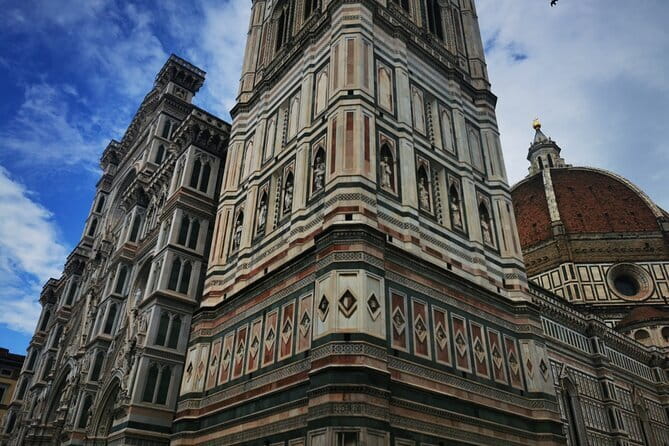
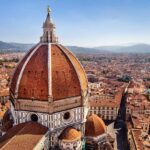
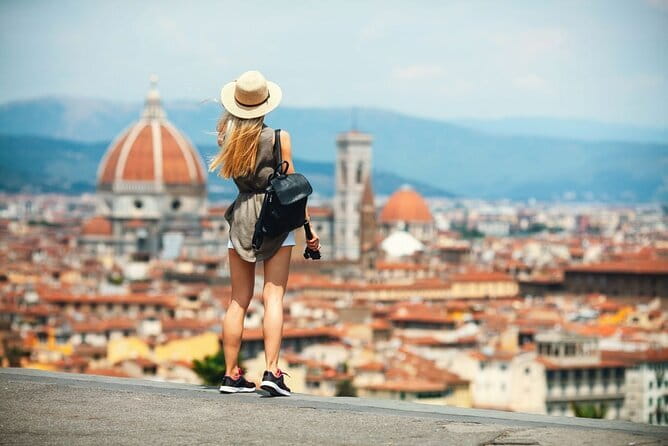
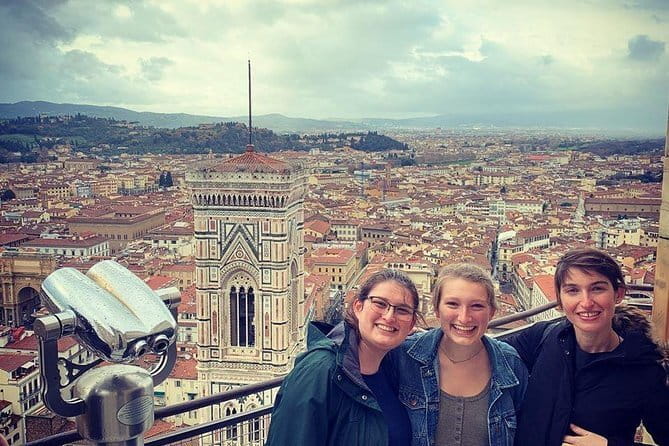
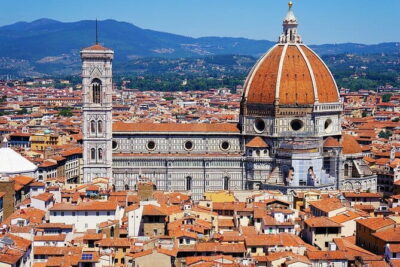
The walk kicks off at Piazza del Duomo, and it’s a smart first stop because it anchors you to Florence’s visual language. Your guide talks through the big religious landmarks in the square: the Baptistery (with its famous bronze doors), the Cathedral complex with Santa Maria del Fiore, and Giotto’s belltower, which is basically an outdoor sculpture gallery.
What I like about this start is that it isn’t just a name-drop tour. You get the why behind what you see: the marble decoration that makes the cathedral feel like it’s wearing clothing, the dome’s dramatic scale (it’s the highest building in town), and the way the Baptistery and bell tower frame the whole religious ensemble.
Practical note: the stops here are listed with free entry. Even if you don’t go inside for every structure, you still get a clear sense of what each building does in the story of Florence. If you enjoy architecture and want to understand what you’re looking at without needing a lecture, this opening hits a sweet spot.
Old Towers and the Roman Roots of Piazza della Repubblica
Next you move through narrower streets where you can still feel the medieval footprint—specifically through the old towers that help you picture how Florence once lived at street level. This part is short, but it’s a big difference-maker. Florence doesn’t always feel medieval once you’re in the main lanes; here, you get reminders that the city had a different rhythm long before the Renaissance polished it.
Then you reach Piazza della Repubblica, where the vibe shifts. You’ll see modern buildings, famous cafés, luxury shops, hotels, and even a carousel nearby—basically a mix of old and new Florence under one roofline. Your guide also connects the piazza to its deeper past: it celebrates the site as an ancient center founded by Romans about two thousand years ago, and there’s a triumphal-arch feel to the space.
The value of this stop is perspective. You’ll learn how “the center” changes over centuries, even when the name and location stick around. It helps you stop treating Florence as one era and start seeing it as a layered city.
Orsanmichele: The Worker Church with Renaissance Statues
Orsanmichele is one of those places that can look odd if you only know it by face value. Your guide gives it a proper backstory: it started as a huge marketplace and later became the church of Florentine workers.
That transformation matters. Florence’s Renaissance wasn’t just about princes and painters—it was also about guilds, labor, and civic identity. Here, you can understand why a building used for commerce could later become a religious home, and why it’s tied to the people who helped shape the city.
You’ll also get the point of the building’s reputation: it once held a rich collection of Renaissance statues, and you’ll be looking at the exterior with that context in mind. Even if you don’t treat Orsanmichele as your top “must-see,” this stop tends to turn into one of those “oh, I get it now” moments.
Piazza della Signoria to the Uffizi Steps: Medici Power in Stone
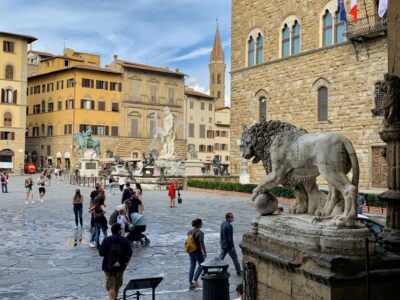
From Orsanmichele, the tour moves to Piazza della Signoria, which is where Florence starts acting like a political machine. This is still the political center in spirit, with Palazzo Vecchio historically used for city council meetings.
Your guide will point out the big themes visible in the square: the Palazzo Vecchio’s imposing, castle-like look, the presence of world-famous 16th-century statues around the area, and the Medici connection—especially in how the courtyard and the setting reflect when the Medici family lived there.
Then there’s a walk toward the Arno River through the Piazzale degli Uffizi. This is a quick but meaningful move because it changes how you read the city’s layout. You’ll hear about how the bureaucracy of the Medici grand-dukes ended up transforming into what’s known as one of Italy’s most important painting galleries. Even without museum time, you start understanding why the Uffizi area became such a magnet for art.
This section is where guides can really shine. In prior groups, I’ve heard how guides with Florentine roots, like Maurizio, can make the architecture feel personal—turning stone and square layouts into a story you can actually follow. And guides such as Roberta and Claudio have a similar strength: clear, complete explanations that link building design to the people behind it.
With a local guide, more of Florence to explore
- The Best tour in Florence: Renaissance & Medici Tales – guided by a STORYTELLER
★ 5.0 · 12,316 reviews

Ponte Vecchio and the Vasari Corridor Overhead
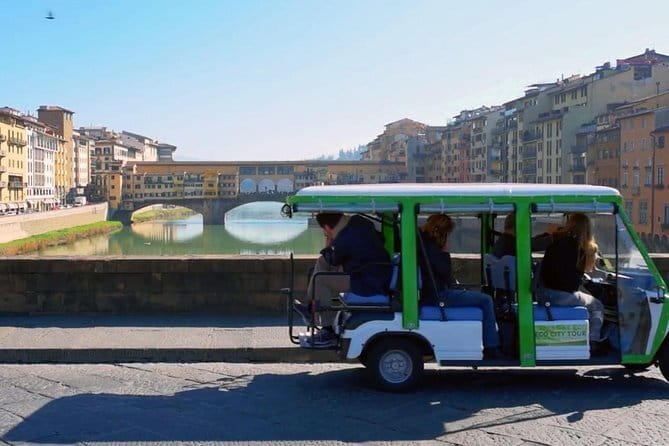
Next comes Ponte Vecchio, the iconic medieval bridge built in the 1340s. The main feature you’ll feel right away is the commercial layer: the glittering shop windows of goldsmiths lined along the bridge.
But the real “wait, that’s wild” detail is the Vasari Corridor. Your guide explains it as the overhead passageway constructed by Giorgio Vasari in 1565 for Cosimo de’ Medici. That bit of information changes how you look at the bridge. It’s not just a pretty photo spot—it’s a piece of political and family logistics built into the city’s bones.
This is a great stop for photos, but it’s also a great stop for understanding how power moved through Florence. When you see how a private corridor could sit above public space, you start noticing the city’s design as a social system.
Palazzo Pitti Finale by the Medici’s Doorstep
The tour ends near Palazzo Pitti, with a view toward the palace that became the Medici residence. Your guide connects the palace to the Medici timeline, including the fact that the family’s presence continued until they became extinct in 1737.
This final stop is short, but it gives you a satisfying arc. You started with major religious architecture, moved through civic squares and guild identity, and end with a grand residence tied to political control. It’s a clean way to close the story without needing to add more transit or another ticketed stop.
Since the tour finishes around Ponte Vecchio, you’re also positioned well for the next move—whether you want a slow walk along the river or a casual dinner plan that your guide’s tips helped you choose earlier.
Price, Timing, and What You Actually Get for $161
At $161.34 per person, this sits in the private-tour zone where you’re paying for the guide’s time, the route design, and the personalized pacing. The value improves because the core stops are listed with free admission for the segments included, so you’re not stacking museum ticket costs on top.
The other value boost is time efficiency. In Florence, a lot of visitors lose the day bouncing between “top sights” without understanding how they connect. This tour tries to fix that by giving you context at each stop—so when you later pass these buildings on your own, you’ll recognize what you’re seeing.
And because the average booking window is about 97 days in advance, this is clearly a popular “first Florence day” pick. If you’re traveling in peak season or have limited availability, book early so you’re not stuck with a schedule that doesn’t match your itinerary.
Who This Private Walk Fits Best (and Who Might Want Something Longer)
This tour fits best if you:
- want a first-day orientation across Florence’s major squares
- enjoy architecture, city layout, and why buildings were built
- like getting food and shopping guidance from someone local
- prefer a private setup where your group can move at your pace
It may feel too brief if your goal is deep museum time, long cathedral interior visits, or detailed art analysis. Two hours is built for getting your bearings and learning the key stories, not for lingering the whole day.
One more consideration: you do a lot of outdoor looking. If your group needs frequent indoor breaks, you might want a longer tour option or pair this with a separate museum visit on another day.
Should You Book FlorencePass Best of Florence?
If you want Florence to start clicking immediately, I think this is a strong choice. You get a tight loop through the Duomo area, Orsanmichele, Piazza della Signoria, and Ponte Vecchio, with Medici and Michelangelo-level context that helps you read the city instead of just scanning it.
I’d book it if:
- you’re short on time but want real storytelling
- you want practical tips for where to eat and shop
- you like the idea of a guide customizing the pace for your group
Skip it (or add time elsewhere) if you want long ticketed museum sessions or you already have your Florence architecture homework done.
FAQ
How long is the Florence private walking tour?
It’s listed at about 2 hours.
Is this a private tour or a group tour?
It’s private. Only your group participates.
Where does the tour start and where does it end?
It starts at Piazza di San Giovanni, 14R, 50129 Firenze FI, Italy and ends near Ponte Vecchio, 46R, 50125 Firenze FI, Italy.
Does the tour include admission tickets?
The stops listed on the route are marked as free (with admission ticket free for each listed stop).
What major sights are included in the walk?
You’ll see Piazza del Duomo (Baptistery, Cathedral, Giotto’s bell tower), narrow streets with old towers, Piazza della Repubblica, Orsanmichele, Piazza della Signoria (Palazzo Vecchio), the walk toward Piazzale degli Uffizi, Ponte Vecchio (and the Vasari Corridor), and Palazzo Pitti.
Is a mobile ticket provided?
Yes, it includes a mobile ticket.
How far in advance should I book?
On average, it’s booked about 97 days in advance.
What is the cancellation policy?
Free cancellation is available up to 24 hours in advance for a full refund.
More Florence Walks
- Florence: Highlights Walking Tour with Expert Guide
★ 4.6 · 4,662 reviews - Uffizi & Accademia Timed Entry: Small Group Duomo Walking Tour
★ 4.5 · 3,630 reviews - Florence: Duomo Complex with Tickets & City Walk Guided Tour
★ 4.7 · 2,057 reviews - Florence: Guided Walking Tour
★ 4.6 · 1,602 reviews - Florence: Renaissance and Medici Tales Guided Walking Tour
★ 4.8 · 1,549 reviews
More Florence Tours to Weigh Up
- The Best tour in Florence: Renaissance & Medici Tales – guided by a STORYTELLER
★ 5.0 · 12,316 reviews - The Best Tour in Florence: Renaissance and Medici Tales
★ 5.0 · 10,810 reviews - Florence: Chianti Wineries Tour with Wine Tasting
★ 4.5 · 10,071 reviews - Florence: Duomo Cathedral 60-Minute Guided Tour
★ 3.7 · 6,829 reviews - Florence: Hop-on Hop-off Bus Tour: 24, 48 or 72-Hour Ticket
★ 4.0 · 6,283 reviews
More Florence Tours We Have Reviewed
- Florence: Skip-The-Line Uffizi Gallery Timed Entry Ticket
★ 4.5 · 27,832 reviews - Tuscany Day Trip from Florence: Siena, San Gimignano, Pisa and Lunch at a Winery
★ 5.0 · 21,634 reviews - Florence: Timed Entry to Michelangelo’s David + Audio App
★ 4.6 · 19,496 reviews - Florence: Leonardo Interactive Museum Entry Ticket
★ 4.5 · 12,957 reviews - Florence: Michelangelo’s David Skip-the-Line Entry Ticket
★ 4.5 · 12,764 reviews
Fresh from our Florence review desk
- Small-Group Pasta Cooking Class and Market Tour in Florence★ 5.0 · 3 reviews
- Palatina Gallery and Pitti Guided Tour in Florence★ 5.0 · 3 reviews
- Tuscan Evening Tour: Fiat 500, 8:30 to 10 PM★ 5.0 · 3 reviews
- Journey into Art: Florence’s Accademia★ 4.5 · 3 reviews
- Paint and Drink Florentine Hills★ 5.0 · 3 reviews
- Truffle hunting and lunch experience, with Vinci and winery.★ 4.5 · 3 reviews
Walking Tours, compared.
 ★ 4.6Highlights Walking Tour with Expert GuideFrom $274,662 reviews
 ★ 4.5Uffizi & Accademia Timed Entry: Small Group Duomo Walking TourFrom $503,630 reviews
 ★ 4.7Duomo Complex with Tickets & City Walk Guided TourFrom $932,057 reviews
 ★ 4.6Guided Walking TourFrom $271,602 reviews
 ★ 4.8Renaissance and Medici Tales Guided Walking TourFrom $21,549 reviews
 ★ 4.7Uffizi & Accademia Small Group Walking TourFrom $1481,380 reviews
 ★ 5.0Skip-the-Line Florence Highlights and David Walking TourFrom $1171,127 reviews
 ★ 4.6Dark Mysteries and Legends Guided Walking TourFrom $21,081 reviews
Browse the lists this tour appears in