
Reviewed · WALKING TOURS
The Best of Florence Walking Tour in a Small Group
Florence can feel like art class on fast-forward. This small-group walking tour slows things down, linking the Medici to the Duomo area and ending at Ponte Vecchio. You get a local guide who shares what to notice while you walk, plus practical ideas for your next meals and sights.
What I like most is the group cap of 15. With the whisper system, it’s easier to actually hear the story over street noise and other tour groups, and that makes the walk feel more personal. I also like that the guide doesn’t just name famous buildings, they point out details and offer on-the-ground recommendations, including street food and side-street stops.
One thing to consider: several major sights are marked as not including admission. So if you’re hoping to go inside every church, library, or museum during the 1 hour 45 minutes, plan to pay extra at the sites where needed.
In This Review
- Key things to know before you go
- Medici power in one easy Florence walk
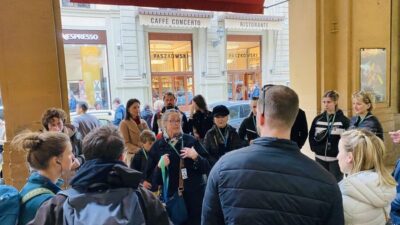
- Meeting at Caffè Scudieri Firenze near San Giovanni
- San Lorenzo: Florence’s main Medici stage
- The Laurentian Library: Michelangelo’s architectural personality
- Medici Chapels and Sagrestia Nuova: where art and family overlap
- Palazzo Medici Riccardi: a fortress-palace in civic clothing
- Duomo complex as the headline: cathedral, baptistery, and the dome mystery
- Piazza della Signoria and Palazzo Vecchio: politics meets sculpture
- Uffizi area and the idea of offices as art infrastructure
- Ponte Vecchio and Palazzo Pitti: the Arno as a money story
- What the whisper system and small group really improve
- Price and ticket reality for $59.26
- How to get the most out of the 1 hour 45 minutes
- Who should book this Florence highlights walk
- Should you book the Best of Florence Walking Tour?
- FAQ
- How long is the Florence walking tour?
- What’s the maximum group size?
- Is the tour offered in English?
- Are admission tickets included for the sights?
- Where do I meet the guide, and where does it end?
- Does the tour use a whisper system?
- What happens if the weather is bad or I cancel?
Key things to know before you go
- Small group (max 15) for a less crowded, more conversational walk
- Licensed guide in English who ties architecture to Florence’s big power shifts
- Whisper system so you can hear directions and stories from close range
- Medici-focused route through San Lorenzo, the Laurentian Library, and the Medici Chapels area
- Duomo landmarks as the centerpiece: cathedral complex, Giotto’s Campanile, and Brunelleschi’s dome from ground level
- Ends at Ponte Vecchio, so you finish where Florence feels most cinematic at street level
Stretch your legs on more Florence walking tours
Medici power in one easy Florence walk
This is a highlights route, but it’s not random sightseeing. The big thread is Florence’s Medici era, starting with their religious and family legacy around San Lorenzo, then moving through the buildings tied to their status and ambitions.
You’ll also see why Florence built its fame through art and architecture, not just money. Standing in the same piazzas and streets where Renaissance leaders displayed influence, you start understanding how power looked when it was carved in stone.
And you get a local guide who turns landmark facts into a story you can remember. People like Manuel and Camilla are specifically called out for making the walk fun and organized, with tips on what to watch for as you pass key facades and façades.
Meeting at Caffè Scudieri Firenze near San Giovanni
The tour starts at Caffè Scudieri Firenze, Piazza di San Giovanni 19R, with a start time listed as 12:15 pm. It ends near Ponte Vecchio, and the exact ending point may vary slightly within the area.
Arrive a few minutes early. Midday is when Florence traffic and foot traffic both spike, and you’ll want a little buffer to check where your group is lining up and get the ear piece set before you move.
This is also a tour built for easy participation. It’s listed as suitable for most travelers, with service animals allowed and the meeting area near public transportation.
San Lorenzo: Florence’s main Medici stage
Your first stop is Basilica di San Lorenzo, one of the city’s largest churches and a central landmark in the market district. The big story here is the Medici burial connection, from Cosimo il Vecchio through Cosimo III, which instantly gives the stop a political weight beyond religion.
Even if you don’t go inside right away, the exterior setting helps. San Lorenzo sits in the heart of Florence life, so you feel the contrast between everyday market energy and the family legacy tied to the basilica.
The practical takeaway: use this opening stop to reset your mental map. Once you know you’re walking through Medici territory, the rest of the route clicks into place faster.
The Laurentian Library: Michelangelo’s architectural personality
Next comes the Biblioteca Medicea Laurenziana, closely tied to Pope Clement VII and the Medici’s shift in public image. The point wasn’t just collecting books; it was showing the Medici as members of “intelligent and ecclesiastical” society, not just merchants.
This library is famous for its architecture designed by Michelangelo, and it’s connected to Renaissance design thinking that can feel intense and theatrical. Even during a brief stop, you can understand why people keep returning to the space: the building is built to make ideas look powerful.
If you’re the type who enjoys seeing how architecture reflects status, this is a strong moment early in the walk. It’s also a useful reminder that Florence wasn’t only about paintings and sculptures, it was about planning, design, and display.
Medici Chapels and Sagrestia Nuova: where art and family overlap
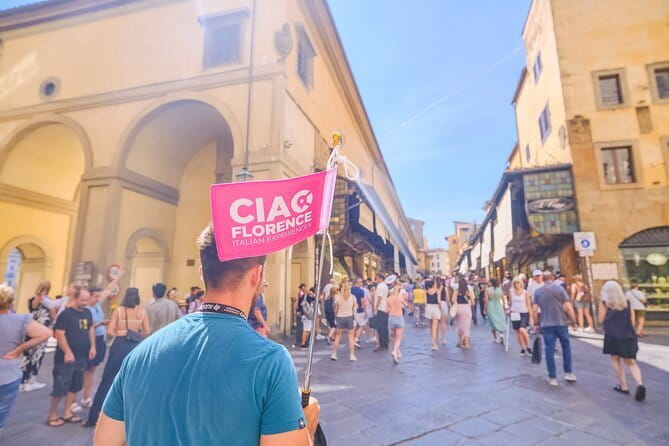
Then you’re guided toward Cappelle Medicee, the Medici chapels built between the 16th and 17th centuries as extensions to Brunelleschi’s 15th-century church. The purpose was clear: celebrate the Medici family and their role as patrons and Grand Dukes of Tuscany.
A standout detail here is the Sagrestia Nuova, designed by Michelangelo. That name matters because it signals you’re in a pocket of Florence where the artists weren’t decorating after the fact. They were shaping how the Medici story was felt in space.
One useful approach: listen for the guide’s explanation of how these chapels connect to the wider church complex. In a short walking tour, the best guides help you avoid the common mistake of treating each site as a separate tourist checkbox.
- The Best tour in Florence: Renaissance & Medici Tales – guided by a STORYTELLER
★ 5.0 · 12,316 reviews




Palazzo Medici Riccardi: a fortress-palace in civic clothing
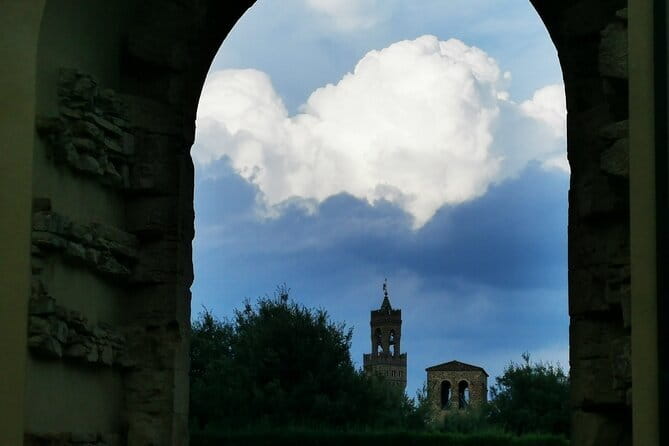
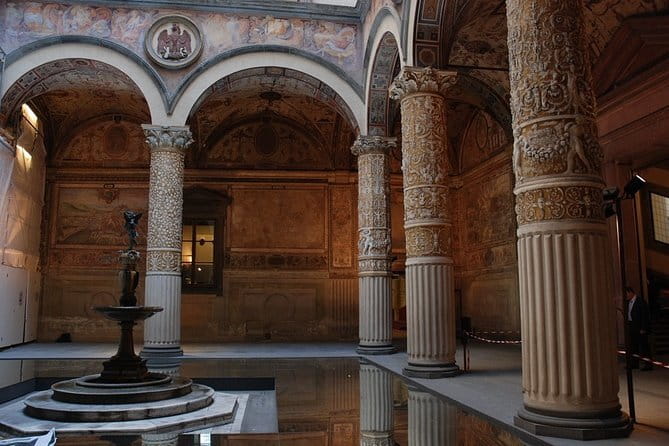
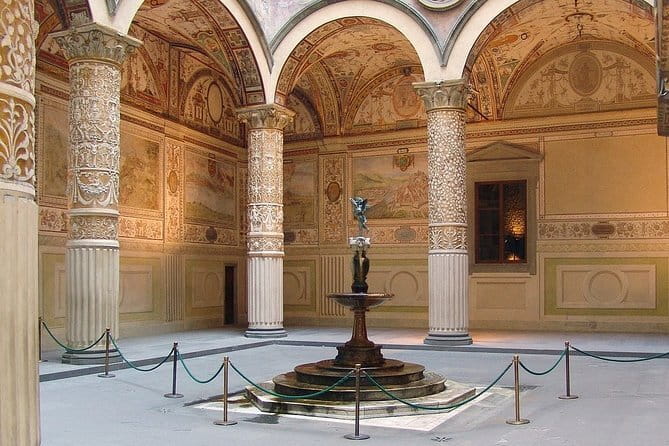
You’ll also pass Palazzo Medici Riccardi, built between 1444 and 1484 for Cosimo de’ Medici. This is the kind of place where the building form is part of the messaging.
Think of it as Renaissance power made architectural. The Medici didn’t just commission art; they built spaces that made their authority visible in the city’s streets.
This stop is short, so the guide’s pacing matters. Look at the palazzo like it’s a clue, not a museum. If you can read it as a statement of influence, you’ll get more out of the next piazzas.
Duomo complex as the headline: cathedral, baptistery, and the dome mystery
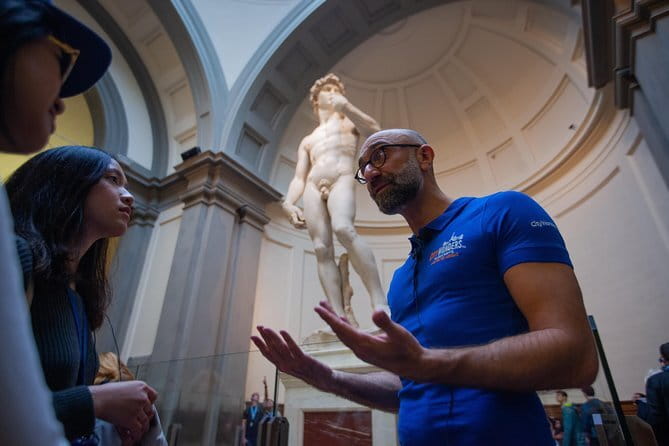
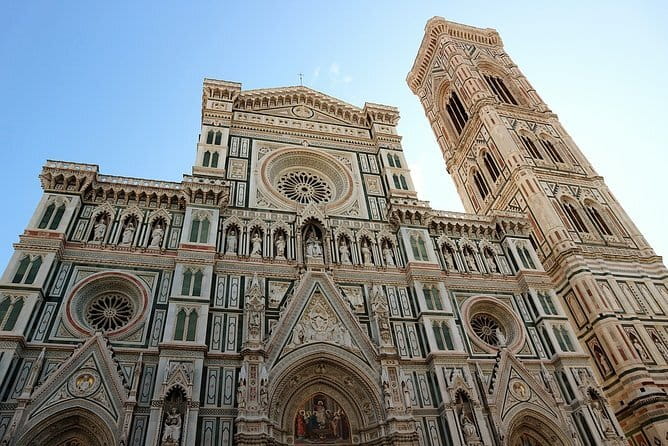
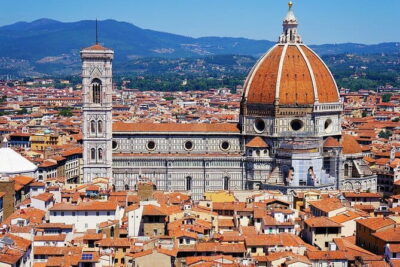
After the Medici cluster, the walk shifts into Florence’s biggest visual magnet: the Duomo complex area. You’ll see Cattedrale di Santa Maria del Fiore (the Florence Cathedral) and related structures that form a UNESCO World Heritage site in the historic center.
The cathedral’s story starts with construction begun in 1296 in the Gothic style, associated with a design by Arnolfo di Cambio. What makes this stop feel extra meaningful is the way the cathedral complex brings multiple landmark buildings into one frame—cathedral, Giotto’s Campanile, and the baptistery.
A key highlight is the Cupola del Brunelleschi. It’s often treated like a puzzle because of what it represented in its time: the largest brick dome ever constructed, and one of the great engineering feats that still reads as art.
Next to the cathedral area is Campanile di Giotto, known for rich sculptural decoration and polychrome marble encrustations. If you look up during this stop, you’ll catch why this tower is treated as a showpiece of Florentine Gothic architecture.
Also nearby is the Battistero di San Giovanni, built between 1059 and 1128 in Florentine Romanesque style. It’s one of the oldest buildings in the city, and standing in its neighborhood gives you a long timeline in a short distance.
Admission note you should plan for: the Duomo stop is marked as free in this route data, while other stops are marked as not included. That means you may still want to budget for additional tickets depending on what you want to see up close.
Piazza della Signoria and Palazzo Vecchio: politics meets sculpture
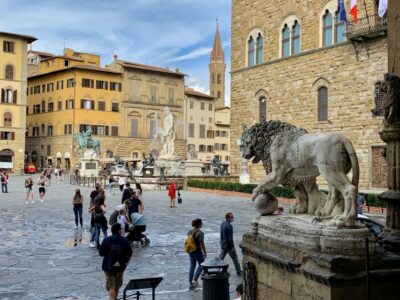
From the cathedral zone, you reach Piazza della Signoria, an L-shaped square in front of Palazzo Vecchio. This is where Florence gathers, and it’s also a practical checkpoint for orienting yourself in the city center.
Palazzo Vecchio (“Old Palace”) is the town hall and reads like a fortress-palace. It’s the kind of civic building that makes you understand why Renaissance Florence was confident enough to build government like defense.
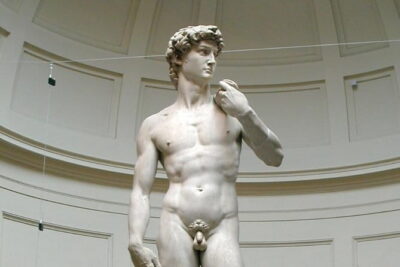
Two details to watch for: the square is linked to a copy of Michelangelo’s David statue, and nearby you’ll see statues in the Loggia dei Lanzi area. Even on a quick stop, the guide can help you spot how the square became a stage for public identity.
It’s a good contrast after the cathedral stops. Here, you’re looking at how civic power presented itself in stone, statues, and open public space.
Uffizi area and the idea of offices as art infrastructure
Your route brings you near Gallerie Degli Uffizi. Even without entering, it helps to know the origin story: the complex was begun by Giorgio Vasari in 1560 for Cosimo I de’ Medici, designed to house offices for the Florentine magistrates. The name uffizi comes from offices.
That context changes how you think about the museum. It wasn’t built only as a temple for viewing art. It was built as a functioning part of government life, and then, over time, that administrative space became a key art destination.
If your schedule is tight, this tour is a smart way to set up a later Uffizi visit. You’ll know where it sits and why it matters, so when you do go, it feels less like wandering.
Ponte Vecchio and Palazzo Pitti: the Arno as a money story
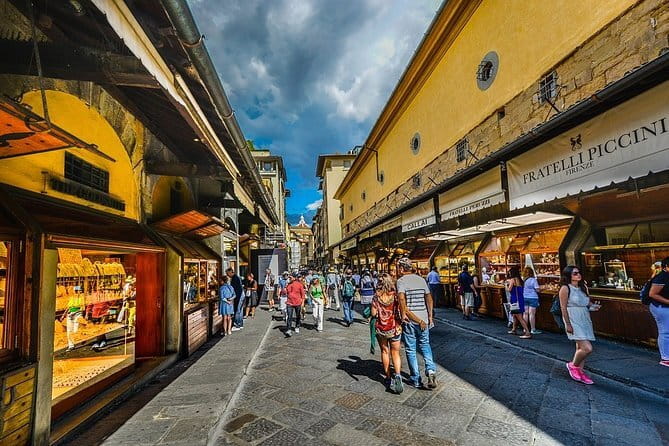
The final stretch finishes at Ponte Vecchio, the medieval bridge over the Arno and the oldest bridge in Florence over the river. What makes it iconic is the shops built along it.
Historically, shop use was tied to trades like butchers, tanners, and farmers. Today, the businesses are jewelers and art dealers, which is a neat reminder that Florence tends to evolve its retail uses while keeping the location sacred.
Then you also connect to Palazzo Pitti, bought by the Medici family in 1549 and later becoming the main residence of the ruling family of the Grand Duchy of Tuscany. The palace expanded into a treasure house as later generations gathered paintings, plates, jewelry, and luxurious possessions.
Even if you don’t go inside, this is a useful finish because it ties the earlier Medici stops to the Medici as rulers, not just patrons. The bridge landing by the river also means you end near one of the city’s most memorable pedestrian areas, easy to transition from history to dinner.
What the whisper system and small group really improve
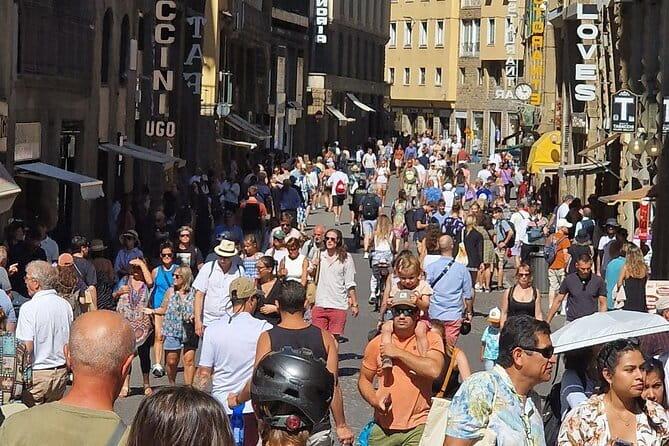
Florence streets can be chaotic. That’s why this tour’s whisper system matters more than it sounds. When you can hear the guide clearly, you catch the small explanations that turn a famous facade into a meaningful one.
The group size capped at 15 also changes the experience. You get fewer people blocking your sight lines, and there’s more room for questions. In the style of guides like Manuel, tours can also adjust to the group’s needs, including pacing for families with kids.
It’s a detail worth taking seriously if you’ve ever done a crowded walking tour where you spend half the time straining to hear. Here, the design of the experience aims for understanding.
Price and ticket reality for $59.26
At $59.26 per person for about 1 hour 45 minutes, the value is in the structure: a licensed guide, small group, whisper system, and a route that hits major Medici and Duomo landmarks without making you plan your own mini-quest.
But here’s the practical budgeting piece. The route data marks admission tickets for several stops as not included, with the Duomo stop marked as free. So you’re paying for guidance and timing, not for guaranteed entry into every interior.
If you’re the kind of traveler who loves seeing famous places but hates ticket lines and research time, you’ll likely feel this is a good deal. If you only want to walk past exteriors and never plan to enter, it can still work well because the main points are architectural and historical context you can absorb quickly.
Also, tips are not included, so factor that into your total budget. Since the tour is licensed and the guide’s work is the main product, it’s normal to tip if you feel it’s worth it.
How to get the most out of the 1 hour 45 minutes
This tour succeeds when you treat it like orientation plus storytelling, not a museum marathon. I’d plan your day so you can absorb what you learn here and then choose a few follow-up sites afterward.
A simple strategy:
- Wear comfortable shoes and expect street walking.
- Bring water, especially because the start time is midday.
- Have your questions ready. Good guides, including Camilla and Samona, tend to share extra context if you ask.
Guides like Simona are also known for managing comfort during stops, including moving people into shade when needed. It’s the kind of small operational skill that makes a short tour feel smooth.
Who should book this Florence highlights walk
This is a great fit for first-timers who want a fast way to understand Florence’s major players: Medici power and the city’s signature landmarks. If you already know you want to see the Duomo area and end up near Ponte Vecchio, this gives you an efficient route that explains why those places matter.
It’s also a good choice if you travel with kids or mixed ages, since some guides can adjust how they tell the story. If you prefer a focused route that doesn’t sprawl across too many neighborhoods, this stays compact and central.
If you’re a hardcore art-collector who wants to spend hours inside museums, you’ll still enjoy it, but you’ll likely want separate time for the interiors. Think of this as your framework, not the finish.
Should you book the Best of Florence Walking Tour?
If you want a small-group Florence walk that connects the Medici story to the Duomo complex and ends at Ponte Vecchio, this is a strong “do it early” type of tour. The combination of licensed guiding, whisper system, and a route that gives context fast is exactly what helps you plan the rest of your trip.
I’d book it if you’re aiming for good value and clear direction, especially if you don’t want to research every stop on your own. I’d hesitate only if your top goal is entering multiple sites during the walk, since several stops are marked as not including admission.
FAQ
How long is the Florence walking tour?
It runs about 1 hour 45 minutes.
What’s the maximum group size?
The group is capped at 15 travelers.
Is the tour offered in English?
Yes, it’s offered in English.
Are admission tickets included for the sights?
The tour includes a licensed guide and guidance, but admission tickets are not included for several stops. The Duomo stop is marked as free in the route details, while other stops list admission as not included.
Where do I meet the guide, and where does it end?
You meet at Caffè Scudieri Firenze, Piazza di San Giovanni 19R, 50123 Firenze FI. The tour ends near Ponte Vecchio in the Ponte Vecchio area.
Does the tour use a whisper system?
Yes. This tour includes a whisper system so you can hear the guide.
What happens if the weather is bad or I cancel?
The experience requires good weather. If it’s canceled due to poor weather, you’ll be offered a different date or a full refund. You can cancel for a full refund up to 24 hours before the experience’s start time.
More Florence Walks
- Florence: Highlights Walking Tour with Expert Guide
★ 4.6 · 4,662 reviews - Uffizi & Accademia Timed Entry: Small Group Duomo Walking Tour
★ 4.5 · 3,630 reviews - Florence: Duomo Complex with Tickets & City Walk Guided Tour
★ 4.7 · 2,057 reviews - Florence: Guided Walking Tour
★ 4.6 · 1,602 reviews - Florence: Renaissance and Medici Tales Guided Walking Tour
★ 4.8 · 1,549 reviews
More Florence Tours to Weigh Up
- The Best tour in Florence: Renaissance & Medici Tales – guided by a STORYTELLER
★ 5.0 · 12,316 reviews - The Best Tour in Florence: Renaissance and Medici Tales
★ 5.0 · 10,810 reviews - Florence: Chianti Wineries Tour with Wine Tasting
★ 4.5 · 10,071 reviews - Florence: Duomo Cathedral 60-Minute Guided Tour
★ 3.7 · 6,829 reviews - Florence: Hop-on Hop-off Bus Tour: 24, 48 or 72-Hour Ticket
★ 4.0 · 6,283 reviews
More Florence Tours We Have Reviewed
- Florence: Skip-The-Line Uffizi Gallery Timed Entry Ticket
★ 4.5 · 27,832 reviews - Tuscany Day Trip from Florence: Siena, San Gimignano, Pisa and Lunch at a Winery
★ 5.0 · 21,634 reviews - Florence: Timed Entry to Michelangelo’s David + Audio App
★ 4.6 · 19,496 reviews - Florence: Leonardo Interactive Museum Entry Ticket
★ 4.5 · 12,957 reviews - Florence: Michelangelo’s David Skip-the-Line Entry Ticket
★ 4.5 · 12,764 reviews
Fresh from our Florence review desk
- Small-Group Pasta Cooking Class and Market Tour in Florence★ 5.0 · 3 reviews
- Palatina Gallery and Pitti Guided Tour in Florence★ 5.0 · 3 reviews
- Tuscan Evening Tour: Fiat 500, 8:30 to 10 PM★ 5.0 · 3 reviews
- Journey into Art: Florence’s Accademia★ 4.5 · 3 reviews
- Paint and Drink Florentine Hills★ 5.0 · 3 reviews
- Truffle hunting and lunch experience, with Vinci and winery.★ 4.5 · 3 reviews
Walking Tours, compared.
 ★ 4.6Highlights Walking Tour with Expert GuideFrom $274,662 reviews
 ★ 4.5Uffizi & Accademia Timed Entry: Small Group Duomo Walking TourFrom $503,630 reviews
 ★ 4.7Duomo Complex with Tickets & City Walk Guided TourFrom $932,057 reviews
 ★ 4.6Guided Walking TourFrom $271,602 reviews
 ★ 4.8Renaissance and Medici Tales Guided Walking TourFrom $21,549 reviews
 ★ 4.7Uffizi & Accademia Small Group Walking TourFrom $1481,380 reviews
 ★ 5.0Skip-the-Line Florence Highlights and David Walking TourFrom $1171,127 reviews
 ★ 4.6Dark Mysteries and Legends Guided Walking TourFrom $21,081 reviews
Browse the lists this tour appears in