
Reviewed · CITY TOURS
Treasures of Florence: Guided Walking Tour of City Highlights
Florence moves fast, and this guide keeps you on track. The biggest help is the high quality audio system, which makes it easy to catch the story as you walk.
I also like the semi-private group (max 8) pace. You get to ask quick questions without feeling like you’re being swept along with a crowd.
One possible drawback: the guide’s accent can be thick, and if you’re sensitive to that, plan for it. The thick accent note is real, so the audio system matters even more.
In This Review
- Quick hits you’ll actually care about
- San Lorenzo: the Medici neighborhood walk that sets the tone
- Piazza Del Duomo: a 25-minute orientation to the Cathedral complex
- Piazza della Signoria: statue-and-society in the open-air museum
- Ponte Vecchio: goldsmith shops and the story behind the bridge
- Piazza della Repubblica to Mercato Centrale: end where you can keep eating and exploring
- Why the small group size and audio system are more valuable than you think
- What you get for the price: $59 for a fast, guided highlights reset
- Who should book this walking tour (and who might skip it)
- The Rosa factor: energy, guidance, and what to expect from the guide
- Should you book Treasures of Florence?
- FAQ
- How long is the Treasures of Florence walking tour?
- Where does the tour start and end?
- Is the tour indoors or outdoors?
- What is included in the tour price?
- What’s not included?
- Is it available in English?
- Is the tour wheelchair-friendly or accessible?
- Is free cancellation available?
Quick hits you’ll actually care about
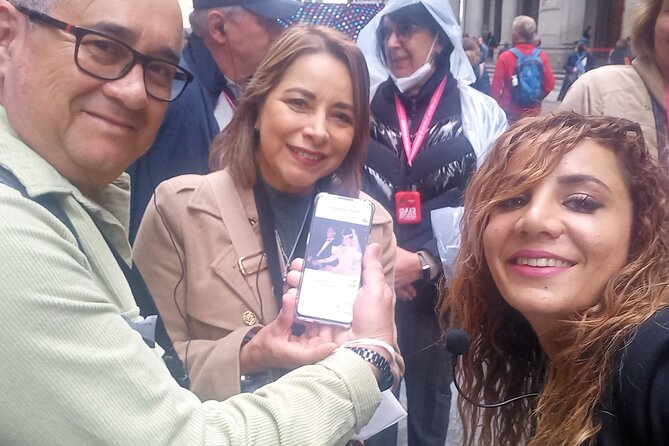
- Audio system that helps you hear the guide clearly while you’re outside
- Max 8 people keeps the tour from feeling like a cattle line
- San Lorenzo to the Duomo area gives you the lay of the land fast
- Ponte Vecchio with the Vasari Corridor story (meat market to jewelers, plus the intrigue)
- A stop-by-stop script at key squares so you know what you’re looking at
Stretch your legs on more Florence walking tours
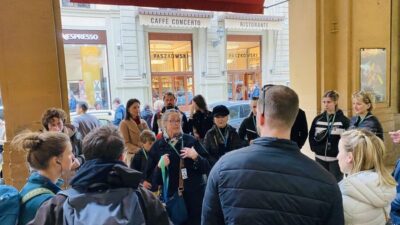
San Lorenzo: the Medici neighborhood walk that sets the tone
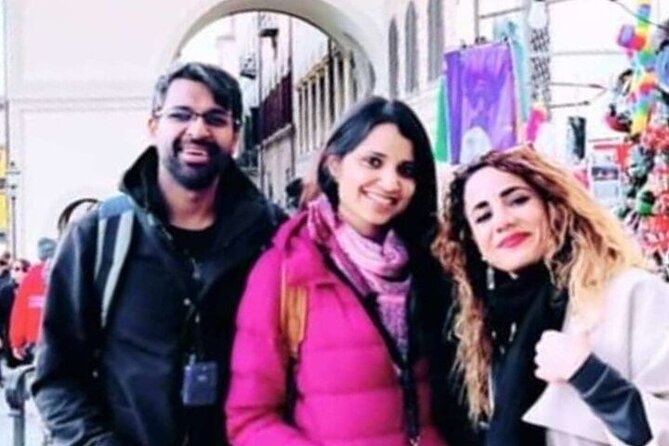
The tour starts in the center of it all, at Piazza della Repubblica, then moves toward San Lorenzo. This is a smart first move because San Lorenzo is where Florence feels like a working city, not just a museum town.
San Lorenzo is closely tied to the Medici rise, and the guide’s job is to make that connection feel real. You’ll notice the energy of the streets, the market vibe, and the way old buildings hold up under daily life. Even if you only catch glimpses, you start understanding why the Medici mattered here.
What I like about starting here is how it frames everything else. When you later look at grand civic spaces, you’ll already have the sense that Florence ran on families, money, and street-level power—this wasn’t just art for art’s sake.
Piazza Del Duomo: a 25-minute orientation to the Cathedral complex
You’ll then head to Piazza Del Duomo, Florence’s star square. In a short window, you cover three big landmarks so you don’t wander around wondering what’s what.
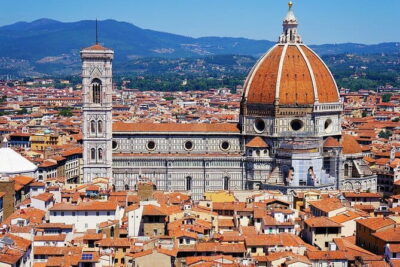
You’ll get a clear walkthrough of Santa Maria del Fiore, including Brunelleschi’s dome, plus Giotto’s Bell Tower and the Baptistery of San Giovanni. The Baptistery part matters because the guide will point you toward the famous Gates of Paradise bronze decoration.
The best value here is the “why you should care” context. You’ll be able to look up and recognize parts rather than just taking photos and moving on. And since the tour is outdoors with no monument entrance fees included, you avoid the common time sink of ticket lines during a highlight walk.
A practical note: this area gets crowded. The tour’s timing keeps it focused—so come with good walking shoes and accept that you’ll be sharing space.
Piazza della Signoria: statue-and-society in the open-air museum
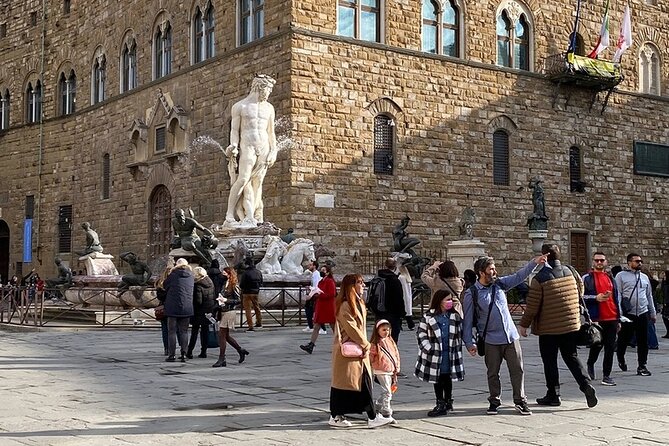
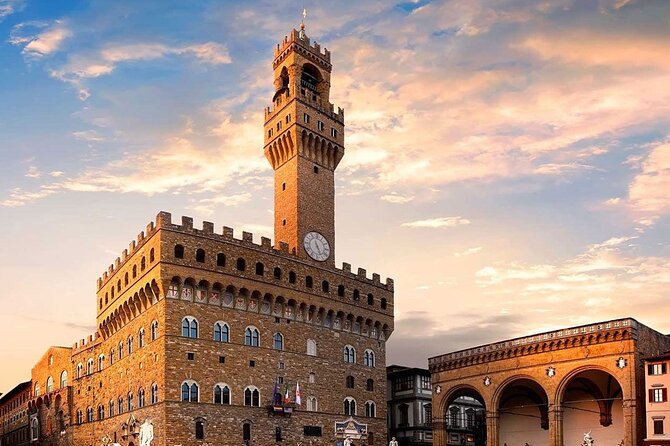
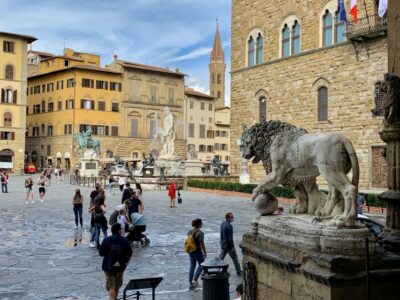
Next is Piazza della Signoria, which is basically Florence’s outdoor political gallery. The guide doesn’t treat it like a sculpture stop only. You’ll hear how Florence ran on competition, power, and the Medici family’s influence.
You’ll see a replica of Michelangelo’s David and learn how that image ties into status and authority. Even though you aren’t in a museum hall, the square reads like a stage set—statues placed to send messages, not just to look pretty.
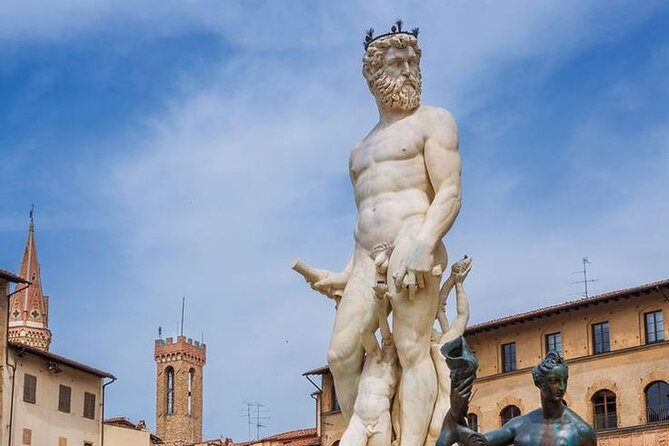
Another point that helps: the guide connects the visual landmarks to what was happening in the city. For example, the Fountain of Neptune isn’t described as a pretty landmark only. It’s used to talk about symbolism and control in civic life.
Downside? If you’re the type who hates standing still, you may feel the pace here is more “listen and look” than “walk and snap.” But it’s worth it, because you’re getting the meaning behind the shapes.
Ponte Vecchio: goldsmith shops and the story behind the bridge
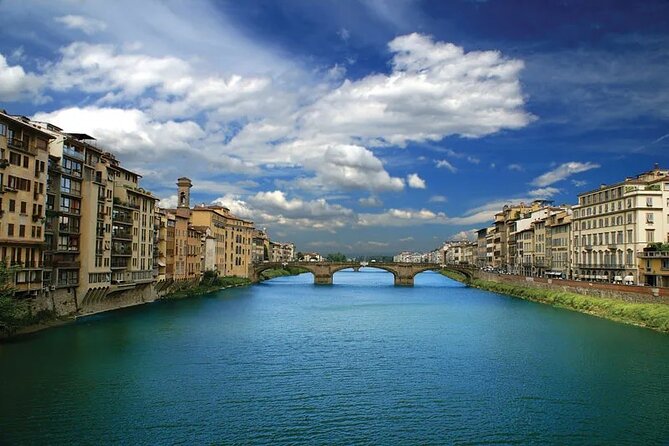
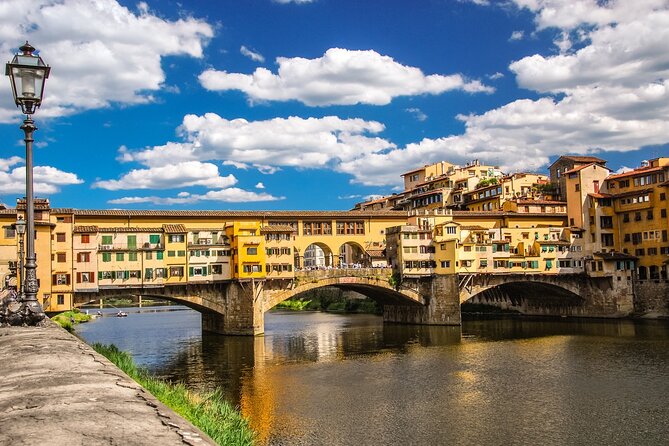
Then you reach Ponte Vecchio, and the atmosphere changes fast. This is Florence’s oldest and most famous bridge, and it’s lined with historic goldsmith shops, so it feels like a living corridor rather than a single photo spot.
The guide’s storytelling is a key part of why this stop works. You’ll hear how the bridge transformed over time—from a meat market into a home for jewelers—and you’ll also get the legend-style intrigue around the Vasari Corridor.
The Vasari Corridor is presented as a secretive passage tied to clandestine affairs and strategic escape. Even when the details blur into legend, the point lands: Florence’s elite planned movement and privacy like it was a weapon.
This is also a place where you can slow down on your own after the guide finishes the main points. The bridge makes you want to keep looking—at the shops, the carvings, the river views. If you time it right, you’ll also get nicer light for photos than you might think, even in daylight bustle.
Piazza della Repubblica to Mercato Centrale: end where you can keep eating and exploring
The walk ends near Mercato Centrale, after stopping at Piazza Della Repubblica. That square sits right in the middle of everything—elegant, active, and easy to use as a navigation anchor.
You’ll get a quick historical frame: the site began as the Roman forum, then changed through the centuries into a hub for culture and leisure. The value isn’t a long lecture; it’s a sense of continuity. Florence layers its eras instead of replacing them, and the square shows that shift in how the space is used.
Ending near Mercato Centrale is practical. Even if you don’t go inside a minute after the tour, you’re dropped close to a food landmark and a transit-friendly area. It’s an easy way to turn a guided “see the highlights” walk into a next step for your own plan.
If you’re the type who likes momentum, this ending helps you avoid the awkward question: Now what? You’ve got options right there.
With a local guide, more of Florence to explore
- The Best tour in Florence: Renaissance & Medici Tales – guided by a STORYTELLER
★ 5.0 · 12,316 reviews


Why the small group size and audio system are more valuable than you think
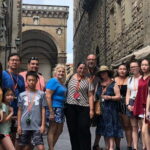
The tour is semi-private with a maximum of 8 people, and that’s not just a comfort perk. In a city like Florence, where streets narrow and noise jumps, small groups help the guide keep control of the pacing.
You don’t just hear stories—you get to stay positioned enough to actually follow. That’s where the audio system becomes a real advantage, not a fancy add-on. When you’re outdoors and surrounded by traffic, voices, and chatter, a good audio setup can make the difference between catching the story and missing it.
Also, the guide is described as licensed and local, and you can feel that in how the stops are explained. The stories don’t sound like generic postcard text; they’re tied to streets and buildings you’re standing near.
One caution: the accent issue shows up in the feedback. If you’re likely to struggle with thick accents, the audio system helps, but it doesn’t magically remove every clarity issue. Still, many people will find the explanation easy enough, especially if you keep the headset volume up and don’t multitask while walking.
What you get for the price: $59 for a fast, guided highlights reset
At $59 per person for about 2 hours, the value is mainly in three things: time saved, hearing the right explanations, and the small group setup.
First, you’re covering multiple major Florence landmarks—San Lorenzo, Duomo square, Piazza della Signoria, Ponte Vecchio, and Piazza della Repubblica—without having to plan each short stop yourself. That matters because Florence is crowded, and self-guided walking often turns into constant decision-making.
Second, you get licensed local guiding plus the audio system. That combo is what makes a short tour feel like more than a simple walk-by.
Third, the pricing avoids the biggest “hidden cost” trap. The tour is outdoors, so entrance fees aren’t included. You’re not required to buy tickets during the 2-hour route. If you later want to enter a monument, you can decide based on your interests and budget.
The one other value angle: the operator offers a special discount on other Florence and Tuscany tours. If you’re planning more than one activity, that can soften the cost.
Timing note: this tour is often booked about 19 days in advance on average. If your travel dates are firm, booking earlier tends to be the smart move.
Who should book this walking tour (and who might skip it)
This tour fits best if you want a guided route that gives you names, context, and a clear sense of what you’re seeing in the major squares and bridge areas. If you enjoy art and architecture but also like political and family-power stories, you’ll probably like this format.
It’s also a good option if you like small groups and you don’t want to spend your first Florence day wrestling with directions. The meeting point at Piazza della Repubblica is central, and the end near Mercato Centrale helps you keep your day moving.
You might skip it if you strongly prefer self-paced wandering or if thick accents are a deal-breaker for you. In that case, you could still do the stops on your own—but you would miss the way the guide connects landmarks to stories like the Medici influence and the Vasari Corridor intrigue.
The Rosa factor: energy, guidance, and what to expect from the guide
Rosa (Roseway Tours) comes through in the feedback as someone with real energy and lots of useful facts. One strong theme in the comments is that the tour acts like a starter kit for the rest of your trip—after the walk, you’re better able to choose what to do next.
That matters because Florence can overload your brain with beauty. A good guide turns that overload into a workable map: you know what’s near what, what each stop represents, and what you might want to see deeper later.
The only repeated caution is the accent clarity. So here’s the practical approach: if you have trouble understanding certain accents, use the audio carefully and focus on listening early. The Duomo and Piazza della Signoria segments tend to deliver the most payoff for people who catch the details.
Should you book Treasures of Florence?
If you want a high-impact overview in about two hours, this is a solid bet. You’ll hit the big Florence landmarks—Duomo square, Piazza della Signoria, Ponte Vecchio—plus meaningful context around the Medici and the city’s political theater. Add the small group size and the audio system, and it’s a clean way to get oriented fast.
I’d book it if:
- you’re short on time and want key highlights explained,
- you prefer small groups (max 8),
- you want help figuring out what to do next.
I’d think twice if:
- you struggle with thick accents even with audio,
- you don’t want a guided structure at all and prefer roaming independently.
With a strong overall rating (4.8 from 9 ratings), and a central start and practical end, it’s the kind of tour that usually earns its place early in a Florence visit.
FAQ
How long is the Treasures of Florence walking tour?
It runs about 2 hours.
Where does the tour start and end?
It starts at Piazza della Repubblica, 50123 Firenze FI, Italy, and ends at Mercato Centrale, 50123 Firenze FI, Italy.
Is the tour indoors or outdoors?
It’s an outdoors walking tour, and entrance fees to monuments or museums are not included.
What is included in the tour price?
You get a licensed local guide, a semi-private small group (max 8), a high quality audio system, personal attention, and a special discount on other tours in Florence and Tuscany.
What’s not included?
Entrance fees to monuments and museums, hotel pickup and drop-off, food and drinks, and gratuities are not included.
Is it available in English?
Yes, it’s offered in English.
Is the tour wheelchair-friendly or accessible?
The tour notes that most people can participate, and it is near public transportation. Service animals are allowed.
Is free cancellation available?
Yes. You can cancel up to 24 hours in advance for a full refund, based on the experience’s local time.
More Florence Walks
- Florence: Highlights Walking Tour with Expert Guide
★ 4.6 · 4,662 reviews - Uffizi & Accademia Timed Entry: Small Group Duomo Walking Tour
★ 4.5 · 3,630 reviews - Florence: Duomo Complex with Tickets & City Walk Guided Tour
★ 4.7 · 2,057 reviews - Florence: Guided Walking Tour
★ 4.6 · 1,602 reviews - Florence: Renaissance and Medici Tales Guided Walking Tour
★ 4.8 · 1,549 reviews
More Florence Tours to Weigh Up
- The Best tour in Florence: Renaissance & Medici Tales – guided by a STORYTELLER
★ 5.0 · 12,316 reviews - The Best Tour in Florence: Renaissance and Medici Tales
★ 5.0 · 10,810 reviews - Florence: Chianti Wineries Tour with Wine Tasting
★ 4.5 · 10,071 reviews - Florence: Duomo Cathedral 60-Minute Guided Tour
★ 3.7 · 6,829 reviews - Florence: Hop-on Hop-off Bus Tour: 24, 48 or 72-Hour Ticket
★ 4.0 · 6,283 reviews
More Florence Tours We Have Reviewed
- Florence: Skip-The-Line Uffizi Gallery Timed Entry Ticket
★ 4.5 · 27,832 reviews - Tuscany Day Trip from Florence: Siena, San Gimignano, Pisa and Lunch at a Winery
★ 5.0 · 21,634 reviews - Florence: Timed Entry to Michelangelo’s David + Audio App
★ 4.6 · 19,496 reviews - Florence: Leonardo Interactive Museum Entry Ticket
★ 4.5 · 12,957 reviews - Florence: Michelangelo’s David Skip-the-Line Entry Ticket
★ 4.5 · 12,764 reviews
Fresh from our Florence review desk
- Small-Group Pasta Cooking Class and Market Tour in Florence★ 5.0 · 3 reviews
- Palatina Gallery and Pitti Guided Tour in Florence★ 5.0 · 3 reviews
- Tuscan Evening Tour: Fiat 500, 8:30 to 10 PM★ 5.0 · 3 reviews
- Journey into Art: Florence’s Accademia★ 4.5 · 3 reviews
- Paint and Drink Florentine Hills★ 5.0 · 3 reviews
- Truffle hunting and lunch experience, with Vinci and winery.★ 4.5 · 3 reviews
City Tours, compared.
 ★ 4.7Duomo Complex with Tickets & City Walk Guided TourFrom $932,057 reviews
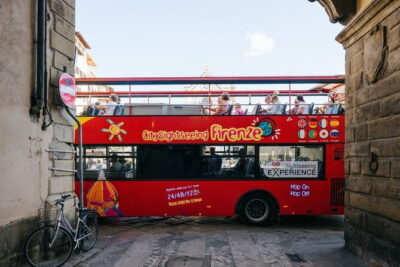 ★ 3.5City Sightseeing Florence Hop-On Hop-Off Bus TourFrom $241,894 reviews
 ★ 4.6Eco-Friendly Golf Cart City Tour with Audio GuideFrom $671,094 reviews
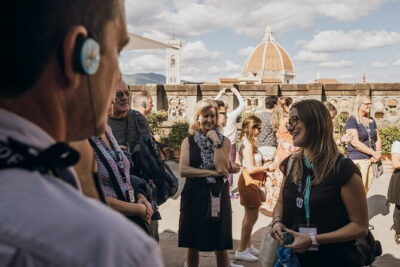 ★ 4.5Florence in a Day: Michelangelo’s David, Uffizi and Guided City Walking TourFrom $1341,048 reviews
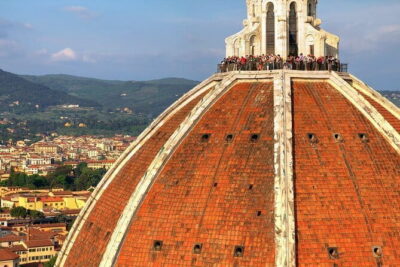 ★ 4.5Florence in a Day: David, Cathedral & City Highlights Guided TourFrom $131947 reviews
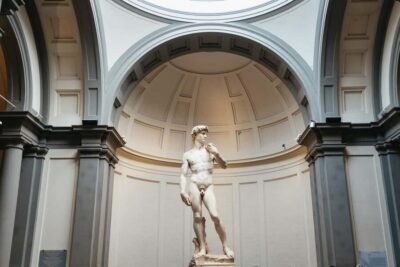 ★ 4.8David, Cathedral & City Highlights Guided TourFrom $128471 reviews
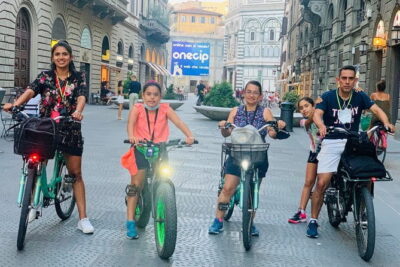 ★ 4.0Florence Small Group Electric Bike City TourFrom $58324 reviews
 ★ 4.2Firenze Card Official Museum City PassFrom $110308 reviews
Browse the lists this tour appears in