
Reviewed · FLORENCE COOKING CLASSES
Tuscan Cooking Class
One lesson can feed your whole trip. In this Tuscan cooking class at La Chiusa Tuscany near Montefollonico, you learn three hands-on pasta recipes plus a seasonal starter and cantucci, then sit down to taste what you made. I love how local women lead the cooking, which makes the food feel lived-in, not staged for tourists.
Two things I especially liked: the food skills you can actually repeat at home (like making pici and shaping ravioli), and the relaxed, friendly pace of a class capped at 15 people. It is very practical fun: you get flour on your hands, not just facts in your notebook.
One thing to consider: the meeting point is in Montefollonico, and the property setup involves a drive up a hill, so plan transport ahead if you are not already in the area. If you rely on taxis that are easy to grab, you might find that timing is tighter than you expect.
In This Review
- Key things to know before you cook in Tuscany
- Montefollonico and La Chiusa Tuscany: where the day starts
- What the 4-hour schedule actually feels like
- The menu you will cook: pici, ravioli, starter, garlic sauce, cantucci
- Pasta making that you can repeat at home
- Handmade pici with garlic sauce
- Ravioli
- Seasonal starter dish
- Cantucci: the almond biscuit you will want to replicate
- The tasting with the grandmothers and why it changes everything
- English-led guidance and how small groups make a difference
- Price and value: is $192.66 per person fair?
- Practical tips to make your day smoother
- Should you book this Tuscan cooking class?
- FAQ
- Where is the cooking class meeting point?
- How long is the Tuscan cooking class?
- What do you learn to make during the class?
- Is the class offered in English?
- How big is the group?
- What is the price per person?
- Can service animals participate?
Key things to know before you cook in Tuscany
- Small group size (max 15) keeps the class more personal and less chaotic.
- Three pastas + a starter + cantucci means you leave with a full menu, not a token tasting.
- Led by local women focused on regional traditions makes the explanations feel grounded.
- English-led format helps you follow along without guessing what comes next.
- Tasting your own results at the end is where it all clicks—this is not just a demo.
Roll up your sleeves for another Tuscany cooking class
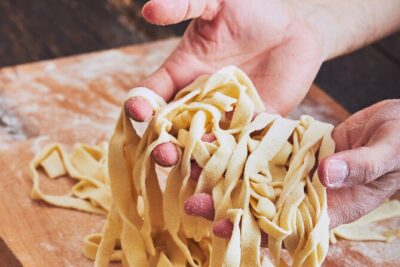
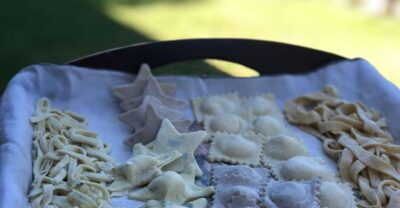
Montefollonico and La Chiusa Tuscany: where the day starts
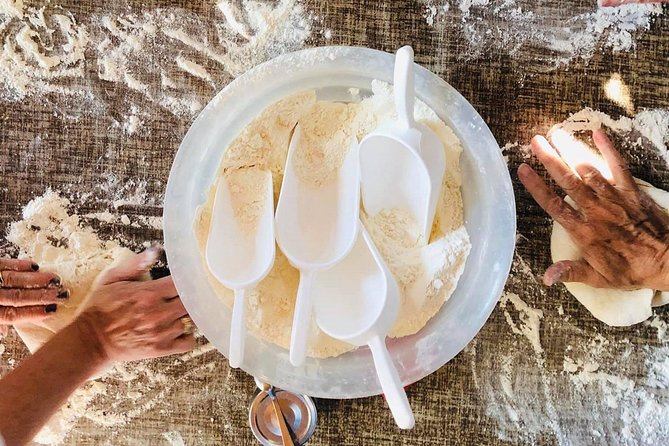
The day begins at Via della Madonnina, 88, 53049 Montefollonico SI. This matters because Montefollonico is not “big-city Tuscany.” It feels like real country Tuscany—quiet lanes, short distances between old stone, and a slower rhythm that fits cooking better than sightseeing does.
When you arrive at La Chiusa Tuscany, the first thing you notice is that it is a proper property, not a classroom pretending to be charming. One helpful detail from the experience vibe: the setting includes outdoor touches like flowers and garden areas. That kind of environment matters because it shifts the mood from hurry-up-and-learn to settle-in-and-cook.
Also, because the activities end back at the meeting point, you are not stuck planning a separate ride to get yourself home. You do still need to plan for the hill-drive feel that comes with rural settings. If you are coming from elsewhere and using taxis, I would treat transport as part of the experience prep, not an afterthought.
What the 4-hour schedule actually feels like
The class is about 4 hours total. The core lesson portion is around 2 hours, and then there is a tasting that brings everything together.
In plain terms, you will spend your time doing three things:
- working through pasta and dough tasks (hands-on, step-by-step),
- learning the typical Tuscan flavor logic behind the recipes,
- and then eating the results in a friendly, social setting.
The pacing is important. A cooking class that runs too fast can turn “hands-on” into “watching your own disaster.” Here, the structure is built for learning enough to get results you can taste right away. That is the best kind of cooking class: you are not just collecting techniques, you are using them on the same day.
The menu you will cook: pici, ravioli, starter, garlic sauce, cantucci
Tuscan food has a reputation for being simple on paper and surprisingly skilled in execution. This class leans into that. You are not just cooking a single dish. You are building a small Tuscan meal the way a home cook might: pasta first, a seasonal component, and something sweet with almonds.
Here is the menu focus you should expect:
- Handmade pici with garlic sauce
- Ravioli
- Typical seasonal dish (starter)
- Garlic sauce (with the pici)
- Cantucci (almond biscuits)
You will likely notice that the recipes share a common thread: dough handling. Tuscan cooking traditions put weight on technique—rolling, shaping, and getting the texture right—so even if you have never made pasta before, you get a clear path. And since cantucci is part of the day, you do not leave with only savory knowledge. You get a sweet Tuscan classic built for dunking and snacking.
A nice bonus: the class includes the tasting of everything you made. That means you can compare what you expected with what actually happens when dough meets heat and timing works out.
Pasta making that you can repeat at home
The biggest value in this class is that you are not only learning ingredients—you are learning the feel of the dough. For me, that is what makes a Tuscany cooking class worth paying for.
Handmade pici with garlic sauce
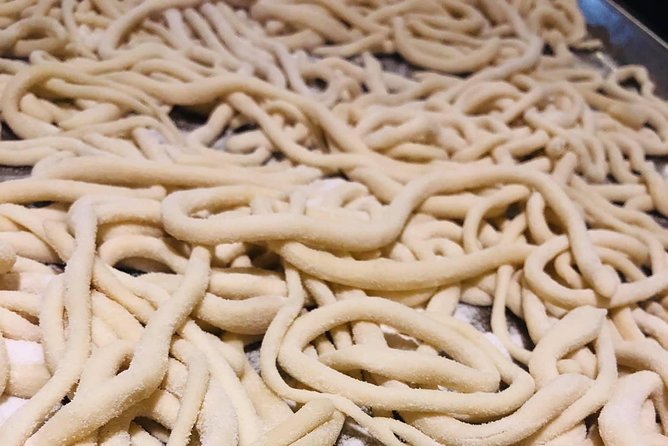
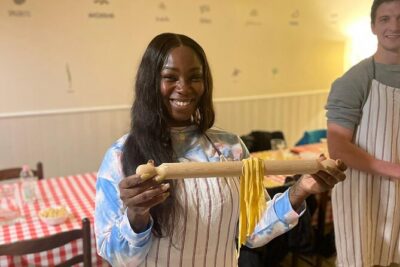
Pici is one of those dishes that looks simple but asks for good hands. You will shape the pasta into long, thick strands that hold sauce. The garlic sauce component is also straightforward in concept, but the balance is the key. You learn how the sauce clings and how garlic turns mellow instead of sharp when it is treated right.
Other Tuscany kitchens to cook a meal in
Ravioli
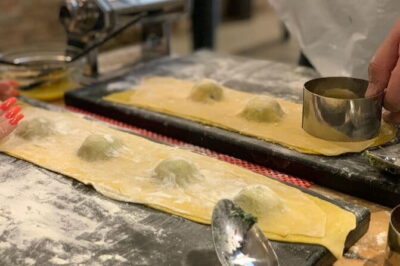
Ravioli gives you a different kind of pasta skill: portioning and sealing. The goal is to make pieces that cook evenly and stay intact. Even if your first round is not restaurant-perfect, you learn what to look for—edge control, thickness, and how the dough behaves once it is cooked.
In a lot of classes, ravioli becomes a lecture. Here, you get time to practice. That hands-on practice is what you will remember later when you cook for friends and actually need to shape something.
Seasonal starter dish
You will also prepare a typical seasonal dish. The exact dish is not listed in the details you provided, so I cannot tell you the specific ingredients in advance. But I can tell you why this part is smart. A seasonal starter shows the Tuscan idea that food should follow what is available, not just what is always on the shelf. Even without knowing the exact recipe ahead of time, you are learning the logic of the region’s kitchen.
Cantucci: the almond biscuit you will want to replicate
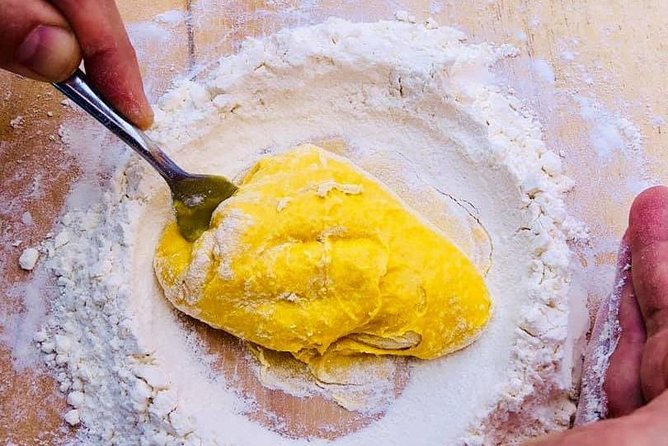
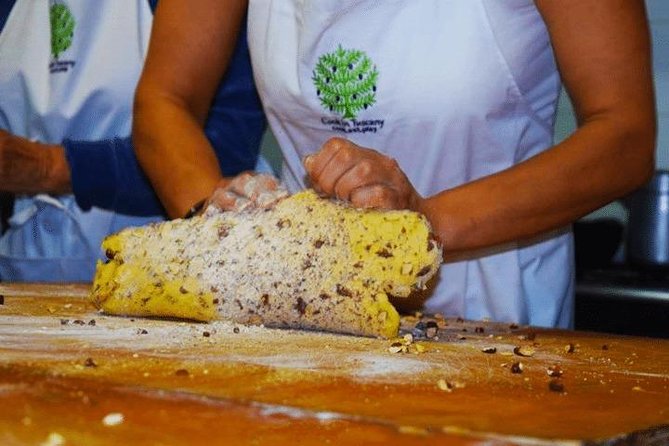
Cantucci is the sweet that gives this class a strong finish. These are typical Tuscan biscuits made with almonds, and the format is perfect for learning because biscuit dough gives clear feedback—firmness, shape, and the baking result.
Why this matters for you: once you learn cantucci, you have a dependable Tuscan-style bake that works for gifting, travel snacks, or hosting. It is also an easy win when you return home and want one “Tuscany” dish that does not require special equipment.
And since you taste at the end, you can calibrate your expectations. You learn what the texture should feel like, and that is much more useful than just being told it should be crunchy.
The tasting with the grandmothers and why it changes everything
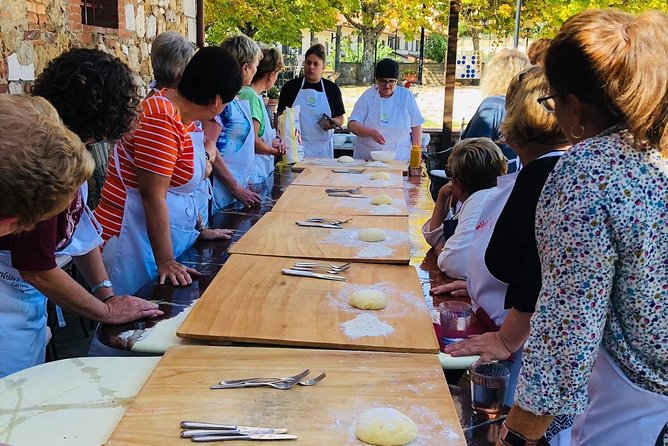
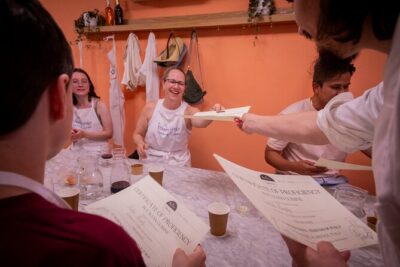
At the end, you eat a tasting of the preparations you made with the grandmothers. That line matters because it signals a cultural tone: this is about shared meals, not a quick buffet.
This is also where you find out if your garlic sauce and dough timing actually worked. Taste is the final teacher. It turns the morning mechanics—kneading, shaping, cooking—into a full sensory picture.
One detail from the experience’s feedback that I think is worth flagging: the class setting has included a cheese demonstration and tasting paired with wine, along with a property you can enjoy visually (flowers, vegetable areas, lemon trees). Even if you come for the pasta and cantucci, that kind of add-on fits the spirit of Tuscany: food comes in stages, and you learn by watching and tasting in a relaxed way.
Just keep your expectations realistic: you are doing several dishes in one session, so you should expect a focused, productive pace. The tasting is the reward, not a long sit-down dinner service.
English-led guidance and how small groups make a difference
The experience is offered in English, and the class size max is 15 travelers. That combo is a big deal for value.
If you have ever done a cooking class where everyone feels like they are in each other’s way, you know what that costs—confusion, spilled ingredients, and less time asking questions. A small cap helps you get answers when you need them. It also keeps your hands moving so you actually learn the techniques instead of waiting for the instructor to catch up.
Also, a key cultural detail: you are led by local women described as custodians of regional culinary traditions. That is not just a marketing line. In my experience, when the guide’s connection to the food is personal, the explanations land better. You end up understanding not only what to do, but why.
Price and value: is $192.66 per person fair?
At $192.66 per person, this is not a cheap “learn a recipe” workshop. But cooking classes in Tuscany tend to price based on ingredients, instruction, and how much time you get. Here, you get:
- about 2 hours of active instruction,
- multiple dishes (three pastas plus starter and cantucci),
- and a tasting at the end.
That makes the price easier to justify. You are not paying for a single recipe or a short demo. You are paying for a full mini-menu plus the chance to practice pasta-making techniques you could easily struggle with on your own.
I also think the small group size is part of the value equation. With a cap at 15, you get more attention and less “everyone watches, few cook.”
If you are the kind of traveler who likes experiences you can repeat—especially ones that become part of your home routine—this price can make sense. If you are mostly looking for scenery and a quick bite, you might find a lighter option more satisfying.
Practical tips to make your day smoother
A few things will help your cooking class feel effortless instead of stressful:
- Wear comfy shoes. You will likely stand and move while cooking, and you do not want stiff footwear slowing you down.
- Plan your transport. The rural location can mean a short drive up a hill, and it may be harder to find taxis at the last minute.
- Ask questions early. Since you have time working on dough, use the first lesson moments to clarify anything about technique.
- Expect hands-on mess. This is cooking, not a tasting tour where you watch from a safe distance.
If you want to get extra out of the day, go into it with curiosity rather than pressure. Your goal is not perfection. Your goal is understanding what makes Tuscan pasta and biscuits taste right.
Should you book this Tuscan cooking class?
I would book it if you want a real food day in Tuscany—one that teaches you how to make pasta by hand and ends with a meal you can actually evaluate. The combination of English instruction, a small group (max 15), and the full menu (pici, ravioli, seasonal starter, garlic sauce, and cantucci) makes it a solid value for people who care about technique.
I would think twice if:
- you need very flexible timing beyond the set 4-hour session,
- you do not plan transport for a rural meeting point,
- or you prefer sightseeing-heavy days over cooking-focused ones.
In other words: if you want a hands-on Tuscan meal you can recreate, this class is an excellent fit.
FAQ
Where is the cooking class meeting point?
The meeting point is Via della Madonnina, 88, 53049 Montefollonico SI, Italy.
How long is the Tuscan cooking class?
It lasts about 4 hours (approx.), with lessons lasting around 2 hours.
What do you learn to make during the class?
You prepare three typical Tuscan pastas, garlic sauce, a typical seasonal dish, and cantucci (almond biscuits), then you taste what you made.
Is the class offered in English?
Yes. The experience is offered in English.
How big is the group?
This activity has a maximum of 15 travelers.
What is the price per person?
The price is $192.66 per person.
Can service animals participate?
Yes, service animals are allowed.
More Kitchens to Try
- Traditional Farmhouse Cooking Experience in Lucca with Lunch or Dinner
★ 5.0 · 34 reviews - Private Home-Made Pasta Cooking Class in Pisa.
★ 5.0 · 8 reviews - Siena: Organic Cooking Class & Tastings
★ 5.0 · 6 reviews - Tuscany: Cake and Biscuit Cooking Class for Kids
★ 5.0 · 5 reviews - Cooking Class in a professional kitchen by a professional Chef
★ 5.0 · 4 reviews
More Tuscany Tours We Have Reviewed
- Canyon Zip Line
★ 5.0 · 225 reviews - Water Trekking Classic
★ 5.0 · 156 reviews - Full rafting
★ 5.0 · 134 reviews - Wine Tasting & Tuscany Countryside, San Gimignano & Volterra
★ 5.0 · 77 reviews - Visit to the Cellar with Wine & Food Tasting over the Val d’Orcia
★ 5.0 · 41 reviews
More Tuscany Cooking Classes
- Traditional Farmhouse Cooking Experience in Lucca with Lunch or Dinner
★ 5.0 · 34 reviews - Private Home-Made Pasta Cooking Class in Pisa.
★ 5.0 · 8 reviews - Siena: Organic Cooking Class & Tastings
★ 5.0 · 6 reviews - Tuscany: Cake and Biscuit Cooking Class for Kids
★ 5.0 · 5 reviews - Cooking Class in a professional kitchen by a professional Chef
★ 5.0 · 4 reviews
Fresh from our Tuscany review desk
- Dining experience at a local’s home in Massarosa with cooking demo★ 5.0 · 3 reviews
- Wine tasting and guided tour of the cellar★ 4.5 · 3 reviews
- Pisa and Wine Tasting in Tuscany from Livorno★ 5.0 · 3 reviews
- Exclusive Private Half Day Shore Excursion from Livorno port to Pisa★ 4.5 · 3 reviews
- Daily excursions and guaranteed fun in Argentario★ 5.0 · 3 reviews
- Horsemanship Experience★ 5.0 · 4 reviews
Florence Cooking Classes, compared.
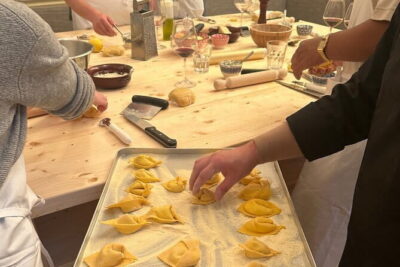 ★ 4.9Pasta Cooking Class with Unlimited WineFrom $2110,285 reviews
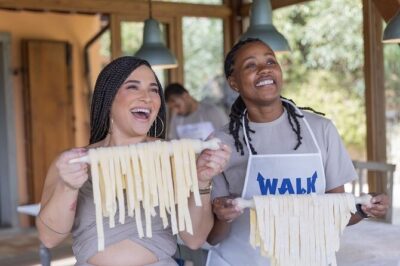 ★ 5.0Florence Pizza or Pasta Class with Gelato Making at a Tuscan FarmFrom $1456,801 reviews
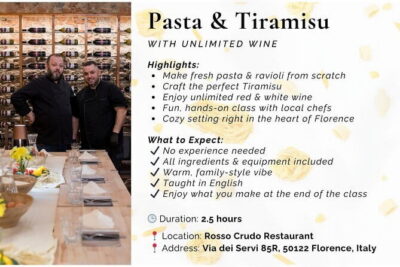 ★ 4.9Pasta & Tiramisu Cooking Class with Unlimited WineFrom $566,708 reviews
★ 5.0Pasta Cooking Class with Unlimited Wine6,413 reviews
★ 4.9Pasta & Tiramisu Cooking Class with Unlimited WineFrom $566,708 reviews
★ 5.0Pasta Cooking Class with Unlimited Wine6,413 reviews
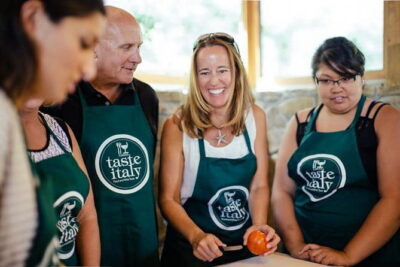 ★ 5.0Cooking Class and Lunch at a Tuscan Farmhouse with Local Market Tour from FlorenceFrom $1454,831 reviews
 ★ 5.0Pastamania – Florence Pasta Making ClassFrom $493,050 reviews
 ★ 5.0Cooking Class Pasta & Tiramisu Making Unlimited WineFrom $892,234 reviews
 ★ 5.0Florence Cooking Class The Art of Making Gelato & Authentic PizzaFrom $642,053 reviews
Browse the lists this tour appears in