
Florence in two hours needs a smart plan. This guided walk threads together the places that actually shaped the city: Santa Maria Novella, the Duomo complex, Piazza della Signoria, Ponte Vecchio, and Palazzo Pitti—plus a stop for artisan workshops and a traditional wine-window tasting.
I especially like the way the tour gives you the full story, not just postcard views. With a licensed guide—I’ve seen names like Giacinta and Renata pop up—you get clear explanations and the kind of street-level details that make the historic center feel less like a museum and more like a working city.
One consideration: it’s only 2 hours, so the pace is brisk and monument entrances aren’t included (you’ll admire many buildings from the outside). If you want to go inside churches or museums, you’ll need to plan and budget extra.
In This Review
- Key points before you go
- Why This Two-Hour Florence Walk Feels Like a Smart Shortcut
- Piazza Santa Maria Novella: Where the Renaissance Story Starts
- Artisan Workshops and the Wine Window in Florence
- Duomo Square: Santa Maria del Fiore, Bell Tower, Baptistery
- Piazza della Repubblica and Piazza della Signoria in One Line
- Ponte Vecchio to Palazzo Pitti: The Medici Route
- Value at $46: What’s Included and What to Budget
- Who This Tour Suits Best
- Book It or Skip It?
- FAQ
- How long is the Florence walking tour?
- What is the price per person?
- What’s included in the tour?
- Are monument entrance fees included?
- Is the wine tasting included?
- What languages are available for the live guide?
- Is the tour wheelchair accessible?
- Can I cancel for a full refund?
Key points before you go
- Licensed guide experience: a real pro leads the full route, with explanations in multiple languages.
- Artisan workshop stop: you get to see traditional craft in action, not just window shopping.
- Wine-window tasting: a small, historic-style tasting at a famous Florence “buchetta.”
- Best-of Florence route in a short time: Santa Maria Novella to the Duomo area to Signoria to Ponte Vecchio to Pitti.
- Wheelchair accessible: the tour is listed as wheelchair accessible.
- Private or small groups available: good if you want less crowd noise and more questions.
Stretch your legs on more Florence walking tours
Why This Two-Hour Florence Walk Feels Like a Smart Shortcut
If your Florence time is tight, this tour is built for that reality. You’ll cover the top landmarks most first-timers aim for, but the guide keeps linking them to the bigger story: how Florence’s power, religion, and wealth moved through squares, bridges, and palaces.
The route makes practical sense, too. Starting in Piazza Santa Maria Novella means you begin in one of the easiest places to orient yourself, then you work your way through the historic center in a logical flow. You’re not zigzagging across town trying to “fit in” the Duomo, Signoria, and Ponte Vecchio all in one day.
And yes, the standout value is that it’s not only monuments. The artisan workshops and the wine-window stop add texture—Florence as a place where craft and daily life still matter.
Piazza Santa Maria Novella: Where the Renaissance Story Starts
The tour begins at Piazza Santa Maria Novella, anchored by the basilica of the same name. This is a great start point because the square has that classic Florence mix: churches, elegant architecture, and everyday life right alongside historic walls.
The basilica façade is the first clue that Florence’s art wasn’t “stuck in the past.” Renaissance design sits beside older Gothic elements, and your guide helps you read what you’re seeing. Even if you’ve walked past Santa Maria Novella before, starting here with an explanation changes how you look at it.
A practical tip: since the meeting point can vary by option, confirm your exact location when you book. Once you’re there, you’ll find the square is straightforward to reach, and the atmosphere makes an easy warm-up before the taller, busier sights kick in.
Artisan Workshops and the Wine Window in Florence
After you’ve set the foundation at Santa Maria Novella, the tour makes a smart detour into the city’s maker side. You’ll visit artisan workshops where local craftspeople show how products are created using traditional methods. In the feedback I saw, people especially valued the live demonstration angle, because it turns “artisans in Florence” from a concept into something you can actually observe.
This stop is also a nice break from constant monument viewing. Florence can overload your eyes fast—marble, statues, frescoes everywhere. Watching hands at work gives you a calmer kind of attention.
Then comes the highlight that feels both old and playful: the wine window tasting. The tour includes time to discover one of Florence’s wine windows and taste local wine the way people did long ago through the little opening (often described as a buchetta). It’s a small moment, but it’s memorable because it connects wine, neighborhood life, and architecture in one go.
Also note what’s not included: food and drinks are not part of the overall price, so don’t expect a full meal. The wine tasting is included as a focused experience.
Duomo Square: Santa Maria del Fiore, Bell Tower, Baptistery
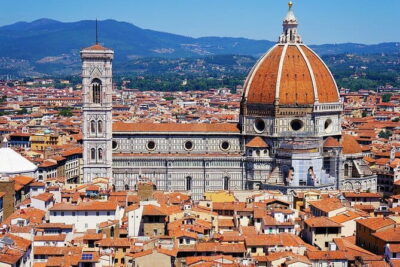
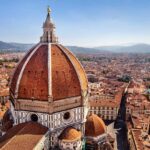
From here, you move toward the Piazza del Duomo area, where Florence’s visual identity gets turned up to maximum volume. You’ll be up close to the Cathedral of Santa Maria del Fiore—the big-name complex most visitors come for—plus the bell tower and the baptistery.
What I like about having a guide here is that it stops you from treating everything like a random list of famous works. Instead, you learn how the different pieces fit together across time. You’ll see Brunelleschi’s majestic dome and Giotto’s bell tower, then the Baptistery of San Giovanni comes into view as part of the same bigger religious and artistic ecosystem.
A good way to “use” this stop: spend your attention on proportions and shapes. The cathedral area is a masterclass in how builders and artists made ideas feel visible—so don’t only look straight at the dome. Tilt your gaze to the surrounding elements and let the guide’s explanations connect what you’re seeing.
And remember the practical limit: monument entrance fees are not included. That means you should go in expecting exterior-to-street-level viewing, with the Duomo complex providing the main drama.
Piazza della Repubblica and Piazza della Signoria in One Line
Next you’ll hit Piazza della Repubblica, an elegant square that sits on the bones of an ancient Roman forum. This is a spot where Florence layers eras on top of each other—Roman foundation, later Renaissance transformation, then the 19th-century look you see today. The guide helps you connect the change in architecture to the change in power and city life.
At the center is the Column of Abundance, a symbol of Florence’s economic and cultural vitality. Seeing it with context makes it more than a photo point; it becomes a clue to how Florentines thought about themselves.
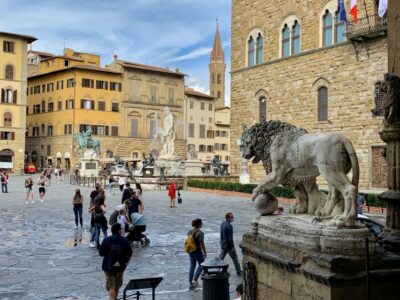
Then the tour moves to Piazza della Signoria, the political and symbolic heart of Florence. This is where the Medici era starts to feel less like textbook history and more like something you can walk through.
You’ll look toward Palazzo Vecchio, the Medici residence and the home of the priors. The square also features famous sculptural works in the Loggia dei Lanzi, including a copy of Michelangelo’s David and other major statuary (like Neptune and Perseus). Even from a distance, this is one of the most useful “art as power” lessons in the whole city. Florence didn’t just collect art—it used it.
With a local guide, more of Florence to explore
- The Best tour in Florence: Renaissance & Medici Tales – guided by a STORYTELLER
★ 5.0 · 12,316 reviews

Ponte Vecchio to Palazzo Pitti: The Medici Route
After the Signoria area, you’ll cross over toward Ponte Vecchio. This bridge is famous for two reasons: it’s iconic, and it has a story. It’s also described as the only one that survived World War II bombings, which helps you understand why it became a symbol of continuity.
Along the arches, you’ll see the historic goldsmiths’ shops. This isn’t just quaint—it ties back to Florence’s craft economy and the city’s reputation for precision work. Even if you don’t go into any shops, the bridge itself gives you a compact view of tradition.
From the bridge, your guide points out the Vasari Corridor, the elevated passage connecting Palazzo Vecchio to Palazzo Pitti. It was used by the Medici to move safely—one of those details that turns a pretty bridge into a “how people lived” story.
The tour ends at Palazzo Pitti. This is the Medici’s big-city statement: an imposing Renaissance residence that’s now home to museums and art collections. Even if you’re not entering, the square and the surrounding views work well as a wrap-up. You’ll also get a look toward the Boboli Gardens, which ties the palace to the idea of Florentine taste and curated outdoor space.
Value at $46: What’s Included and What to Budget
For $46 per person, you’re paying for more than a walking route. The price includes a licensed guide, about 2 hours of guided time, explanations in selectable languages, and the special add-ons: artisan workshops and the wine-window tasting.
Entrance fees and food aren’t included. That matters because the Duomo complex and the museum side of Palazzo Pitti can tempt you to buy tickets on the spot. If your priority is inside-the-building art and architecture, consider doing those with separate timed entries later. If your priority is seeing the main exterior masterpieces and learning how they connect, this tour is strong value for the time you spend.
Timing also helps with value. Two hours is long enough for real context, but short enough that you won’t lose an entire day to transit and queues. That’s useful if you’re planning to layer other neighborhoods afterward.
One small practical note: this is a walking tour, so wear shoes you can trust. Florence streets are not uniform and the center can be crowded at peak times.
Who This Tour Suits Best
This tour is a good fit if you want a “great hits” Florence overview with actual meaning behind it. I think it’s especially ideal for:
- First-time Florence visitors who don’t want to guess what matters.
- Travelers who enjoy craft and local traditions, not only big-name monuments.
- Families and couples who want a structured 2-hour plan that still leaves you time to wander on your own afterward.
It’s also a strong option if you like asking questions. With private or small groups available, you can often get more direct answers about what you’re seeing and why it was built the way it was.
If you’re someone who only wants maximum museum interior time, you may feel boxed in by the “look and learn” focus. In that case, pair this with at least one separate ticketed experience.
Book It or Skip It?
Book this tour if you want Florence in one efficient walk, with expert guidance and two stops that most monument-only tours skip: artisan workshops and the wine-window tasting. It’s the kind of tour that helps you remember what you saw because the guide connects the dots.
Consider skipping or swapping if you plan to spend your limited time hunting museum tickets and fully entering major sites. Since entrance fees are not included, you might spend more on top of the tour if your must-do list is “inside only.”
FAQ
How long is the Florence walking tour?
It lasts about 2 hours.
What is the price per person?
The price is $46 per person.
What’s included in the tour?
You get a licensed tour guide and about 2 hours walking. The experience also includes detailed explanations in a selectable language, plus stops for artisan workshops and time at a wine window for tasting wine.
Are monument entrance fees included?
No. Entrance fees to monuments are not included.
Is the wine tasting included?
Yes. The tour includes time to discover a wine window and taste excellent local wine.
What languages are available for the live guide?
The live guide is available in English, French, Italian, Spanish, and Arabic.
Is the tour wheelchair accessible?
Yes, it’s listed as wheelchair accessible.
Can I cancel for a full refund?
You can cancel up to 24 hours in advance for a full refund.
More Florence Walks
- Florence: Highlights Walking Tour with Expert Guide
★ 4.6 · 4,662 reviews - Uffizi & Accademia Timed Entry: Small Group Duomo Walking Tour
★ 4.5 · 3,630 reviews - Florence: Duomo Complex with Tickets & City Walk Guided Tour
★ 4.7 · 2,057 reviews - Florence: Guided Walking Tour
★ 4.6 · 1,602 reviews - Florence: Renaissance and Medici Tales Guided Walking Tour
★ 4.8 · 1,549 reviews
More Florence Tours to Weigh Up
- The Best tour in Florence: Renaissance & Medici Tales – guided by a STORYTELLER
★ 5.0 · 12,316 reviews - The Best Tour in Florence: Renaissance and Medici Tales
★ 5.0 · 10,810 reviews - Florence: Chianti Wineries Tour with Wine Tasting
★ 4.5 · 10,071 reviews - Florence: Duomo Cathedral 60-Minute Guided Tour
★ 3.7 · 6,829 reviews - Florence: Hop-on Hop-off Bus Tour: 24, 48 or 72-Hour Ticket
★ 4.0 · 6,283 reviews
More Florence Tours We Have Reviewed
- Florence: Skip-The-Line Uffizi Gallery Timed Entry Ticket
★ 4.5 · 27,832 reviews - Tuscany Day Trip from Florence: Siena, San Gimignano, Pisa and Lunch at a Winery
★ 5.0 · 21,634 reviews - Florence: Timed Entry to Michelangelo’s David + Audio App
★ 4.6 · 19,496 reviews - Florence: Leonardo Interactive Museum Entry Ticket
★ 4.5 · 12,957 reviews - Florence: Michelangelo’s David Skip-the-Line Entry Ticket
★ 4.5 · 12,764 reviews
Fresh from our Florence review desk
- Small-Group Pasta Cooking Class and Market Tour in Florence★ 5.0 · 3 reviews
- Palatina Gallery and Pitti Guided Tour in Florence★ 5.0 · 3 reviews
- Tuscan Evening Tour: Fiat 500, 8:30 to 10 PM★ 5.0 · 3 reviews
- Journey into Art: Florence’s Accademia★ 4.5 · 3 reviews
- Paint and Drink Florentine Hills★ 5.0 · 3 reviews
- Truffle hunting and lunch experience, with Vinci and winery.★ 4.5 · 3 reviews
Shopping Tours, compared.
 ★ 5.0Cooking Class and Lunch at a Tuscan Farmhouse with Local Market Tour from FlorenceFrom $1454,831 reviews
 ★ 5.0Small Group Cooking Class & Market Food Tour in FlorenceFrom $621,574 reviews
 ★ 5.0Pasta and Tiramisu Cooking Class with optional Local Market TourFrom $83515 reviews
 ★ 4.9Cooking Class with Local Food Market TourFrom $63407 reviews
 ★ 4.9Cooking Class at a Tuscan Farm & Local Market TourFrom $94354 reviews
 ★ 5.0Florence Central Market Food Tour with Eating EuropeFrom $113224 reviews
 ★ 5.0The Original Florence Street Food & Market Tour (by Streaty)From $101158 reviews
 ★ 4.5Florence Cooking Course with Historic Local Market VisitFrom $95151 reviews
Browse the lists this tour appears in