
Reviewed · MEDICI & RENAISSANCE TOURS
Florence Medici Bike Tour – Cycle Through History and Power
Two hours, and Florence feels bigger fast. This Medici-themed bike tour threads together the rise and fall of the family that shaped the city, while you glide between Renaissance landmarks on a real street ride. You’ll connect the dots between Medici power and standout sights like Ponte Vecchio without spending the whole day walking.
I especially like the Arno River cycling for those open-sky views and quick photo stops. And I love that the guide ties what you see to named figures—Cosimo the Elder, Lorenzo the Magnificent, and Cosimo I—so the trip feels like a story with momentum, not a list of monuments.
One thing to consider: the experience can feel a bit uneven if headset audio or guide pacing isn’t great on the day. It’s usually the kind of tour where communication matters, so plan to speak up early if you can’t hear clearly.
In This Review
- Key things to know before you go
- Why a Medici Bike Tour Works in Florence
- Getting Oriented: Meeting Point by Eataly and Starting with My Green Tour
- The Medici Story You’ll Be Hearing While You Ride
- Ponte Vecchio to Palazzo Pitti: Seeing the Power Centers Side by Side
- Ponte Vecchio: more than a postcard bridge
- Palazzo Pitti: where the story moves into residence-level power
- The Vasari Corridor connection: a “secret link” in plain sight
- Cruising Along the Arno River for Views You Can’t Get Standing Still
- Oltrarno District Stops: Santa Rosa and Santo Spirito Without the Tourist Trap Feel
- Standard Bikes vs E-Bikes: How to Pick the Right Ride in 2 Hours
- How It Really Feels: Pace, Headsets, and City Traffic Reality
- Value Check: What $32 Buys for a 2-Hour Guided Ride
- Who Should Book This Tour (and Who Might Skip It)
- Should You Book the Florence Medici Bike Tour?
- FAQ
- How long is the Florence Medici Bike Tour?
- Where do I meet the guide?
- What is included in the price?
- Is hotel pickup or drop-off included?
- What languages are available for the guide?
- What happens if it rains?
- Can I book a private group?
Key things to know before you go
- Medici dynasty narration: You’ll hear how Cosimo the Elder, Lorenzo the Magnificent, and Cosimo I connect to Florence’s political and artistic glow.
- Ponte Vecchio + Palazzo Pitti focus: These anchors help you understand Medici influence in the city center.
- Vasari Corridor mentioned on the route: You’ll see what’s referred to as the secret link between Palazzo Vecchio and Palazzo Pitti.
- Arno River views while you ride: Expect scenic stretches that make the bike feel like the right tool for Florence.
- Oltrarno neighborhood walking-through vibes: You’ll pass through areas associated with Santa Rosa and Santo Spirito, known for traditional Tuscan food and artisan workshops.
- Rain plan is real: If the weather turns, the tour becomes a walking tour for security.
Deeper into Medici Florence and its Renaissance
Why a Medici Bike Tour Works in Florence
Florence is compact, but it’s not small. Roads tighten up, pedestrians multiply, and “let’s just see one more thing” can become “we’re stuck in a slow shuffle.” That’s exactly where a bike tour earns its keep. In two hours, you get a meaningful slice of the city—moving efficiently, but still stopping to look and listen.
What I like most is the angle: this isn’t just a sightseeing loop. It’s built around the Medici dynasty—power, art, and politics—so the route feels purposeful. You’ll be reminded that Florence wasn’t only about paintings in museums. It was about families making decisions that shaped streets, palaces, and the way the city presented itself.
And because you’re riding rather than only walking, you can actually enjoy the in-between moments: the turns, the bridge sightlines, and those brief stretches when the city opens up toward the Arno.
Getting Oriented: Meeting Point by Eataly and Starting with My Green Tour
You’ll check in at the Tourist Point in front of Eataly bar. That’s a big practical win: Florence has lots of meeting spots, and this one is easy to find if you arrive a few minutes early.
The experience also uses a base starting point at Via de’ Martelli, 33R (My Green Tour). So if you’re the type who likes to confirm logistics in your head—bike check, guide greeting, then you’re rolling—this setup tends to reduce stress.
No hotel pickup or drop-off is included, so plan to get yourself to the meeting point on your own. For most people, that’s fine. Florence center is walkable, but it can be slow in peak hours, so leaving yourself a buffer helps.
The Medici Story You’ll Be Hearing While You Ride
This tour is built as a guided narrative of Medici influence in Florence, and it names the big players for a reason. When the guide points out a palace connection or a political turning point, you’re not just seeing a building—you’re getting the “why.”
Here’s what that storyline covers: you’ll learn about Cosimo the Elder, Lorenzo the Magnificent, and Cosimo I. That matters because the Medici story changes as the family’s power consolidates and then evolves. The tour is designed so the stops feel connected to that arc.
You should expect the guide to connect the dots between civic power and physical landmarks. In Florence, so many structures were built (or promoted) to project status. When you understand who was driving the policy and patronage, your eyes start picking up details you’d otherwise gloss over—especially around the places tied to the Medici’s “day-to-day” world.
Ponte Vecchio to Palazzo Pitti: Seeing the Power Centers Side by Side
Two names tend to anchor the imagination in Florence: Ponte Vecchio and Palazzo Pitti. On this tour, they’re not just photo targets—they work as story anchors.
Ponte Vecchio: more than a postcard bridge
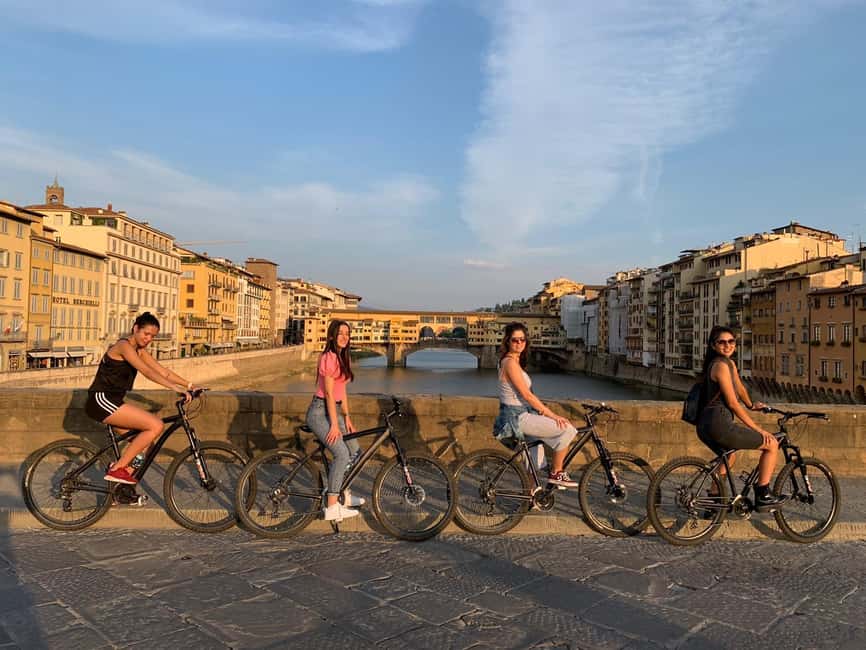
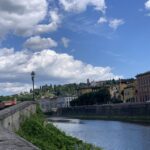
You’ll ride past Ponte Vecchio and hear it positioned within the Medici-era context. Even if you’ve seen photos before, the vibe is different when you approach by bike—slower than driving, faster than walking, and you get time to look at how the bridge and surrounding streets function.
A practical tip: bring your attention to the edges and angles. From the bike, you’ll often catch sightlines that feel less staged than “look at the bridge and move on.” It’s one of those moments where slowing your breathing helps you notice details.
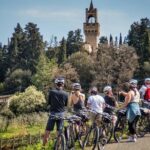
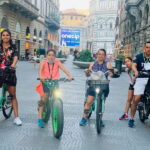
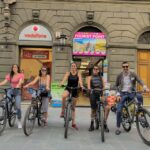
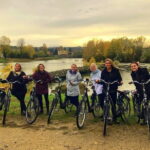
Pedal on: other Florence bike and e-bike routes
Palazzo Pitti: where the story moves into residence-level power
Palazzo Pitti is another key stop. It’s the kind of place that makes you feel like Florence has always been about big decisions in impressive rooms.
On this tour, the guide uses Palazzo Pitti as part of the Medici narrative, so you’re less likely to treat it as just a big building. You’ll also hear about a famous connection tied to power movement across the city: the Vasari Corridor.
The Vasari Corridor connection: a “secret link” in plain sight
You may not walk inside the corridor (nothing in your tour details promises interior access), but you will hear about it as the link between Palazzo Vecchio and Palazzo Pitti—often described as a secret connection.
Why that matters for your understanding: it reframes the city. Florence isn’t only a place where people walked to markets and churches. It was also a place where elite life required controlled movement, privacy, and security—especially for a family with real influence.
Cruising Along the Arno River for Views You Can’t Get Standing Still
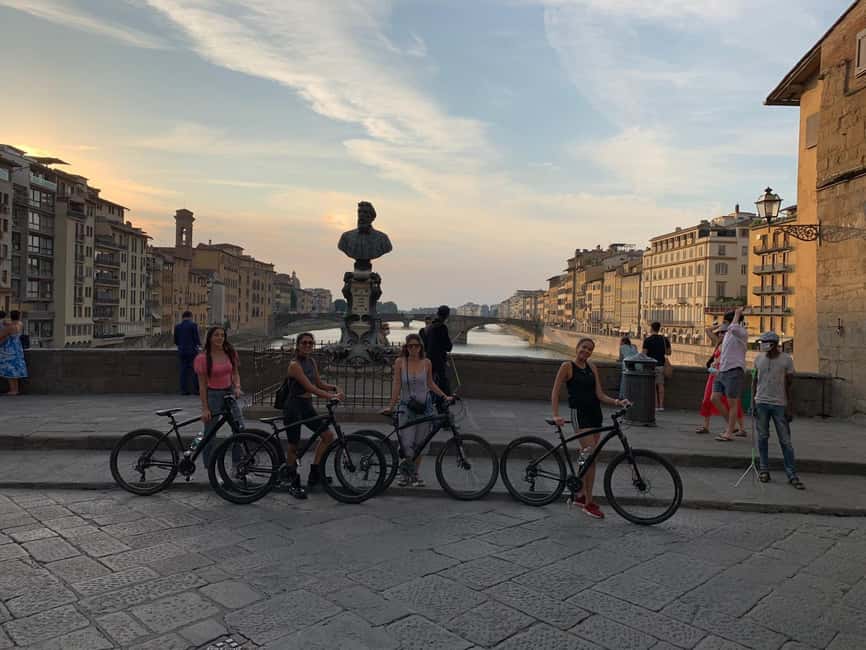
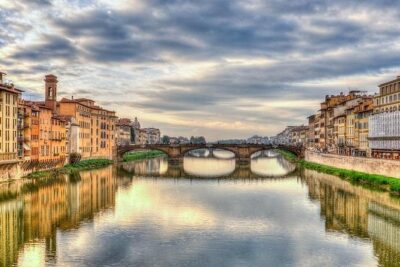
One of the best parts of this style of tour is that the route includes scenic cycling along the Arno River. This is where the bike stops being a vehicle and turns into the experience.
Along the river, you get a different rhythm. Streets that feel tight elsewhere often open up. You also get that “I can see farther” feeling—perfect for orientation in a city where everything is layered.
I like that the bike gives you a smoother way to experience Florence’s geometry. Instead of stopping every few steps, you maintain momentum, then pause when it matters—bridge sightlines, waterfront perspectives, and those stretches where the city looks almost cinematic.
If you’re someone who usually moves too fast through museums and too slow through streets, this is a rare middle ground: enough motion to enjoy the city, enough control to actually look.
Oltrarno District Stops: Santa Rosa and Santo Spirito Without the Tourist Trap Feel
A big part of why this tour feels more “Florence” than “generic Italy” is that it moves into the Oltrarno side of town. That area tends to feel different from the postcard core—more local daily life energy, plus lots of workshops and neighborhood food culture.
You’ll pass through areas associated with Santa Rosa and Santo Spirito, both connected to traditional Tuscan food and artisan workshops. Even if you don’t stop for a meal during the tour (food and drinks aren’t included), simply riding through those streets helps you understand why people talk about Oltrarno as a slower, more human layer of Florence.
Practical advice: if you’re hungry later, you’ll know where to aim. This tour can be a map of where you want your next hour to go—especially after the big sights settle into your memory.
Standard Bikes vs E-Bikes: How to Pick the Right Ride in 2 Hours
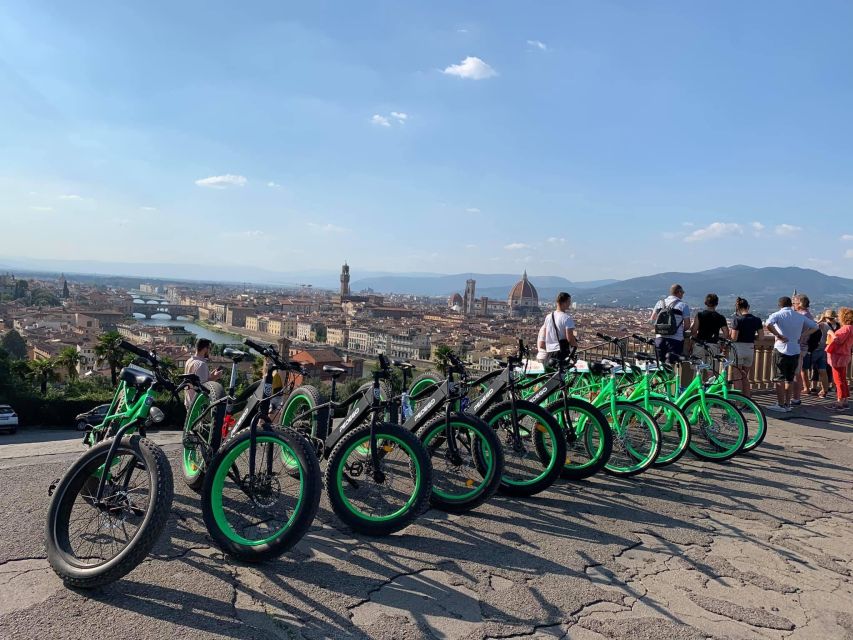
Your tour offers standard or e-bike options. For a two-hour city tour, that choice is less about “comfort” in a vague way and more about what kind of experience you want.
- If you choose a standard bike, you’ll likely enjoy a more classic feel and slightly more physical involvement. It’s a good fit if you’re comfortable with urban riding and short climbs or uneven surfaces.
- If you choose an e-bike, you’ll keep the energy for looking and listening rather than managing effort. That’s especially helpful in a city where the route can include various street conditions.
Either way, the goal is a relaxed Florence ride. The bike is included, so you’re not forced into last-minute rentals or juggling gear. Just make your choice based on how much you want your body to participate.
How It Really Feels: Pace, Headsets, and City Traffic Reality
A bike tour can be magical—or frustrating—depending on the day’s setup. The good news is that the basic concept is solid: you move faster than you would on foot, and you still get guided interpretation.
The mixed news comes down to two factors you should keep an eye on:
- Headset sound quality can affect how much you actually absorb. If the audio is weak or inconsistent, you’ll lose parts of the Medici story.
- Time spent in city traffic and stops can shape the pacing. Some people find that the ride holds steady; others want more info and less waiting.
My practical workaround: get focused early. At the start, confirm you can hear the guide clearly through the headset. If you can’t, tell the staff right away. Don’t wait until you’re halfway through.
Also, be mentally flexible about the flow. Florence streets can be unpredictable. When the group has to slow down or pause, treat it as your chance to look outward—then re-tune for listening when motion resumes.
Value Check: What $32 Buys for a 2-Hour Guided Ride
At $32 per person for 2 hours, this tour is priced like a practical city add-on, not a big splurge. The biggest reason it can feel like good value: it includes the bike and a guided experience for the whole duration.
Here’s how I think about value in a city like Florence:
- If you had to rent a bike and then figure out your own route, you’d be spending time and energy you could use to actually enjoy the sights.
- If you only did walking tours, you’d cover less ground in two hours. You’d also have more time spent navigating crowds rather than seeing the city from a moving perspective.
So the question isn’t only the price tag. It’s what you’re buying with that price: time, interpretation, and a mode of transport that fits Florence’s tight geometry.
You’re also getting a defined theme—Medici power—rather than a general highlights crawl. That theme helps your brain hold onto what you saw, which makes the experience feel more memorable later.
Who Should Book This Tour (and Who Might Skip It)
This is a strong fit if you:
- Want a quick, efficient way to see a lot in a short window
- Like guided storytelling tied to named figures and major landmarks
- Enjoy cycling past major sites like Ponte Vecchio, plus scenic stretches like the Arno River
- Prefer a route that includes a more local-feeling Florence layer like Oltrarno
It may be less ideal if you:
- Are very sensitive to audio clarity or need a quiet, interruption-free experience
- Expect the guide to speak at the same volume and tempo throughout without any hiccups (city riding sometimes forces changes)
If you’re the type who wants maximum time inside key museums, a bike tour like this is probably not your only plan. But as a high-impact primer to Florence—this works nicely.
Should You Book the Florence Medici Bike Tour?
If your goal is to get a Medici-shaped understanding of Florence in two hours, I’d seriously consider booking. The theme gives the route meaning, and the bike gives you the kind of movement that walking tours often can’t manage.
I’d book especially if you want:
- landmark highlights plus an “in-between” neighborhood layer
- a way to experience the Arno River from street level
- a guided story that connects Cosimo the Elder, Lorenzo the Magnificent, and Cosimo I to what you’re seeing
Before you go, keep two expectations realistic: city traffic and headset clarity can vary day to day. If you address headset sound at the start and stay flexible with pacing, you’ll likely come away feeling you used your time well.
FAQ
How long is the Florence Medici Bike Tour?
The guided tour lasts 2 hours.
Where do I meet the guide?
You check in at the Tourist Point in front of the Eataly bar.
What is included in the price?
The bike and the 2-hour guided tour are included.
Is hotel pickup or drop-off included?
No, hotel pickup and drop-off are not included.
What languages are available for the guide?
The tour guide is available in English, French, Italian, Spanish, German, and Russian.
What happens if it rains?
If rain makes it necessary for security reasons, the tour becomes a walking tour.
Can I book a private group?
Yes, a private group option is available.
If you want, tell me your travel month and whether you prefer a standard bike or an e-bike, and I’ll help you decide if this tour matches your pace and sightseeing style.
More Florence Tours We Have Reviewed
- Florence: Skip-The-Line Uffizi Gallery Timed Entry Ticket
★ 4.5 · 27,832 reviews - Tuscany Day Trip from Florence: Siena, San Gimignano, Pisa and Lunch at a Winery
★ 5.0 · 21,634 reviews - Florence: Timed Entry to Michelangelo’s David + Audio App
★ 4.6 · 19,496 reviews - Florence: Leonardo Interactive Museum Entry Ticket
★ 4.5 · 12,957 reviews - Florence: Michelangelo’s David Skip-the-Line Entry Ticket
★ 4.5 · 12,764 reviews
More Florence on Two Wheels
- Tuscany Bike Tours Through the Chianti Hills with Wine Tasting
★ 5.0 · 1,300 reviews - Florence: Guided E-Bike Tour to Piazzale Michelangelo
★ 4.4 · 1,204 reviews - Florence: 2-Hour Guided Sightseeing Bike Tour
★ 4.5 · 1,004 reviews - Private Self-Guided E-Bike Ride in Tuscany with Vineyard Visit
★ 5.0 · 775 reviews - Florence: 2-Hour Guided Bike Tour
★ 4.7 · 646 reviews
The Medici Story Continues
- The Best tour in Florence: Renaissance & Medici Tales – guided by a STORYTELLER
★ 5.0 · 12,316 reviews - The Best Tour in Florence: Renaissance and Medici Tales
★ 5.0 · 10,810 reviews - Uffizi Gallery: Renaissance Masterpieces Guided Tour
★ 4.6 · 6,070 reviews - Florence: Renaissance and Medici Tales Guided Walking Tour
★ 4.8 · 1,549 reviews - Guided Medici Tour Florence: Discover Mysteries & History
★ 4.3 · 1,077 reviews
Fresh from our Florence review desk
- Small-Group Pasta Cooking Class and Market Tour in Florence★ 5.0 · 3 reviews
- Palatina Gallery and Pitti Guided Tour in Florence★ 5.0 · 3 reviews
- Tuscan Evening Tour: Fiat 500, 8:30 to 10 PM★ 5.0 · 3 reviews
- Journey into Art: Florence’s Accademia★ 4.5 · 3 reviews
- Paint and Drink Florentine Hills★ 5.0 · 3 reviews
- Truffle hunting and lunch experience, with Vinci and winery.★ 4.5 · 3 reviews
Medici & Renaissance Tours, compared.
 ★ 5.0The Best tour in Florence: Renaissance & Medici Tales – guided by a STORYTELLERFrom $312,316 reviews
 ★ 5.0The Best Tour in Florence: Renaissance and Medici TalesFrom $310,810 reviews
 ★ 4.6Uffizi Gallery: Renaissance Masterpieces Guided TourFrom $886,070 reviews
 ★ 4.8Renaissance and Medici Tales Guided Walking TourFrom $21,549 reviews
 ★ 4.3Guided Medici Tour Florence: Discover Mysteries & HistoryFrom $571,077 reviews
 ★ 4.0Accademia Gallery: Michelangelo’s David and High Renaissance ArtFrom $43872 reviews
 ★ 4.7Guided Tour of Medici Family Secrets and ChapelsFrom $93512 reviews
 ★ 5.0Florence Private Tour: Renaissance, Famous Families & Hidden GemsFrom $199233 reviews
Browse the lists this tour appears in