
Reviewed · LEONARDO DA VINCI MUSEUM TICKETS
Florence Unveiled: The Rivalry of Leonardo and Michelangelo
Florence gets competitive when art is the prize. This walking tour strings together major Florence landmarks with one big idea: the Leonardo vs Michelangelo rivalry, explained in human terms, not museum-wall jargon. You also get a stop focused on Michelangelo’s wooden crucifix, the Crocifisso ligneo, plus anecdotes that connect Renaissance art to real street-level Florence.
I especially like the story-first pacing with frequent breaks for photos and the guide’s focus on how Florence worked—Medici money, politics, and patronage. I also like the “go where locals actually eat and drink” angle via Antonio’s secret diary. One consideration: it’s a 3-hour walk, so if you’re not great on cobblestones or you hate sun, plan smart with comfy shoes and water.
In This Review
- Key highlights to look forward to
- Leonardo vs Michelangelo on foot: why this tour format works
- Neptune Fountain to Piazza della Signoria: your first Medici power lesson
- The practical takeaway
- Piazza della Signoria to the Uffizi zone: politics, David replicas, and competing commissions
- A possible drawback to know about
- Ponte Vecchio to Oltrarno: stepping from bank money to jewelry-lined history
- Why this stop is valuable
- Piazza della Repubblica and the Duomo complex: where architecture explains Renaissance ambition
- What I’d watch for
- Santa Trinita to Santo Spirito: the Michelangelo chapter you don’t usually hear
- Why this matters for your understanding
- Basilica di Santo Spirito and the Crocifisso ligneo: a compact ending with real weight
- Food, drinks, and Antonio’s secret diary after the tour
- How to use it well
- Optional upgrades: Medici Chapel and Leonardo’s interactive museum
- A fair value note
- Price and what you’re really getting for $53
- Who this tour suits best (and who should skip it)
- Practical tips for a smooth 3-hour Florence walk
- Should you book Florence Unveiled?
- FAQ
- Where does the tour start?
- How long is the Florence Unveiled tour?
- How much does the tour cost?
- Is the tour guided in English?
- What’s included in the price?
- Are there optional add-ons?
- What should I bring for the day?
- Is it suitable for young children?
- Can I cancel for a full refund?
Key highlights to look forward to
- Antonio’s story style: Renaissance Florence comes with street-level detail, not just dates.
- Medici power made visual: You’ll see how their banking and patronage shaped art.
- Rivalry explained at the right stops: Leonardo and Michelangelo’s competing commissions are tied to places you can actually stand in.
- Off-the-beaten-path routing: The route is designed to avoid the most obvious tourist traps.
- Santo Spirito finale and the Crocifisso ligneo: A contemplative, specific Michelangelo moment that’s easy to remember.
- Food and drink support: You get included refreshment time plus practical recommendations after.
More Leonardo in Florence, if the machines drew you in
Leonardo vs Michelangelo on foot: why this tour format works
Florence can feel like an art-history homework assignment if you let it. This tour keeps it moving with one thread you can follow: who wanted what, who funded it, and why it pushed artists to new extremes. That makes the big masterpieces easier to understand because you’re learning the “why” alongside the “what.”
What helps is that the rivalry isn’t treated like a cool trivia fact. It’s linked to the city’s power structure—especially the Medici family—so the conflict becomes part of everyday Florence life: contracts, commissions, and prestige. And because it’s walking rather than sitting, the route helps your brain build a mental map fast.
Neptune Fountain to Piazza della Signoria: your first Medici power lesson
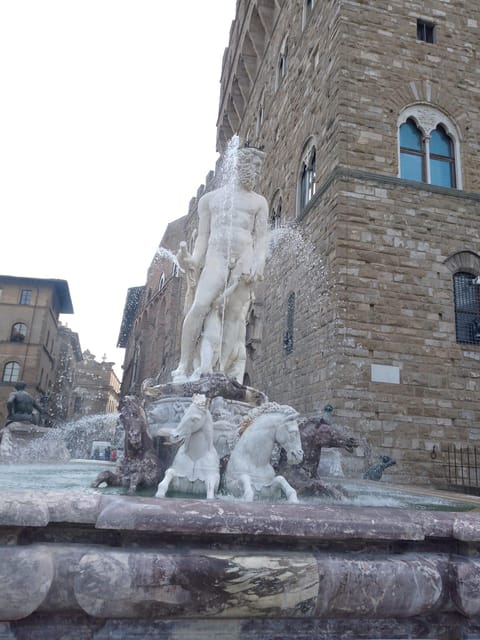
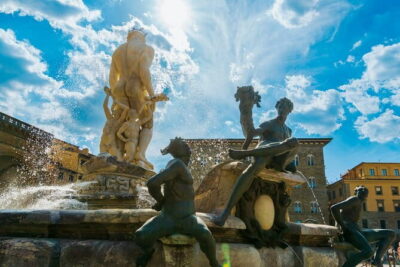
You start at the Fountain of Neptune, right by Piazza della Signoria. That spot matters because it’s essentially a public stage for Florence. From here, you’re positioned to connect civic power with art—exactly what the Medici used to do when they helped steer the Renaissance.
From Piazza della Signoria, the tour guides you through the space the city used for political drama for centuries. You get a photo stop and guided time right in the square’s thick of it, with key landmarks used as visual anchors. If you’ve only ever seen Florence from postcards, this is where you start seeing the city’s organization: who held power, where it happened, and how sculpture filled the public square.
The practical takeaway
If you’re trying to get your bearings on a first Florence day, this is a solid place to start. You’ll leave with a working mental layout that makes later visits much easier.
Piazza della Signoria to the Uffizi zone: politics, David replicas, and competing commissions
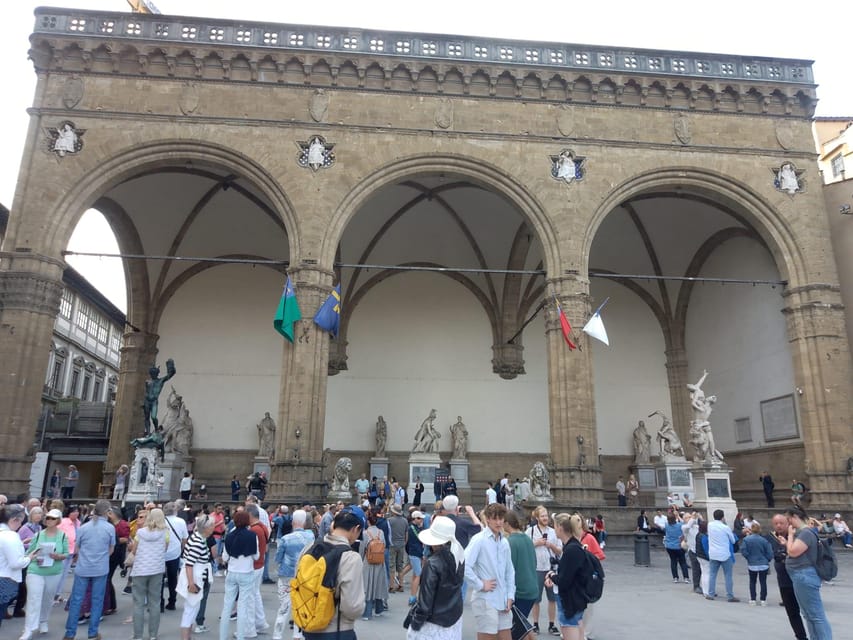
Piazza della Signoria is one of those squares that feels like an open-air museum, but the point here is how it relates to the rivalry. You’ll see the Palazzo Vecchio, historically tied to Medici power, and you’ll also meet a striking reminder that Michelangelo’s fame is still part of Florence’s public identity—a replica of Michelangelo’s David.
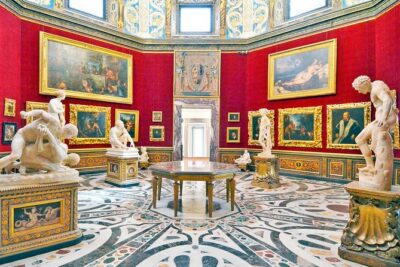
Just steps away, the Uffizi Gallery enters the story. The tour frames the Uffizi as part of the Medici legacy of collecting and commissioning. You’ll connect the idea of patronage to the works you associate with these artists, including names like Leonardo da Vinci and Michelangelo.
The big plot point is the rivalry itself—especially the idea of competing commissions for the Palazzo Vecchio, where Leonardo and Michelangelo created fresco plans that remained unfinished. That detail is important because it explains why the story feels unfinished too: the artists were driven, but circumstances and outcomes weren’t always tidy.
A possible drawback to know about
This part of Florence can get crowded. The tour’s pacing and breaks help, but you should still expect a bit of shoulder-to-shoulder energy near the major square-and-museum clusters.
- The Best tour in Florence: Renaissance & Medici Tales – guided by a STORYTELLER
★ 5.0 · 12,316 reviews



Ponte Vecchio to Oltrarno: stepping from bank money to jewelry-lined history
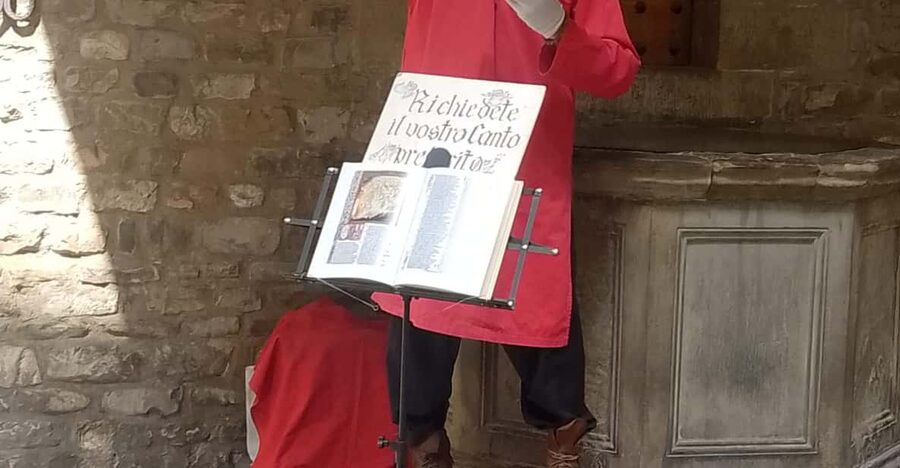
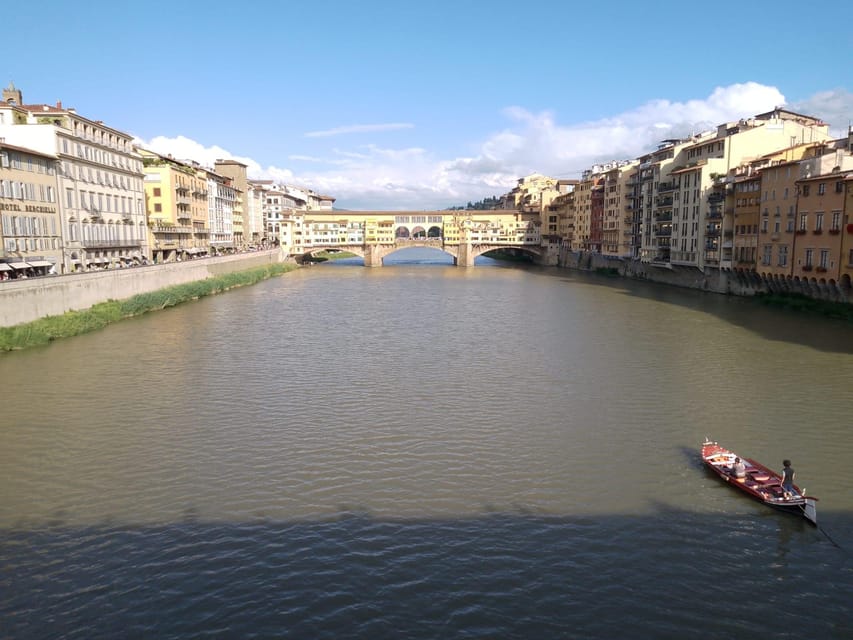
Then you cross Ponte Vecchio, Florence’s oldest bridge, famous for its long-standing jewelry shops. It’s easy to treat Ponte Vecchio as just a photo stop. This tour helps you see it as a historical corridor—another way the Medici era echo survives in a place people still use.
After the bridge, you move into the Oltrarno district, where the “Florence mood” can feel a little different. The tour works this shift intentionally, leading you toward Pitti Palace, a former Medici residence that showcases centuries of art and royal life. Even if you don’t treat Pitti as your main museum stop on this day, its scale and setting make it a strong context piece: this is where patronage becomes living comfort and power.
Why this stop is valuable
The rivalry story starts in the political center of the city, then you get a sense of how that power played out across Florence—literally across bridges and through different neighborhoods.
Piazza della Repubblica and the Duomo complex: where architecture explains Renaissance ambition
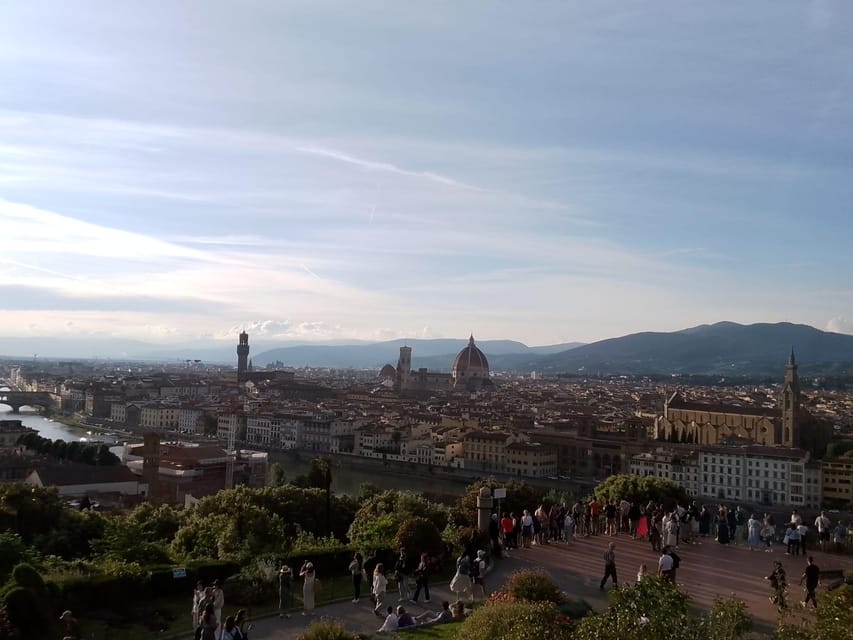
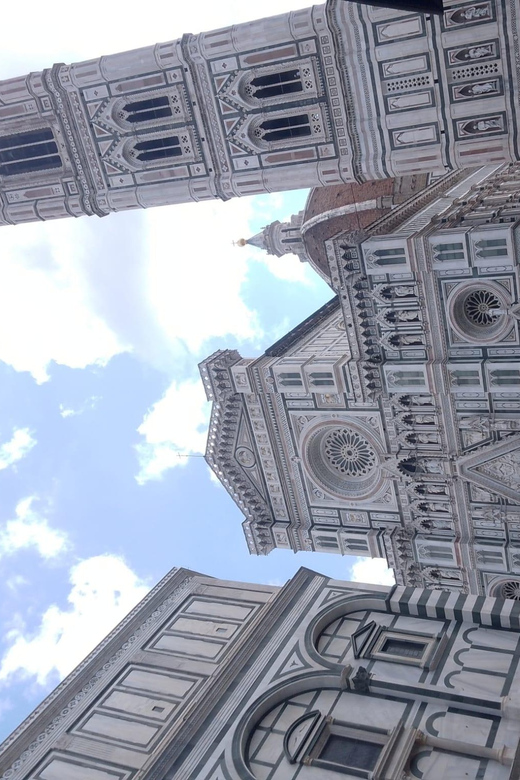
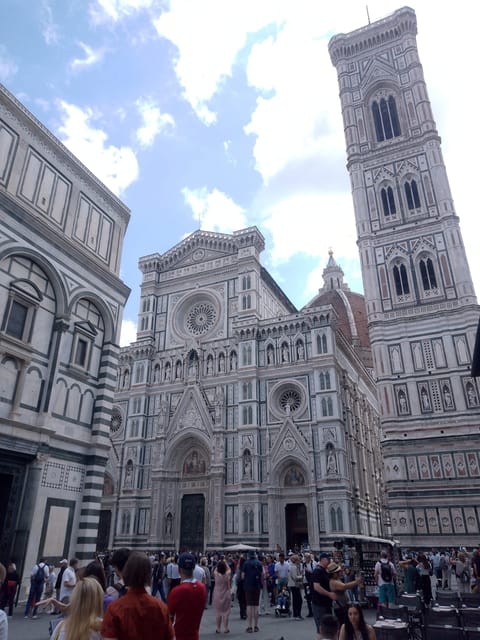
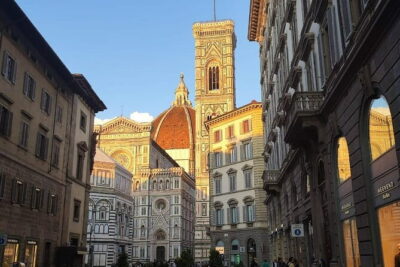
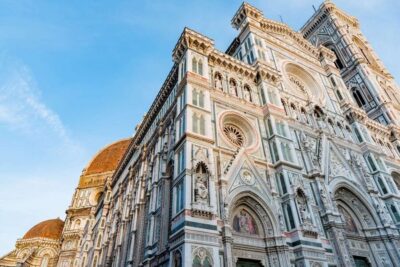
Next comes a cluster centered on Florence’s most iconic religious architecture. You’ll stop around Piazza della Repubblica and then move to the Cathedral area, where the main focus is Santa Maria del Fiore.
The tour highlights Brunelleschi’s revolutionary dome and gives you guided time around the Cathedral complex. Even if you’ve seen pictures, it helps to stand close enough to feel the dome’s impact in real scale. Florence didn’t just build art; it solved engineering problems with style. Brunelleschi’s dome becomes the symbol of that shift.
You then also get time at Giotto’s Bell Tower. This is the “vertical rhythm” part of Florence. The tower helps you read the skyline in a way that makes the whole city feel planned rather than random.
What I’d watch for
This segment can involve more standing and looking upward. If you’re prone to neck strain, take advantage of the tour’s planned breaks. Also, wear shoes that handle uneven stone without complaint.
Santa Trinita to Santo Spirito: the Michelangelo chapter you don’t usually hear
By the time you reach Piazza Santa Trinita and then Santo Spirito, the tour shifts tone in a good way. Instead of focusing only on fame and famous objects, it focuses on how Michelangelo became Michelangelo.
The key idea here is his early genius after the death of his patron Lorenzo de’ Medici. The tour explains that Michelangelo lived at the monastery around 1492, and that the monks let him study corpses from a hospital. That access to rare anatomical insight is what shaped the lifelike, emotionally charged quality we associate with his later sculptures.
And Santo Spirito isn’t presented as a generic church stop. It’s framed as a specific stepping stone in his development, which makes the architecture feel secondary—in a helpful way.
Why this matters for your understanding
When you connect art to the tools and access behind it, Michelangelo’s style stops being a miracle and starts being a result of work, observation, and patient study.
Basilica di Santo Spirito and the Crocifisso ligneo: a compact ending with real weight
The emotional payoff of this tour is the Michelangelo wooden crucifix inside the church: the Crocifisso ligneo. The tour points out that it’s carved by Michelangelo at just 17, which changes how you look at it immediately.
Even if it’s not the loudest artwork name in Florence, the “at 17” detail makes it feel more human. The tour also connects it to what Michelangelo was learning early on:
- early grasp of anatomy and proportion
- spiritual depth and sensitivity
- a bridge between medieval and Renaissance thinking
That combination makes the finale feel like a quiet conclusion rather than a rushed photo scramble. It’s the sort of thing you remember on the walk back to your hotel, not just after you scroll your camera roll.
Food, drinks, and Antonio’s secret diary after the tour
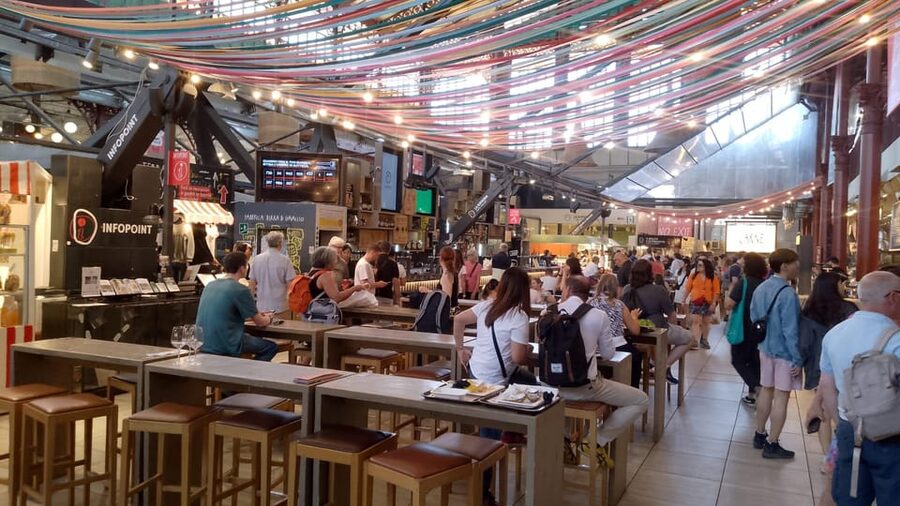
This tour includes food and drinks, plus photo breaks that keep it from turning into a nonstop lecture. That’s practical in a city where “I’ll grab lunch later” can turn into long lines and pricey decisions.
The bigger bonus is Antonio’s secret diary—positioned as a list of Florence’s top spots for food, music, museums, gardens, and wine tasting. Even though you won’t necessarily hit every location in one day, this is the kind of reference that helps you plan the rest of your trip without guessing. It’s also a smart antidote to spending your first days circling the same tourist magnets.
How to use it well
Treat it like a menu of options. Pick one food stop for the next day and one for your final day. That way you avoid the common problem of wandering hungry with no plan.
Optional upgrades: Medici Chapel and Leonardo’s interactive museum
Two add-ons are available if you want to extend the Florence art story beyond the walking route:
- Medici Chapel (additional cost, book online)
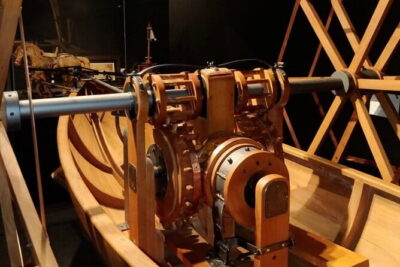
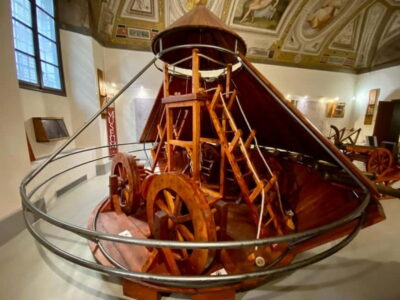
- Leonardo’s interactive museum (additional cost, book online)
These are not mandatory for the core tour experience. But if you’re the type who wants more time with the Medici narrative or more Leonardo-focused material, they can help balance the day.
A fair value note
Because the core tour already includes a strong Michelangelo-centered finale, I’d only add Leonardo’s interactive museum if Leonardo is genuinely your favorite artist or if you’re comparing how both men approached the same Florence commissions and patronage pressures.
Price and what you’re really getting for $53
At $53 per person for a 3-hour guided walk, you’re paying for three things that are hard to replicate alone:
- A coherent storyline through the Medici era and the rivalry angle.
- Local routing choices, including off-the-beaten-path movement that helps you avoid the most annoying tourist-trap rhythms.
- Interpretation, especially at Santo Spirito, where the tour connects anatomy access to Michelangelo’s later lifelike work.
Food and drinks being included is a big practical win. It reduces decision fatigue mid-day. And the frequent picture breaks mean you’re not stuck in that painful cycle of rushing between landmarks while everyone else tries to guess the best angle.
In other words: the value isn’t just the sites—it’s the editing of those sites into a story you can remember.
Who this tour suits best (and who should skip it)
This is a strong fit if you want:
- a guided narrative that links art to patronage and power
- a walking day that mixes landmark scale with human details
- Michelangelo-focused context that goes beyond famous masterpieces
- practical suggestions for where to eat and drink after
It may be less ideal if:
- you need a fully seated experience (you’ll be walking)
- you dislike churches or prefer only high-ticket museum interiors
- your group has very low tolerance for standing and uneven surfaces
Also note the age guidance: it’s not suitable for children under 2 years, and babies under 1 year aren’t suitable.
Practical tips for a smooth 3-hour Florence walk
Florence in warm weather is no joke. The tour specifically recommends a hat and carrying at least 500 ml of water to beat the scorching summer. I’d treat that as essential, not optional.
Other practical basics:
- wear comfortable shoes (cobblestones are real)
- wear clothes you can move in for a walking-heavy schedule
- plan your expectations around a small group vibe and breaks, not a marathon pace
Should you book Florence Unveiled?
Yes—if you want a Florence day that feels like a story, not a checklist. This route is built around the rivalry between Leonardo da Vinci and Michelangelo, but it also explains how the Medici family’s influence shaped what art became in the city. The Santo Spirito finale, with the Crocifisso ligneo and the 17-year-old Michelangelo context, is the kind of moment that can stick with you long after the photos fade.
If you’re only chasing the biggest museum highlights and hate walking, you might feel like this is more “interpretive walking tour” than “museum day.” But for most first-time Florence visitors, it’s a smart start: it gives you context, direction, and useful next steps.
FAQ
Where does the tour start?
The tour meets at the Fountain of Neptune, just beside Palazzo Vecchio in Piazza della Signoria.
How long is the Florence Unveiled tour?
It lasts 3 hours.
How much does the tour cost?
The price is $53 per person.
Is the tour guided in English?
Yes, it’s a live tour guide in English.
What’s included in the price?
The tour includes a professional guide, food and drinks, and breaks for the best photos. It also includes a picture of Antonio’s secret diary with top places for food, drinks, music, museums, gardens, and wine tasting.
Are there optional add-ons?
Yes. You can add a visit to the Medici Chapel for €19 and Leonardo’s interactive museum for €9, with online booking.
What should I bring for the day?
Wear comfortable shoes and comfortable clothes. For hot Florence weather, bring a hat and at least 500 ml of water.
Is it suitable for young children?
No. It’s not suitable for children under 2 years, and babies under 1 year.
Can I cancel for a full refund?
Yes. Free cancellation is available up to 24 hours in advance for a full refund.
More Florence Tours We Have Reviewed
- Florence: Skip-The-Line Uffizi Gallery Timed Entry Ticket
★ 4.5 · 27,832 reviews - Tuscany Day Trip from Florence: Siena, San Gimignano, Pisa and Lunch at a Winery
★ 5.0 · 21,634 reviews - Florence: Timed Entry to Michelangelo’s David + Audio App
★ 4.6 · 19,496 reviews - Florence: Leonardo Interactive Museum Entry Ticket
★ 4.5 · 12,957 reviews - Florence: Michelangelo’s David Skip-the-Line Entry Ticket
★ 4.5 · 12,764 reviews
More Leonardo, More Machines
- Florence: Leonardo Interactive Museum Entry Ticket
★ 4.5 · 12,957 reviews - Leonardo Da Vinci Museum Entrance Ticket
★ 4.5 · 1,458 reviews - Leonardo Interactive Museum® Entrance Ticket
★ 4.5 · 583 reviews - Florence: Visit the Leonardo Da Vinci Museum
★ 4.3 · 225 reviews - Renaissance Florence & the rivalry of Michelangelo and Leonardo
★ 5.0 · 40 reviews
Fresh from our Florence review desk
- Small-Group Pasta Cooking Class and Market Tour in Florence★ 5.0 · 3 reviews
- Palatina Gallery and Pitti Guided Tour in Florence★ 5.0 · 3 reviews
- Tuscan Evening Tour: Fiat 500, 8:30 to 10 PM★ 5.0 · 3 reviews
- Journey into Art: Florence’s Accademia★ 4.5 · 3 reviews
- Paint and Drink Florentine Hills★ 5.0 · 3 reviews
- Truffle hunting and lunch experience, with Vinci and winery.★ 4.5 · 3 reviews
Leonardo da Vinci Museum Tickets, compared.
 ★ 4.5Leonardo Interactive Museum Entry TicketFrom $512,957 reviews
 ★ 4.5Leonardo Da Vinci Museum Entrance TicketFrom $121,458 reviews
 ★ 4.5Leonardo Interactive Museum® Entrance TicketFrom $11583 reviews
 ★ 4.3Visit the Leonardo Da Vinci MuseumFrom $11225 reviews
 ★ 5.0Renaissance Florence & the rivalry of Michelangelo and LeonardoFrom $3140 reviews
 ★ 5.0Florence – Express Uffizi Gallery and Leonardo da Vinci MuseumFrom $14432 reviews
 ★ 5.0Kid-Friendly Uffizi Museum Tour in Florence with Botticelli & Leonardo WorksFrom $27521 reviews
 ★ 5.0Leonardo da Vinci Guided Walking Tour with MuseumFrom $20615 reviews
Browse the lists this tour appears in