
Reviewed · FLORENCE DUOMO TOURS
Guided Walking Tour of Florence – Duomo & Historic Squares
Florence works best on foot. This short guided walk ties the Duomo area to major historic squares, with a local guide turning landmarks into a story you can follow mile by mile. I especially like how the route covers both the showstoppers and the power centers of the city.
You’ll also get a strong focus on how Florence got its reputation, from Medici influence to the bigger ideas shaped by people like Michelangelo and Dante. Guides such as Alessandra and Chiara are known for clear explanations and answering questions, and the pacing fits an easy 1 hour 30 minutes.
One possible drawback: the walk is tightly timed, so if you’re hoping for a very specific topic (like deeper Jewish ghetto history), you might not get every detail you want and may need extra reading or another focused visit.
In This Review
- Key highlights to look forward to
- A Florence route that actually makes sense
- Meeting point to Ponte Vecchio: easy to follow on the ground
- Palazzo Medici Riccardi: where Medici influence starts to feel real
- Basilica di San Lorenzo: a church stop with neighborhood logic
- Duomo and Piazza San Giovanni: the biggest names, tightly framed
- Piazza della Repubblica: a pause that helps you see the city’s layers
- Piazza della Signoria and Palazzo Vecchio: where Florence performed politics
- Ponte Vecchio: the end of the walk, and the start of your own wandering
- Price and tickets: what you are paying for
- Who this tour is best for (and who should choose differently)
- Should you book this Duomo and historic squares walk?
- FAQ
- How long is the Florence walking tour?
- How much does the tour cost?
- Is the tour offered in English?
- Where does the tour start?
- Where does the tour end?
- What are the main stops on the route?
- Are admission tickets included for the stops?
- How many people are in a group?
- When will I receive confirmation after booking?
- Is free cancellation available?
Key highlights to look forward to
- Duomo and Piazza San Giovanni in the same concentrated stop, with context for what you’re seeing
- Medici connections at Palazzo Medici Riccardi, plus history you can spot from the street
- Ponte Vecchio at the end, when you can re-orient and continue exploring nearby
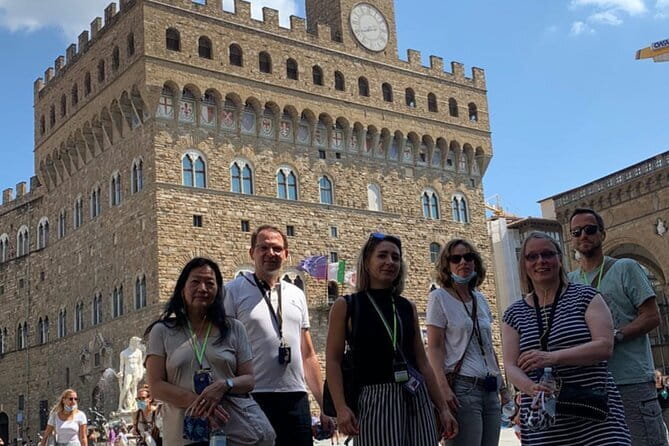
- Historic squares in a logical sweep: Piazza della Repubblica, Piazza della Signoria, and beyond
- Small group feel with a maximum of 20 travelers, which helps questions and conversation
- English guiding with an emphasis on local stories rather than just photo stops
Climbing the Duomo? Here are the other options
A Florence route that actually makes sense
In Florence, it’s easy to stare at the big stuff and miss why it matters. This walk is built to help you connect the dots—where power lived, where art got made, and how public space worked in daily life. You’ll move through a sequence of places that keeps your brain engaged, instead of turning the day into a checklist.
The time window is also smart: about 1 hour 30 minutes means you cover a lot without feeling trapped for an entire afternoon. That matters in Florence, where streets are narrow, crowds can thicken around the Duomo, and you’ll want energy left for your own wandering afterward.
Price-wise, $46.91 for a guided experience like this is not “cheap,” but it’s also not trying to pretend you’re getting an all-day museum pass. You’re paying for guided storytelling and efficient route flow over a short window. If you like learning while you walk—rather than standing in one spot for a long time—you’ll likely feel it’s fair value.
Meeting point to Ponte Vecchio: easy to follow on the ground
You start at Via de’ Martelli, 33R, and the tour ends at Ponte Vecchio. That end point is great because it’s a natural springboard: once you reach the bridge, you can continue in either direction and still feel like you’re on track.
The tour also notes that it’s near public transportation, which helps if you’re coming in from another part of town. And with a maximum group size of 20, you’re not stuck in a giant moving crowd that forces you to keep your head down and your camera up.
One practical tip: plan to wear comfortable shoes from the start. Even though the time is short, Florence streets and pavements add up. If your day includes more walking, this tour is a good way to get oriented early, then go back later with sharper eyes.
Palazzo Medici Riccardi: where Medici influence starts to feel real
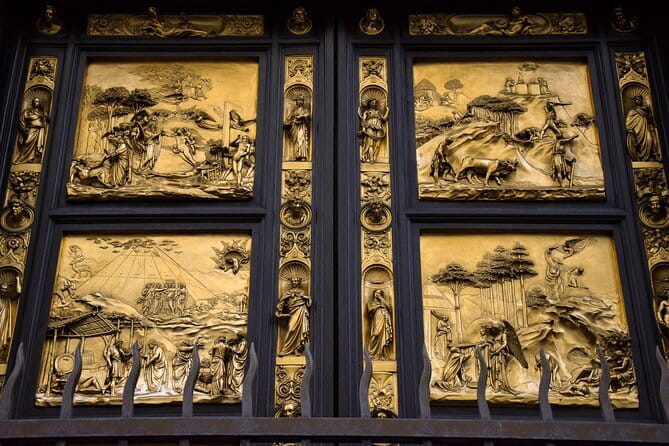
Stop 1 is Palazzo Medici Riccardi, with about 20 minutes on site. This is one of those locations where architecture can feel like a history lesson. The Medici were not only art patrons; they were political players. Seeing their world in front of you helps the name move from a textbook into something tangible.
What makes this stop valuable is the likely focus on “Medici secrets”—the way the family’s power showed up in public life and culture. You’re not just getting a generic description of a palace. You’re aiming to understand how Florence worked, who mattered, and why certain buildings ended up where they did.
A drawback to know upfront: admission isn’t included. So if you want to go inside (instead of staying exterior-focused and looking around the area), you’ll need to plan tickets separately. For many people, the exterior context plus guide explanations is enough. If you’re the type who hates missing indoor rooms, budget time and money accordingly.
Basilica di San Lorenzo: a church stop with neighborhood logic
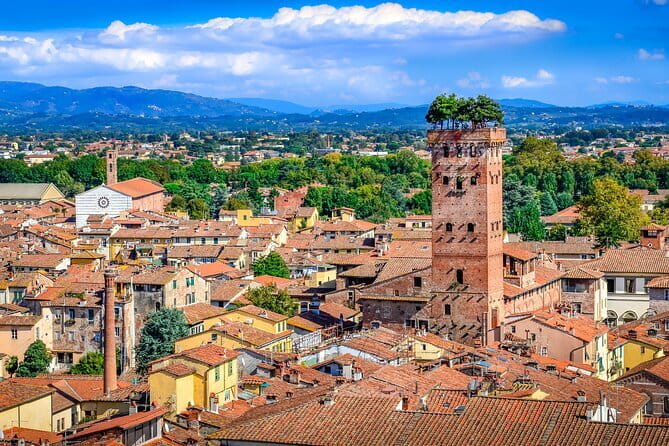
Stop 2 is Basilica di San Lorenzo, again around 20 minutes, and tickets aren’t included here either. San Lorenzo is a key piece of the Florence puzzle because it sits in the thick of the city’s everyday rhythms. It’s not just a landmark you photograph; it’s part of a living neighborhood feel.
This stop can be especially helpful if you want to connect Florence’s spiritual side with its social and political side. Your guide’s job is to help you see how religious institutions and civic life overlapped. And if the tour leans into Florence’s Roman roots (as highlighted), you may hear comparisons that help you understand why certain layouts and ideas echoed across centuries.
One consideration: since admission isn’t included, you may find yourself outside or in areas the guide can access without tickets. That doesn’t make it pointless—it just means your experience depends on what you personally choose to do next. If going inside is a priority, check your plans before the tour so you don’t end up feeling rushed.
Duomo and Piazza San Giovanni: the biggest names, tightly framed
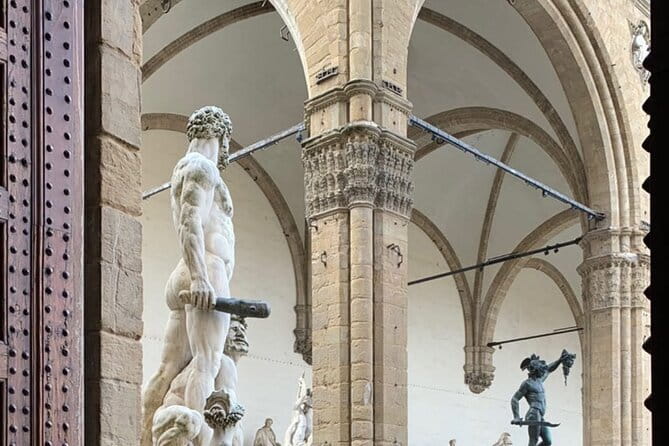
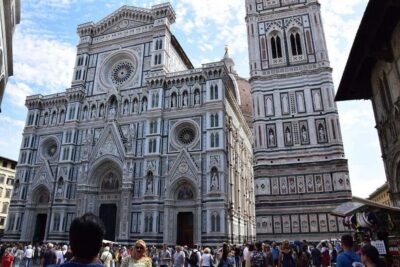
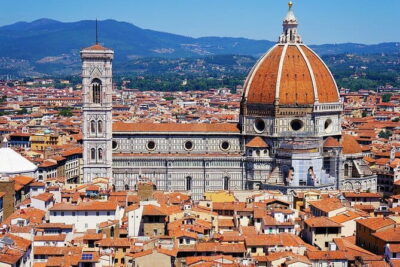
Stop 3 is the Duomo area—Cattedrale di Santa Maria del Fiore, plus Piazza del Duomo and Piazza San Giovanni—with about 20 minutes. This is the emotional center of Florence for most visitors, and it can also be the most confusing if you’re there with no context. The guide helps you read what you’re looking at and why it became so symbolic.
You’ll likely hear connections that make sense of the highlight mentions: legends like Michelangelo and Dante are part of Florence’s artistic and literary identity, and the Duomo sits in the middle of that cultural gravity. When a guide ties ideas to landmarks, the building stops feeling like a postcard and starts feeling like a message.
Also, this stop is a good “orientation moment.” After seeing the Duomo and the nearby public spaces, you’ll understand how the city’s layout funnels people toward major civic and religious points.
Reality check: admission isn’t included. If you want to go into the Duomo or access specific viewpoints, you’ll need your own ticket. Plan that for another block of time, or be ready to treat this as the guided introduction that sets up a return visit later.
Stretch your legs on more Florence walking tours

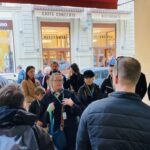
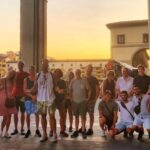
Piazza della Repubblica: a pause that helps you see the city’s layers
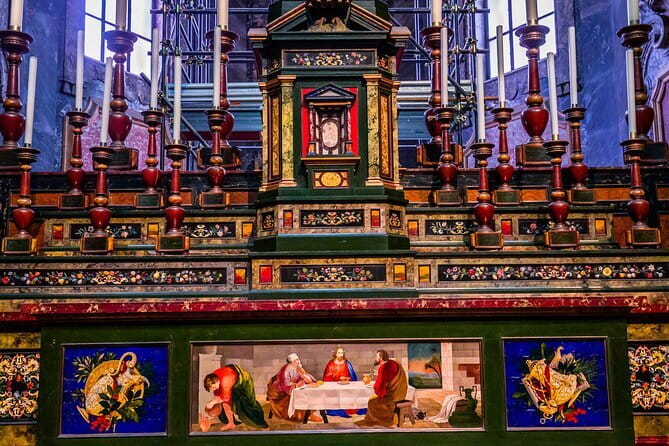
Stop 4 is Piazza della Repubblica for about 10 minutes. Short stops can feel like filler, but this one can actually be useful because it gives you a change of pace. You’re moving from the Duomo’s intensity into a broader public square, and the guide’s explanations can help you understand how Florence kept shaping its public spaces over time.
Think of this as a reset point. You get to look around, catch your breath, and watch how the space works. If you’re the kind of traveler who likes people-watching, this is the part of the walk where you can combine that with history context instead of just standing still.
Since tickets aren’t part of this stop, it’s a low-pressure area. The only “don’t forget” is time management: 10 minutes disappears fast in a crowded city center. Keep your eyes up for what your guide is pointing out and save slow photography for after the tour.
Piazza della Signoria and Palazzo Vecchio: where Florence performed politics
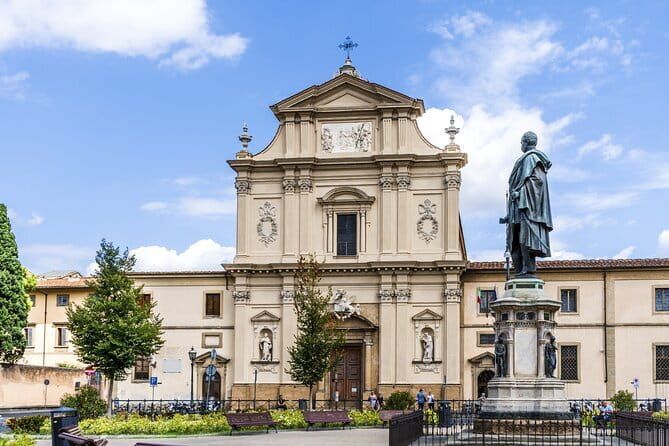
Stop 5 is Piazza della Signoria, around 10 minutes, with Palazzo Vecchio and Piazzale degli Uffizi referenced. This is a space where you can feel civic life. It’s also a place where art and politics overlap constantly. If you’re interested in how Florence ran, this stop is a strong match.
Based on what guides are praised for, you can expect stories that go beyond statues and dates. The best moments here are the explanations of how power displayed itself in public. When a guide talks about Florentine political history, this is the kind of square where it clicks.
One practical note: this is short, so you’re not going to absorb every detail in one visit. Treat it like a guided map of what’s worth your deeper look later. If you want more time, plan to return to the area after the tour with your questions answered.
Ponte Vecchio: the end of the walk, and the start of your own wandering
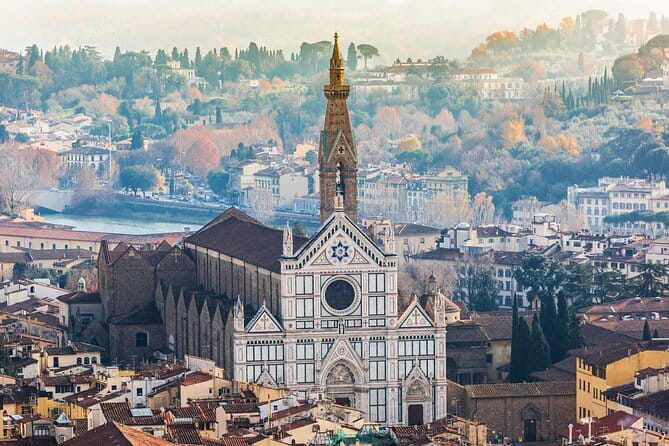
Stop 6 is Ponte Vecchio, the old bridge, for about 10 minutes. Finishing here is smart, because the bridge is not only iconic—it’s also a natural “destination” that keeps you oriented. When you’re done with the guided portion, you can decide how long to linger without feeling like you’ve missed the point of the day.
Ponte Vecchio also fits the tour’s theme: it represents Florence’s ability to keep older layers in use while layering new meanings onto familiar structures. It’s the kind of place where, even without going inside anything, you can understand why the city became so famous.
Tickets aren’t the issue here. Your focus is on the bridge itself and the surrounding streets you can immediately explore afterward. If you’d like that extra element of surprise, this is often where guides encourage you to continue walking and notice smaller corners nearby—side streets and viewpoints that don’t always make it into quick photo plans.
Price and tickets: what you are paying for
At $46.91 per person for roughly 1 hour 30 minutes, you’re paying for a guided walking experience with English-speaking interpretation and a small group format (maximum 20). You’re not paying for entry tickets to the monuments listed on the stops. For each stop, admission is noted as not included.
That means your overall “cost” depends on what you want to do next. If your priority is the guided story and outside context, you can keep spending under control. If you want interiors—like going into the Duomo area facilities or entering places connected to the Medici—you’ll need to budget additional tickets.
In Florence, I think this is the best way to spend mid-morning or early afternoon: take a guided walk to learn what matters, then choose one or two ticketed interiors later with your eyes fully switched on.
Who this tour is best for (and who should choose differently)
This tour fits you if you want a fast, organized introduction to central Florence. It’s also good if you enjoy historical storytelling that explains why landmarks exist, not just where they are. The guide style described in the feedback—clear explanations, enthusiasm, and answering questions—matters a lot in a short walk like this.
It’s especially worth it if you like big-name cultural references (Michelangelo, Dante) but want them tied to specific places. And if you’re the type who appreciates political context, the stop sequence around civic squares and Palazzo Vecchio area can really land.
You might want a different format if you need a very deep specialty focus, like detailed coverage of specific communities or very niche chapters of history. The tour is designed to cover major themes in limited time.
Should you book this Duomo and historic squares walk?
I’d book it if you want to get your bearings quickly and learn what to look for while you’re in the most important central zones of Florence. The combination of Duomo area stops, Medici-related context, and a finish at Ponte Vecchio is a practical route that sets you up for the rest of your day.
Skip it only if your main goal is entering multiple monument interiors, because admission tickets are not included and you’ll have to plan those separately. If, instead, you want guided orientation plus history that makes Florence feel less like random sightseeing, this one is a strong choice.
Also, keep your expectations aligned: it’s a short walk. You’ll come away informed and motivated to continue exploring on your own, not finished with Florence.
FAQ
How long is the Florence walking tour?
It lasts about 1 hour 30 minutes.
How much does the tour cost?
The price is $46.91 per person.
Is the tour offered in English?
Yes, it is offered in English.
Where does the tour start?
The meeting point is Via de’ Martelli, 33R, 50129 Firenze FI, Italy.
Where does the tour end?
The tour ends at Ponte Vecchio, 50125 Firenze FI, Italy.
What are the main stops on the route?
The tour includes Palazzo Medici Riccardi, Basilica di San Lorenzo, the Duomo area (Cattedrale di Santa Maria del Fiore and nearby squares), Piazza della Repubblica, Piazza della Signoria (with Palazzo Vecchio area), and Ponte Vecchio.
Are admission tickets included for the stops?
No. Admission tickets are not included for these locations.
How many people are in a group?
The maximum group size is 20 travelers.
When will I receive confirmation after booking?
Confirmation is received at the time of booking.
Is free cancellation available?
Yes. You can cancel up to 24 hours in advance for a full refund.
More Florence Tours to Weigh Up
- The Best tour in Florence: Renaissance & Medici Tales – guided by a STORYTELLER
★ 5.0 · 12,316 reviews - The Best Tour in Florence: Renaissance and Medici Tales
★ 5.0 · 10,810 reviews - Florence: Chianti Wineries Tour with Wine Tasting
★ 4.5 · 10,071 reviews - Florence: Duomo Cathedral 60-Minute Guided Tour
★ 3.7 · 6,829 reviews - Florence: Hop-on Hop-off Bus Tour: 24, 48 or 72-Hour Ticket
★ 4.0 · 6,283 reviews
More Florence Tours We Have Reviewed
- Florence: Skip-The-Line Uffizi Gallery Timed Entry Ticket
★ 4.5 · 27,832 reviews - Tuscany Day Trip from Florence: Siena, San Gimignano, Pisa and Lunch at a Winery
★ 5.0 · 21,634 reviews - Florence: Timed Entry to Michelangelo’s David + Audio App
★ 4.6 · 19,496 reviews - Florence: Leonardo Interactive Museum Entry Ticket
★ 4.5 · 12,957 reviews - Florence: Michelangelo’s David Skip-the-Line Entry Ticket
★ 4.5 · 12,764 reviews
The Duomo, Keep Climbing
- Florence: Duomo Cathedral 60-Minute Guided Tour
★ 3.7 · 6,829 reviews - Florence: Brunelleschi’s Dome Climb Entry Ticket & Duomo
★ 4.5 · 3,815 reviews - Florence: Duomo Guided Tour with Optional Dome Climb Upgrade
★ 4.1 · 3,706 reviews - Uffizi & Accademia Timed Entry: Small Group Duomo Walking Tour
★ 4.5 · 3,630 reviews - Florence Duomo Guided Tour: Santa Maria del Fiore Cathedral
★ 4.4 · 2,679 reviews
Fresh from our Florence review desk
- Small-Group Pasta Cooking Class and Market Tour in Florence★ 5.0 · 3 reviews
- Palatina Gallery and Pitti Guided Tour in Florence★ 5.0 · 3 reviews
- Tuscan Evening Tour: Fiat 500, 8:30 to 10 PM★ 5.0 · 3 reviews
- Journey into Art: Florence’s Accademia★ 4.5 · 3 reviews
- Paint and Drink Florentine Hills★ 5.0 · 3 reviews
- Truffle hunting and lunch experience, with Vinci and winery.★ 4.5 · 3 reviews
Florence Duomo Tours, compared.
 ★ 3.7Duomo Cathedral 60-Minute Guided TourFrom $96,829 reviews
 ★ 4.5Brunelleschi’s Dome Climb Entry Ticket & DuomoFrom $533,815 reviews
 ★ 4.1Duomo Guided Tour with Optional Dome Climb UpgradeFrom $253,706 reviews
 ★ 4.5Uffizi & Accademia Timed Entry: Small Group Duomo Walking TourFrom $503,630 reviews
 ★ 4.4Florence Duomo Guided Tour: Santa Maria del Fiore CathedralFrom $82,679 reviews
 ★ 4.6Brunelleschi’s Dome Reserved Entry Ticket & DuomoFrom $572,216 reviews
 ★ 4.7Duomo Complex with Tickets & City Walk Guided TourFrom $932,057 reviews
 ★ 4.5Best of Florence: Small Group Tour Skip-the-Line David & Accademia with DuomoFrom $781,422 reviews
Browse the lists this tour appears in