
Reviewed · TRAIN EXPERIENCES
Private Tour from Florence: Venice Full Day Tour by Train
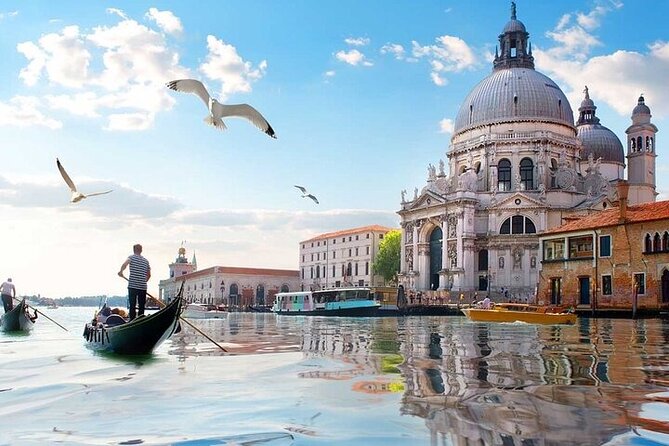
Venice can be a lot of first-day logistics. This private day trip from Florence turns the long travel day into a guided loop through canals, churches, and landmarks—without you guessing what to see first. I love that you get round-trip train tickets built into the plan, and I also like the pace: you’re moving, but it doesn’t feel rushed because it’s set up for a guided visit plus time to wander. One consideration: at this price point, you’ll want to confirm what’s included vs. optional add-ons (like gondola or bell tower tickets), because some of the value lives in what your guide covers on foot.
Starting at Santa Maria Novella at 8:30 am, you’ll ride to Venice, meet your personal guide, and then spend the day working through iconic spots like the Canal Grande and Piazza San Marco, along with quieter corners that explain how Venice actually functions. You’ll also have flexibility to tailor the day toward your interests, which matters in a city where one bad pacing choice can waste hours.
In This Review
- Key Highlights You’ll Feel Immediately
- A Florence-to-Venice Day Trip on a High-Speed Train
- Price, Private Tour Value, and What’s Not Included
- Meet Your Venice Guide and Set Your Walking Pace
- Canal Grande and Rialto: The Venice Basics You’ll Want Up Front
- Canal Grande
- Strada Nova
- Ponte di Rialto
- Church Stops: San Giorgio dei Greci and San Zaccaria
- Chiesa di San Giorgio dei Greci
- Chiesa di San Zaccaria
- St Mark’s Square and the Bridge of Sighs: Iconic Views, Guided Meaning
- Piazza San Marco
- Ponte dei Sospiri (Bridge of Sighs)
- From Shipyards to Student Squares: Venice Beyond the Postcard
- Squero di San Trovaso
- Campo San Pantalon and the Banksy Painting
- Campo Santa Margherita
- Ponte dell’Accademia and the Walk Back to Piazzale Roma
- Ponte dell’Accademia
- Piazzale Roma (and heading back to Florence)
- Should You Book This Private Venice Day Tour?
- FAQ
- How long is the full Florence-to-Venice tour?
- What time does the tour start?
- Is this tour private?
- Are train tickets included?
- Where does the tour meet in Florence?
- What parts of Venice do you visit during the day?
- Are meals included?
- Are there any major tickets that are not included?
- Is there admission cost for the stops?
- Is cancellation free?
Key Highlights You’ll Feel Immediately
- Train included both ways: you’re not charting schedules or buying tickets mid-planning
- A true private guide: your time in Venice is guided, not just a timed drop-off
- Canal Grande focus: you’ll see the main views and the streets that connect them
- St Mark’s Square time on purpose: it’s more than a photo stop
- Real Venice craft and daily life: squero shipyard, student square, and working-city details
- Go at your own pace: you get guided structure plus time to slow down
Just your group: more private Florence tours

A Florence-to-Venice Day Trip on a High-Speed Train
This tour is built around a simple idea: Venice is easier when you show up with a plan and leave with a plan. You’ll depart from Santa Maria Novella in Florence at 8:30 am, then take a train ride of about 2.5 hours to Venice. That gets you into the city early enough to start seeing the landmarks while your brain is still fresh.
The round-trip structure is a big deal for value. Venice can swallow whole days. Here, you’re paying for a day that stays in motion, and you’re also paying to avoid the “what time do we return” stress. The total experience runs about 11 hours, and travel time is included in that number, so you won’t get surprised by a long day that feels longer than it should.
When the tour ends, you return back toward Piazzale Roma and head back by train for about 2.5 hours, arriving back at the same meeting point in Florence.
Price, Private Tour Value, and What’s Not Included
At $388.13 per person, this is not a budget day. The upside is that you’re buying a full-day package that includes private guided time in Venice plus round-trip train transportation (2nd class) and the Venice visitor fee.
Here’s the honest way to judge the price: decide whether you want a guided walking day that hits the key sights and adds context. If you’d rather speed-run Venice with a map and your phone, you might feel the cost. If you want someone to connect the dots—why the city looks the way it does, what the churches mean, how the canals shaped trade—you’ll likely feel the value.
What you should watch closely: this tour description doesn’t list food, and it also doesn’t include certain popular add-ons mentioned as not included in the details you’re given (like gondola rides and bell tower tickets). Also, the guide may not provide earphones, so if you care about audio clarity, plan accordingly—especially in crowded areas.
Meet Your Venice Guide and Set Your Walking Pace
This is a private tour, meaning it’s only your group. That helps a lot in Venice. You can ask questions without feeling like you’re competing with 30 people for attention, and your guide can adjust your speed.
It also means your day is more realistic if you have preferences. Maybe you love architecture. Maybe you want shipyard history. Maybe you care more about everyday Venice than the most famous views. The tour specifically allows customization, so you’re not locked into a rigid script that ignores what you came for.
One practical tip: Venice involves walking between stops, often across bridges. Comfortable shoes matter. Even with a guide, you’ll still be on your feet for hours.
Canal Grande and Rialto: The Venice Basics You’ll Want Up Front
Your day starts with the Grand Canal area, the city’s main visual spine. The plan gives you time for Canal Grande first, which is smart. Once you understand where the water artery is, the rest of Venice starts making sense.
Canal Grande
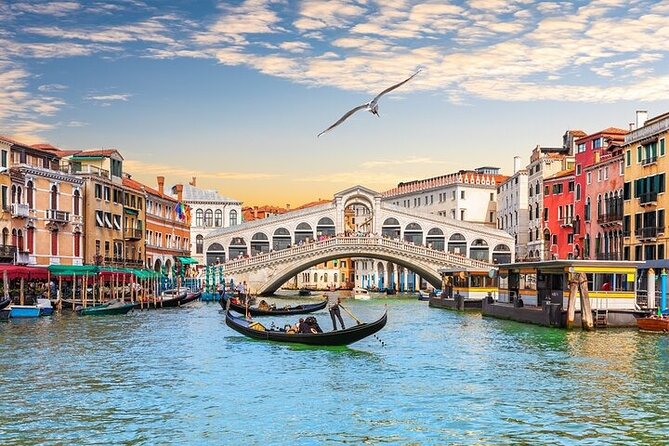
The Grand Canal is about 4 kilometers long and divides Venice into two parts. Expect a Venetian-Gothic look along the banks and big views over the water. There’s also a mention of the Sanctuary of St. Lucy, so your guide can point out how religious buildings and civic life have shared the same narrow space for centuries.
You’ll get about 3 hours here in the pacing information, though exact movement time will depend on how your guide works the day. Either way, starting here helps your photos look like Venice, not like a blur of buildings.
Prefer something else? A few more Florence tours to weigh up
Strada Nova
Next comes Strada Nova, described as the widest street in Venice. This matters because it explains something people often miss: Venice isn’t only medieval alleys. Strada Nova was created in the 19th century to speed pedestrian access between Rialto and the railway station, replacing buildings that would otherwise force a long, twisty path through narrow streets.
Think of this stop as a “how Venice adapted” moment. It’s a change of pace from canals and ornate facades, and it gives your brain a breather while still staying connected to the city’s real transport routes.
Ponte di Rialto
Then you hit Rialto Bridge, the oldest of the four bridges spanning the Grand Canal. It used to be a hub of Venice’s economy, and you can feel that history in the way the area is arranged around movement—people, goods, and the constant flow of trade.
You’ll have about 30 minutes here. That’s enough to look at the bridge, scan the canal views, and get your bearings. If you’re hoping for a deep architectural lecture, tell your guide you want more time on the details; private tours work best when you advocate a little.
Church Stops: San Giorgio dei Greci and San Zaccaria
Venice has churches everywhere, but these two stops give you different angles on the city: one tied to a community and trade life, the other shaped by shifting artistic styles.
Chiesa di San Giorgio dei Greci
This stop centers on the Chiesa di San Giorgio dei Greci and its famous campanile, sometimes called the leaning clocktower. It was designed by Simone Sorella and completed in 1592, and it apparently started tilting from the beginning.
The bell tower was built by and for the Greek community in Venice, especially sailors and merchants. That’s the key takeaway. This isn’t just a picturesque landmark—it’s a sign that Venice was a trading hub with many communities moving through it.
You’ll get about 30 minutes, and it’s typically enough for exterior observation and a quick guided explanation.
Chiesa di San Zaccaria
Then you move to San Zaccaria, a 15th-century former monastic church in central Venice, located in Campo San Zaccaria. The current church was built between 1458 and 1515 and the facade blends late-Gothic and Renaissance styles, which your guide can point out as you walk by.
This is a good stop if you like subtle style transitions. Too often, Venice churches get treated like identical backdrops. San Zaccaria gives you a clearer sense of how tastes and construction methods changed over time.
St Mark’s Square and the Bridge of Sighs: Iconic Views, Guided Meaning
When people say Venice has one “must-see” place, it’s usually Piazza San Marco. This tour includes time in the square, not just a quick pass.
Piazza San Marco
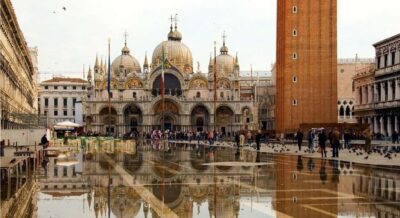
You’ll spend about 30 minutes in St. Mark’s Square. It’s described as the principal public square in Venice, and it’s so famous that Napoleon Bonaparte reportedly called it the most beautiful hall in Europe.
Near the square is St Mark’s Basilica, and the description calls out the way the domes, vaults, and upper walls were slowly covered with gold-ground mosaics depicting saints, prophets, and biblical scenes. Whether you see those details up close depends on the time you spend and what your guide prioritizes, but even from the outside, the square’s scale and design help you understand why it became the social center.
This is also where crowds can shape your experience. A private guide helps you time your viewing so you’re not stuck staring at the same angle for 40 minutes.
Ponte dei Sospiri (Bridge of Sighs)
Next is Ponte dei Sospiri, built in the 1600s, connecting the Doge’s Palace and the historic prison across the canal. It’s called the Bridge of Sighs because prisoners, crossing it, allegedly sighed at seeing the outside world for the last time.
You’ll get around 30 minutes here. It’s a perfect pause between high-opulence landmarks and more human-scale, working-city stops later in the day.
From Shipyards to Student Squares: Venice Beyond the Postcard
Not every great Venice experience is about the same four buildings. This tour adds texture—places that show Venice isn’t only a museum.
Squero di San Trovaso
This stop is the Squero di San Trovaso, one of the oldest and most famous Venetian shipyards, especially known as a classic shipyard where smaller boats like gondolas are repaired. If your interest runs toward craft and how Venice keeps itself running, this is the stop that can surprise you.
You’ll get about 30 minutes. The description suggests you can peek at how gondolas are repaired or made, which is the kind of moment that often feels more real than another big-sight photo.
Campo San Pantalon and the Banksy Painting
Then comes Campo San Pantalon, with a painting by Banksy commonly referred to as the shipwrecked or migrant child. The point of including this is simple: Venice has always attracted outsiders, and contemporary street art can feel like a new layer on old walls.
You’ll have about 30 minutes. Don’t overthink it—this stop works best if you’re curious about how modern culture sits alongside historic space.
Campo Santa Margherita
Finally, Campo Santa Margherita is a city square in the Dorsoduro district near university buildings. It’s described as a gathering place for students at the end of the day.
Again, about 30 minutes. It’s a useful contrast point after churches, bridges, and the heavy symbolism of major landmarks. Here you’re seeing how people actually use space.
Ponte dell’Accademia and the Walk Back to Piazzale Roma
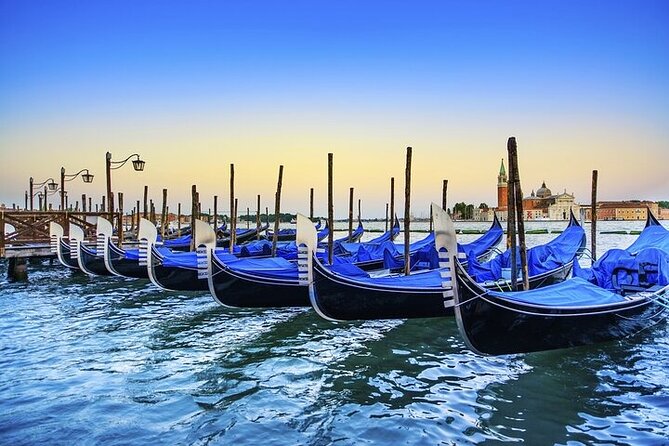
You end with a strong “Venice in motion” geography lesson. This part of the day helps you understand why the city is built the way it is and how visitors move through it.
Ponte dell’Accademia
Ponte dell’Accademia is one of only four bridges that span the Grand Canal. It crosses near the southern end of the canal and is named for the Accademia di Belle Arti di Venezia.
This is a good stop if you like art institutions and how they shape neighborhoods. Even if you don’t visit the school itself, naming it reminds you that Venice isn’t just relics; it’s still making culture.
Piazzale Roma (and heading back to Florence)
The tour concludes at Piazzale Roma, a square at the entrance of Venice at the end of the Ponte della Libertà. It’s noted as one of the only parts of Venice’s insular urban core accessible to ground vehicles like automobiles and buses.
That matters because Venice’s transportation reality is part of the experience. You’ve spent the day in water-and-walk routes; this is your reminder of where the city meets the land.
From there, the plan is to catch the train back to Florence for about 2.5 hours, returning to Santa Maria Novella.
Should You Book This Private Venice Day Tour?
I’d book this if you want a guided, organized Venice day and you’re the type who likes understanding what you’re seeing, not just collecting landmarks. The fact that train tickets and the visitor fee are included makes it easier to plan—and the private setup means you can push your guide toward what matters most to you, whether that’s the Greek community story in San Giorgio dei Greci or the working shipyard energy at Squero di San Trovaso.
I’d pause before booking if you’re hoping for a “free-form wander” with minimal guidance, or if you plan to rely on a long list of paid extras without confirming what’s included. At $388+ per person, small mismatches between expectations and what you actually get can feel bigger than they would on a cheaper tour.
If you do book, my best advice is straightforward: wear comfortable shoes, bring a little patience for Venice walking time, and ask your guide in the moment where they can swap priorities. This tour works best when you treat it like a conversation, not a checklist.
FAQ
How long is the full Florence-to-Venice tour?
The total experience is about 11 hours, including train travel time. The train ride from Florence to Venice is about 2.5 hours, and the return ride is also about 2.5 hours.
What time does the tour start?
It starts at 8:30 am from Santa Maria Novella in Florence.
Is this tour private?
Yes. It’s a private tour/activity, and only your group participates.
Are train tickets included?
Yes. Round-trip train tickets to Florence are included, and the train is listed as 2nd class.
Where does the tour meet in Florence?
The meeting point is Santa Maria Novella, Firenze FI, Italy. The tour also ends back at the meeting point.
What parts of Venice do you visit during the day?
You’ll spend time around the Canal Grande, Chiesa di San Giorgio dei Greci, Strada Nova, Ponte di Rialto, Piazza San Marco, Ponte dei Sospiri, Chiesa di San Zaccaria, Ponte dell’Accademia, Squero di San Trovaso, and Campos including San Pantalon and Santa Margherita, then finish at Piazzale Roma.
Are meals included?
No. Food and drink are not included.
Are there any major tickets that are not included?
The provided details indicate that some optional experiences like gondola rides and bell tower tickets are not included. Earphones are also noted as not provided.
Is there admission cost for the stops?
Many of the listed stops show an admission ticket of free in the details provided, but some venues may still have their own rules and schedules.
Is cancellation free?
Free cancellation is offered. You can cancel up to 24 hours in advance for a full refund. Cut-off times are based on local experience time.
More Private Florence Tours
- Cinque Terre and Pisa Tower Tour from Florence Semi Private
★ 5.0 · 1,406 reviews - From Florence: Private Chianti Hills Tour with Tasting
★ 4.3 · 809 reviews - Private Self-Guided E-Bike Ride in Tuscany with Vineyard Visit
★ 5.0 · 775 reviews - Florence Private Transportation in Rickshaw
★ 5.0 · 730 reviews - Florence: Private Transport by Rickshaw
★ 5.0 · 659 reviews
More Florence Tours to Weigh Up
- The Best tour in Florence: Renaissance & Medici Tales – guided by a STORYTELLER
★ 5.0 · 12,316 reviews - The Best Tour in Florence: Renaissance and Medici Tales
★ 5.0 · 10,810 reviews - Florence: Chianti Wineries Tour with Wine Tasting
★ 4.5 · 10,071 reviews - Florence: Duomo Cathedral 60-Minute Guided Tour
★ 3.7 · 6,829 reviews - Florence: Hop-on Hop-off Bus Tour: 24, 48 or 72-Hour Ticket
★ 4.0 · 6,283 reviews
More Florence Tours We Have Reviewed
- Florence: Skip-The-Line Uffizi Gallery Timed Entry Ticket
★ 4.5 · 27,832 reviews - Tuscany Day Trip from Florence: Siena, San Gimignano, Pisa and Lunch at a Winery
★ 5.0 · 21,634 reviews - Florence: Timed Entry to Michelangelo’s David + Audio App
★ 4.6 · 19,496 reviews - Florence: Leonardo Interactive Museum Entry Ticket
★ 4.5 · 12,957 reviews - Florence: Michelangelo’s David Skip-the-Line Entry Ticket
★ 4.5 · 12,764 reviews
Fresh from our Florence review desk
- Small-Group Pasta Cooking Class and Market Tour in Florence★ 5.0 · 3 reviews
- Palatina Gallery and Pitti Guided Tour in Florence★ 5.0 · 3 reviews
- Tuscan Evening Tour: Fiat 500, 8:30 to 10 PM★ 5.0 · 3 reviews
- Journey into Art: Florence’s Accademia★ 4.5 · 3 reviews
- Paint and Drink Florentine Hills★ 5.0 · 3 reviews
- Truffle hunting and lunch experience, with Vinci and winery.★ 4.5 · 3 reviews
Train Experiences, compared.
 ★ 4.5Private Arrival Transfer: Florence Train StationFrom $3872 reviews
 ★ 4.5Florence Private Transfer from or to Florence Airport, Train Station and HotelFrom $12650 reviews
 ★ 4.6Full-Day Trip by High-Speed Train from RomeFrom $24847 reviews
 ★ 4.5Private Departure Transfer: Florence Train StationFrom $3829 reviews
 ★ 4.5Private Transfer from SMN Train Station to FlorenceFrom $5520 reviews
 ★ 4.1From Florence: Explore Venice in a Full Day Tour by TrainFrom $4339 reviews
 ★ 5.0Private Day Trip from Rome to Florence by Fast trainFrom $6506 reviews
Browse the lists this tour appears in