
Reviewed · HISTORICAL TOURS
Florence Jewish Quarter History Private Walking Tour
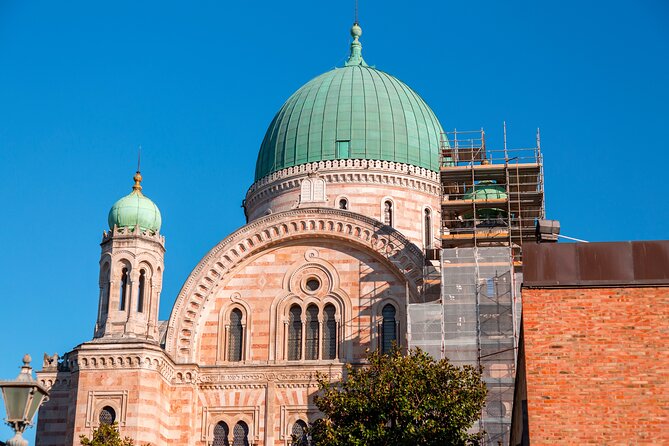
Florence has a second story if you look. This private walk traces how Jewish life shaped the city, with stops tied to the Great Synagogue and Florence’s Old Town landmarks like the Duomo area and Santa Croce.
Two things I really like: you get built-in skip-the-line entry to the synagogue and Jewish Museum (at least on the 3-hour option), and the guide’s commentary turns everyday squares into clear “here’s what happened, here’s why it matters” moments. One possible drawback: tour pace can vary by guide. One experience described a brisk walk with less conversation than expected, so if you want more Q&A time, go in with that expectation.
In This Review
- Key Points That Make This Tour Worth Your Time
- Florence’s Jewish Quarter, Mapped Through Squares You Already Know
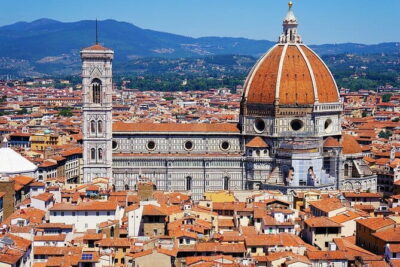
- Start at Piazza del Duomo: Meeting Point vs. Main Entrance
- Piazza della Repubblica: The Old Market and the Ghetto’s Footprint
- Piazza della Signoria: Jewish Commerce and the Medici Connection
- Santa Croce’s Facade: The Hidden Star of David and the Former Quarter
- The Great Synagogue and Jewish Museum: What You Get (and When It Might Change)
- Choosing the 2-Hour vs. 3-Hour Option for Real Value
- Guide Style Can Make or Break the Experience
- Kosher Food and Shops: What to Do After the Museum
- Who This Tour Fits Best (and Who Might Want Something Else)
- Should You Book This Florence Jewish Quarter Tour?
- FAQ
- How long is the Florence Jewish Quarter History Private Walking Tour?
- Where does the tour meet?
- Is skip-the-line access included?
- Can we tour the synagogue interior during the entire day?
- What should I wear or bring for the synagogue?
- What’s included in the tour price?
Key Points That Make This Tour Worth Your Time

- Skip-the-line access to the synagogue and Jewish Museum is included only on the 3-hour option, so choose the timing carefully.
- Medieval-to-modern connections: you’ll link Jewish life in Florence to commerce and major local power, including the Medici family.
- Spot the symbolic details like the Star of David on Santa Croce’s facade and a Jewish inscription of the Ten Commandments associated with the Duomo area.
- A synagogue visit that’s also a museum visit: religious objects and clothing inside, plus exhibits commemorating Holocaust victims.
- Kosher meal suggestions from your guide, including a stop-ending recommendation for Balagan Café and other kosher spots.
Stretch your legs on more Florence walking tours
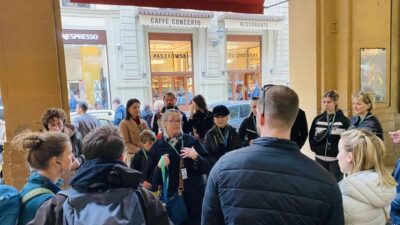
Florence’s Jewish Quarter, Mapped Through Squares You Already Know
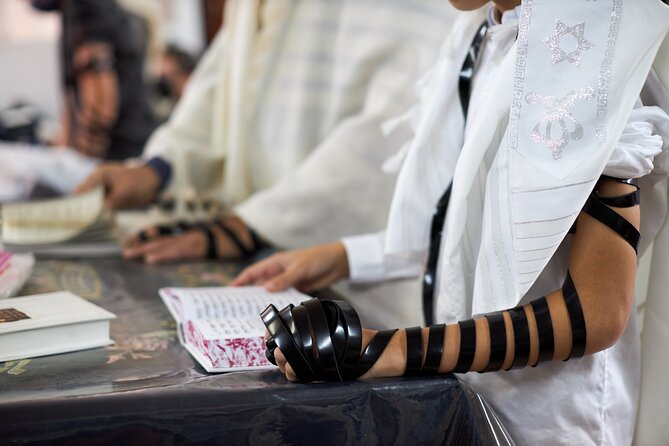
This tour is built for people who love “recognition moments.” You’ll walk through famous Florence spaces—Piazza della Repubblica, Piazza della Signoria, and Santa Croce’s area—then get the missing context that many first-time visitors never hear.
What makes it interesting is how the story threads through daily city life. Instead of only focusing on one building or one period, the route tracks shifts: where Jewish communities lived, how commerce connected them with Florence’s power centers, and how the city’s later changes pushed people to new areas.
And because the format is a private walking tour, you can ask direct questions as you go—especially when the guide points out small details you’d never catch on your own (like inscriptions or symbolic marks on major churches). If you’re the type who enjoys learning by looking, this fits.
Start at Piazza del Duomo: Meeting Point vs. Main Entrance
You begin at Piazza del Duomo, 9. The address is listed right in front of the Opera del Duomo Museum, and it’s important to note: you do not enter the building at the start. The location is just a meeting point, and the museum staff isn’t informed about the tour.
That matters because it sets the tone for the whole experience. You’re not rushing through ticket lines right away; you’re getting oriented. Think of this first stop as a “get your bearings fast” moment—where your guide will set up what you’re about to see and why those nearby landmarks relate to Florence’s Jewish community.
If you’re arriving late, it can also matter for pacing. Ten minutes is short at a busy hub like the Duomo area, so plan on getting there early and staying close to the meeting point.
Piazza della Repubblica: The Old Market and the Ghetto’s Footprint
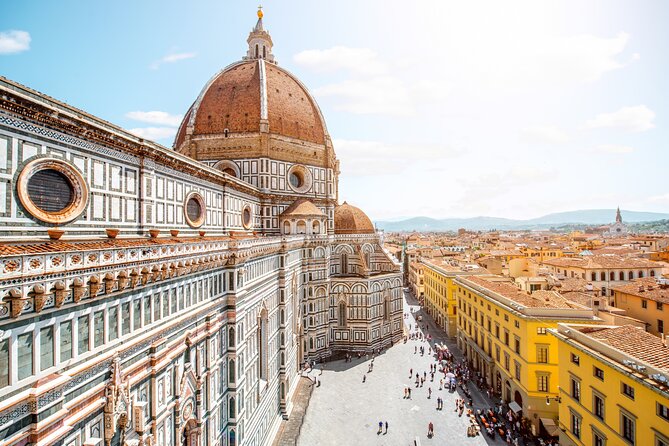
Next comes Piazza della Repubblica, and this is where the tour starts connecting geography to history. Your guide takes you to the area associated with the old market and the place where Florence’s Jewish Ghetto was established.
One of the more memorable ideas here is how visible religious text can be, even when you don’t realize what you’re seeing. The tour notes that the Duomo features a Jewish inscription of the Ten Commandments. Your guide helps you connect that inscription to the bigger story—how Jewish identity and public life overlapped in ways that can surprise you.
Practical tip: this stop is also a good moment to slow down and watch how the square functions today. Once your guide frames the old market and ghetto location, the same public space starts to feel like it has layers. It’s not just a pretty piazza. It becomes a timeline you can walk through.
Piazza della Signoria: Jewish Commerce and the Medici Connection
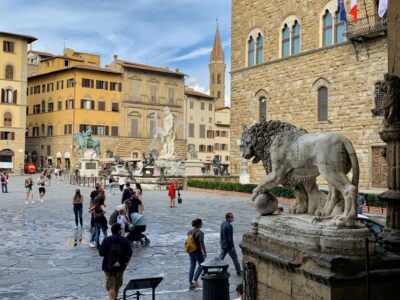
At Piazza della Signoria, the tour shifts from “where people lived” to “how people mattered economically and politically.” You’ll learn about the role of Jewish people in commerce and how that connects to the powerful Medici family as you look toward Palazzo Vecchio.
This is a key part of the value for me. The story isn’t presented as separated chapters. It’s framed as cause-and-effect: commerce brought connections, connections brought influence, and influence shaped how Florence functioned.
Also, Piazza della Signoria is a classic Florence stage—statues, major civic buildings, the feeling of power everywhere you turn. Your guide uses that setting to explain the social and economic relationships behind the scenes. If you like history that explains why cities became what they are, this stop is a strong match.
Santa Croce’s Facade: The Hidden Star of David and the Former Quarter
Then you reach Santa Croce Basilica, and the tour does something smart: it teaches you to notice symbolic details on buildings you thought you already understood.
You’ll be shown a hidden Star of David on the facade of Santa Croce, and your guide also points you toward the former Jewish Quarter—especially the area people moved to after the ghetto was demolished.
This is where the emotional tone can shift. You go from “spot the detail” to “understand the displacement.” The star is only one marker, but your guide uses it to show how Jewish presence appeared in stone and street life, even within a city dominated by Christian monuments.
Give yourself room to pause here. Santa Croce’s area gets busy, so even though the scheduled time is around thirty minutes, you’ll enjoy it more if you don’t rush your eyes over the facade. Ask your guide where to look and what to track visually; that helps you leave with something you can remember later.
Just your group: more private Florence tours



The Great Synagogue and Jewish Museum: What You Get (and When It Might Change)
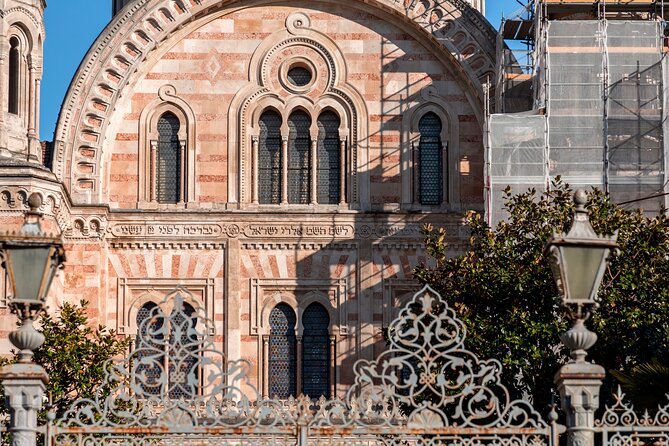
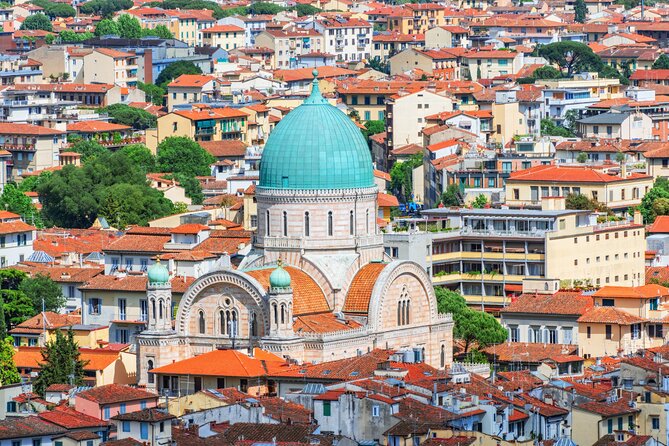
The finale is the Great Synagogue and Jewish Museum of Florence. If you choose the option that includes skip-the-line entry, you’ll use pre-booked access to arrive at your scheduled time without waiting at the ticket counter.
What you can expect inside:
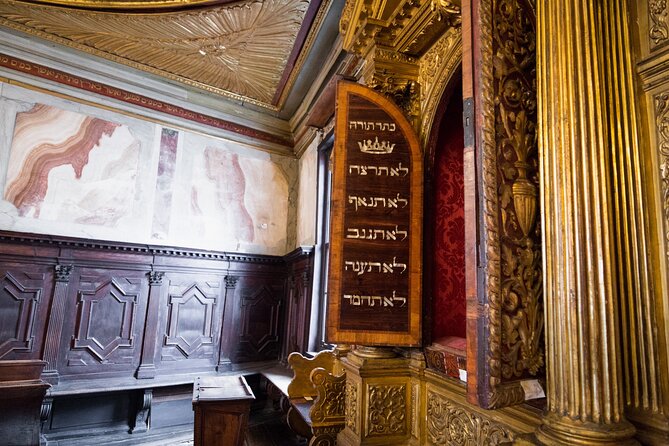
- The Great Synagogue is described as one of the most important synagogues built in Europe during the age of Jewish emancipation.
- The synagogue houses the Jewish Museum, which displays religious items and clothing.
- Exhibits include commemorations of Holocaust victims.
A practical note that’s worth respecting: the Great Synagogue is an active place of worship. Interior access can be limited during scheduled events like Sabbath, prayer times, concerts, or similar activities. Your tour is not meant to compete with religious practice, so you might find certain areas unavailable depending on the day and schedule.
Dress code and etiquette matter. You should dress and act appropriately, and yarmulkes (proper attire) are available on site free of charge. If you’re wearing a hat or have something that covers your head already, still expect that respectful handling is part of the visit.
One more planning point: the synagogue visit is listed as about one hour. That’s usually enough time to see the museum displays and absorb the museum’s key themes without feeling like you were pushed through.
Choosing the 2-Hour vs. 3-Hour Option for Real Value
The tour is offered in two main timeframes: 2 to 3 hours. The big value lever is skip-the-line.
Here’s the practical difference:
- In the 3-hour option, skip-the-line tickets to the Great Synagogue and Jewish Museum are included.
- In the 2-hour option, skip-the-line tickets are not included, and it may affect how much time you spend waiting to enter.
So the question isn’t just “how long do I want to walk?” It’s also “how much do I want to manage queues?” If your day in Florence is tight—especially when you’re bouncing between major sites—paying for time savings can feel worth it.
The private nature also affects value. This is a private tour/activity, meaning only your group participates. And group-size guidance is provided for guide coverage: it’s recommended that there be 1 licensed guide per maximum of 25 guests, and for group sizes above that, they add a second guide.
And yes, the price is steep enough to make you think. At $190.83 per person, you’re paying for (1) a licensed guide, (2) a private walk through historically significant spaces, and (3) potentially skip-the-line access to two major sites. If you’re going at a time when you’d otherwise fight ticket lines, that’s the part you’re really buying.
Guide Style Can Make or Break the Experience
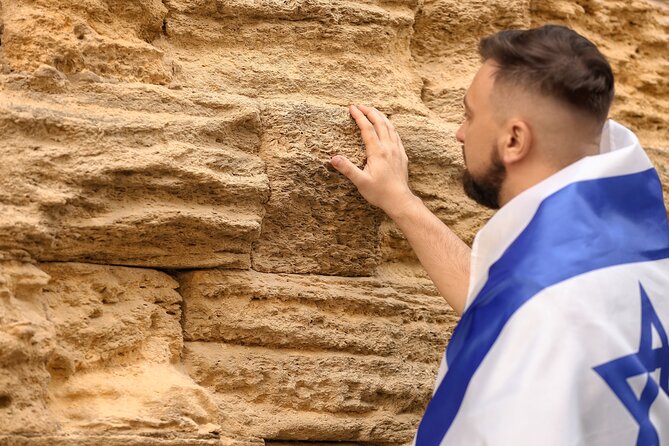
This is a private walking tour, but guide personality still shows up in the experience. One positive review highlighted Linda Sassano Higgins, praising how she brought the history and cultural context to life and included individual experiences from the Jewish community in Florence.
That’s the best-case scenario: a guide who slows down enough to let you ask questions and actually react to what you’re seeing.
A less ideal review described a guide who walked fast and stayed ahead rather than engaging during the walk. That doesn’t mean the tour is poorly designed—it means your comfort level with pace matters.
My advice: if you care about conversation, mention that at the start. Ask for time for questions at each stop. Private tours often become better when you set the tone early.
Kosher Food and Shops: What to Do After the Museum
One of the simplest reasons to take this tour is how it can shape your next meal.
The tour highlights that your guide includes tips for the best kosher shops, restaurants, and cafés. And there’s an explicit mention that at the end of the tour, you can check out Balagan Café or another kosher restaurant recommended personally by your guide.
This is where the value can surprise you. Florence is loaded with great food, but kosher options aren’t always obvious. If your day ends around the synagogue and museum, you’ll appreciate having a guide’s practical recommendations in your pocket rather than trying to hunt around at the last minute.
If you have dietary needs, this kind of guidance is more useful than it sounds. It saves time, reduces uncertainty, and helps you keep your day moving.
Who This Tour Fits Best (and Who Might Want Something Else)
This tour is best for you if:
- You like historical explanations tied directly to what you can see on the street.
- You want a Jewish history lens while still covering major Florence landmarks like Santa Croce and the Duomo area.
- You want a museum-quality stop at the end, not just a quick photo moment.
- You appreciate religious-site etiquette and context, not just sightseeing.
It might not be ideal if:
- You strongly dislike walking between several squares and prefer one single-site visit.
- You need lots of downtime or slow pacing.
- You’re going specifically for synagogue interiors and your visit day falls on a tight schedule of worship events. The tour notes that interior access can be limited during events.
Should You Book This Florence Jewish Quarter Tour?
I’d book it if you want your Florence to have more than one layer. This tour connects Jewish life, commerce, and the city’s iconic monuments into a route that feels meaningful without turning into a lecture.
Choose carefully based on the option:
- If skip-the-line access matters to your schedule, lean toward the 3-hour option so your synagogue and museum time isn’t eaten by waiting.
- If you’re flexible on timing, the shorter option could work, but confirm what you’re giving up—skip-the-line isn’t included for the 2-hour version.
Also, if you’re picky about pacing and conversation, set that expectation early. The difference between a fast walk and a slower, interactive one can come down to the guide’s style, and you’ll be happier if you communicate your preferences up front.
FAQ
How long is the Florence Jewish Quarter History Private Walking Tour?
The tour runs about 2 to 3 hours.
Where does the tour meet?
You meet at Piazza del Duomo, 9, 50122 Firenze FI, Italy, in front of the Opera del Duomo Museum. The building is not entered at the start.
Is skip-the-line access included?
Skip-the-line tickets to the Great Synagogue and Jewish Museum are included for the 3-hour option. Skip-the-line is not included for the 2-hour option.
Can we tour the synagogue interior during the entire day?
The Great Synagogue is an active place of worship, so interior tours may be limited during scheduled events such as Sabbath, prayer times, or concerts.
What should I wear or bring for the synagogue?
Dress and act appropriately. Yarmulkes are available on site free of charge.
What’s included in the tour price?
Included are the private walking tour, expert commentary, tips on kosher shops/restaurants/cafés, and licensed guide services. Depending on the option, it also includes skip-the-line tickets to the synagogue and Jewish Museum.
More Florence Walks
- Florence: Highlights Walking Tour with Expert Guide
★ 4.6 · 4,662 reviews - Uffizi & Accademia Timed Entry: Small Group Duomo Walking Tour
★ 4.5 · 3,630 reviews - Florence: Duomo Complex with Tickets & City Walk Guided Tour
★ 4.7 · 2,057 reviews - Florence: Guided Walking Tour
★ 4.6 · 1,602 reviews - Florence: Renaissance and Medici Tales Guided Walking Tour
★ 4.8 · 1,549 reviews
More Florence Tours to Weigh Up
- The Best tour in Florence: Renaissance & Medici Tales – guided by a STORYTELLER
★ 5.0 · 12,316 reviews - The Best Tour in Florence: Renaissance and Medici Tales
★ 5.0 · 10,810 reviews - Florence: Chianti Wineries Tour with Wine Tasting
★ 4.5 · 10,071 reviews - Florence: Duomo Cathedral 60-Minute Guided Tour
★ 3.7 · 6,829 reviews - Florence: Hop-on Hop-off Bus Tour: 24, 48 or 72-Hour Ticket
★ 4.0 · 6,283 reviews
More Florence Tours We Have Reviewed
- Florence: Skip-The-Line Uffizi Gallery Timed Entry Ticket
★ 4.5 · 27,832 reviews - Tuscany Day Trip from Florence: Siena, San Gimignano, Pisa and Lunch at a Winery
★ 5.0 · 21,634 reviews - Florence: Timed Entry to Michelangelo’s David + Audio App
★ 4.6 · 19,496 reviews - Florence: Leonardo Interactive Museum Entry Ticket
★ 4.5 · 12,957 reviews - Florence: Michelangelo’s David Skip-the-Line Entry Ticket
★ 4.5 · 12,764 reviews
Fresh from our Florence review desk
- Small-Group Pasta Cooking Class and Market Tour in Florence★ 5.0 · 3 reviews
- Palatina Gallery and Pitti Guided Tour in Florence★ 5.0 · 3 reviews
- Tuscan Evening Tour: Fiat 500, 8:30 to 10 PM★ 5.0 · 3 reviews
- Journey into Art: Florence’s Accademia★ 4.5 · 3 reviews
- Paint and Drink Florentine Hills★ 5.0 · 3 reviews
- Truffle hunting and lunch experience, with Vinci and winery.★ 4.5 · 3 reviews
Historical Tours, compared.
 ★ 4.3Guided Medici Tour Florence: Discover Mysteries & HistoryFrom $571,077 reviews
 ★ 5.0Tipsy Tour: Guided Bar Crawl In Florence with Dark HistoryFrom $78271 reviews
 ★ 4.5Florence Cooking Course with Historic Local Market VisitFrom $95151 reviews
 ★ 4.9Florence to Fiesole golf cart tour:History & Panoramic viewsFrom $116121 reviews
 ★ 4.3Medici Family History TourFrom $13793 reviews
 ★ 3.5Historical Guided Tour of Florence’s Iconic CathedralFrom $1088 reviews
 ★ 4.2Fashion History Guided Walking Tour & Museum VisitFrom $9072 reviews
 ★ 5.0The History of Florence: The Renaissance Era Private TourFrom $19849 reviews
Browse the lists this tour appears in