
Reviewed · HISTORICAL TOURS
Florence Jewish Quarter History Private Walking Tour
Jewish Florence hides in plain sight. This private walking tour traces Jewish life from the 14th century to World War II, with stops tied to Florence Cathedral, Santa Croce, and the Great Synagogue area. I especially love how the guide points out small architectural clues, like Jewish symbolism on major landmarks, and how the route mixes local Florentine power (yes, the Medici) with the human stories of arrests and deportations. The main catch: the 2-hour option doesn’t include interior time in the Great Synagogue and Jewish Museum, so you’ll want the 3-hour choice if you care most about the exhibits.
If you’re the type who likes your history grounded in real streets and buildings, this works well. You also get a live licensed guide, and in at least one 5-star experience, Daniela was praised as very knowledgeable and for adding extra Florence context plus a few quieter city-center corners. One consideration: the synagogue is an active place of worship, so interior access can be limited during scheduled events and prayer times.
In This Review
- Key things you’ll notice on this Florence Jewish Quarter walk
- Starting near Florence Cathedral: the Jewish clues most people miss
- Piazza della Repubblica: where commerce and the ghetto story intersect
- Piazza della Signoria and Palazzo Vecchio: the Medici connection
- Santa Croce’s facade: looking for the Star of David detail
- From the former Jewish Quarter to today’s route
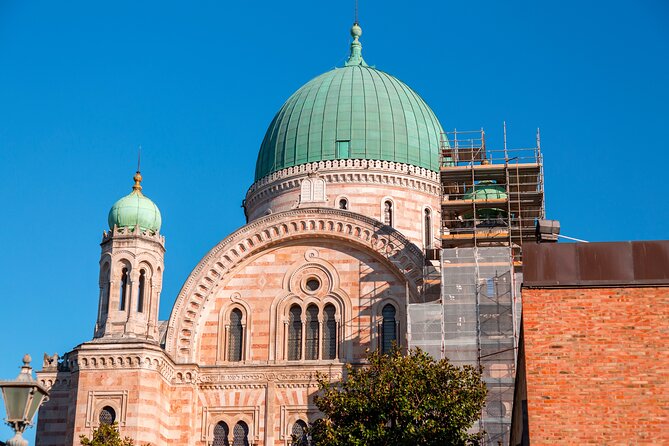
- Great Synagogue and Jewish Museum: what you get with the 3-hour option
- Synagogue etiquette you should plan for
- The guide matters: Daniela’s approach and what to look for
- Skip-the-line tickets: saving time where it actually counts
- Where to eat afterward: kosher options with local guidance
- How much walking is involved, and who this tour suits best
- Price and time value: which option makes the most sense
- Should you book this Florence Jewish Quarter private tour?
- FAQ
- FAQ
- How long is the Florence Jewish Quarter History private walking tour?
- Where do we meet for the tour?
- What’s the difference between the 2-hour and 3-hour options?
- Are skip-the-line tickets included?
- Does the Great Synagogue visit include a guided tour inside?
- What should I know about synagogue dress and etiquette?
- Is the tour wheelchair accessible?
- What languages are available for the live guide?
- Is this a private tour?
- What’s the guide setup for larger groups?
- Can I cancel for a refund?
Key things you’ll notice on this Florence Jewish Quarter walk

- A route that links Florence’s big-name sights to Jewish community landmarks, starting near Florence Cathedral
- Jewish symbolism on major facades, including a Star of David detail connected with Santa Croce
- Piazza della Repubblica as a major anchor point for trade and the area where the Jewish ghetto was established
- Medici-era connections through stops around Piazza della Signoria and Palazzo Vecchio
- A former Jewish Quarter segment showing where people moved after the ghetto was demolished
- Optional synagogue + museum entry on the 3-hour option with skip-the-line tickets for faster access
Stretch your legs on more Florence walking tours
Starting near Florence Cathedral: the Jewish clues most people miss
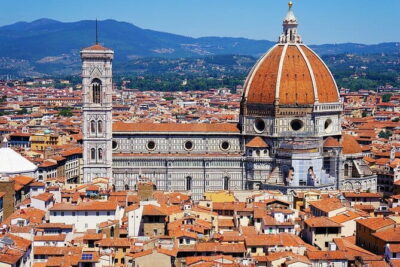
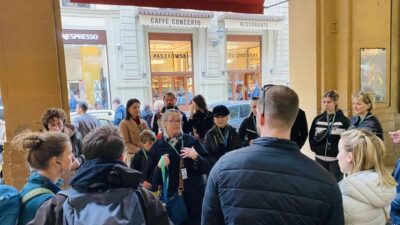
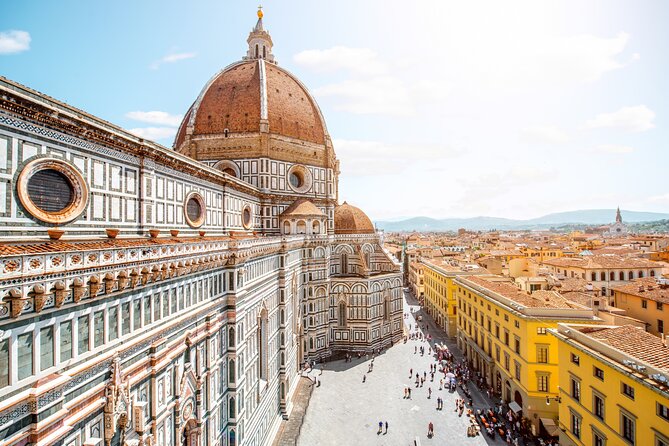
Most tours start with the obvious stuff: Duomo views, big squares, and the usual photo stops. This one starts smarter—near Florence Cathedral, where you can expect the guide to point out a detail tied to the Ten Commandments. It’s a reminder that Florence’s Jewish story isn’t tucked away in a museum only. It can be written into the city’s most famous walls.
From that starting point, the pacing stays easy but purposeful. You’ll walk through the old town with a guide who uses the buildings as evidence. That matters, because Jewish history in Florence isn’t just a single timeline; it’s a chain of changes driven by commerce, politics, and later persecution.
I like that the tour doesn’t treat Jewish history as separate from the rest of Florence. You’ll see how Jewish communities lived and worked inside the same urban machine that made the city famous, including the relationships around influential families.
Piazza della Repubblica: where commerce and the ghetto story intersect
One of the strongest parts of this tour is how it treats Piazza della Repubblica as more than a pretty square. This is where the Old Market once stood, and the tour connects that commercial center to the area where Florence’s Jewish Ghetto was established.
That linkage is useful. It gives you context for why Jewish communities were present in the city in the first place: trade and business weren’t side quests. They were part of how people built livelihoods. When politics tightened later, the same city that supported commerce also shaped restrictions and harsh outcomes.
As you walk, you’ll also get a sense of how the tour balances public space and sensitive history. You might pause at points that feel ordinary today, then your guide will explain why those same spots carried very different meaning in past centuries.
Piazza della Signoria and Palazzo Vecchio: the Medici connection
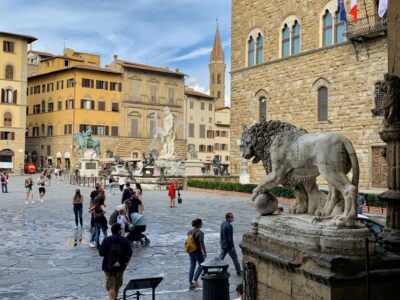
Next, the tour pushes into the heart of power. Around Piazza della Signoria and Palazzo Vecchio, you’ll hear about how Jewish people were connected to commerce and how that connected to Florence’s political engine—especially the Medici family.
This is the part I find especially helpful if you want history that explains cause and effect. It’s not just names and dates. It’s how influence flowed through the city. The guide’s job here is to make the power structures feel real, so the Jewish story doesn’t float in the abstract.
If you’re the type who likes seeing Florence’s political icons while also understanding who benefited and who suffered, this segment gives you a fuller picture. You come away seeing Palazzo Vecchio not only as a landmark, but as part of the setting where community life played out.
Santa Croce’s facade: looking for the Star of David detail
Then comes a detail-based moment that can easily be missed on your own. The tour includes Santa Croce Basilica, and your guide will show you a hidden Star of David on the facade.
This kind of stop changes how you look at Florence. After your guide points it out, you start scanning facades and stonework for meaning instead of treating buildings as just background. That’s one reason people leave saying they saw things they wouldn’t have noticed otherwise.
Practical note: facades and exterior details move fast. Bring your attention, not just your camera. If you’re hard of hearing, lean closer when the guide points out the symbol.
From the former Jewish Quarter to today’s route
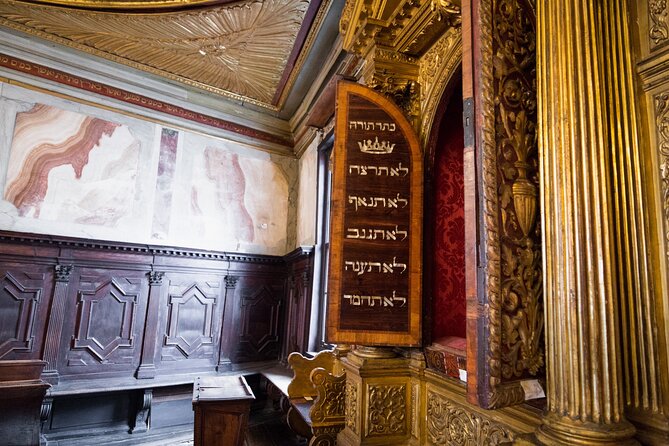
The tour also follows the shifts in where Jewish residents lived. You’ll walk through the former Jewish Quarter, including the area where many Jews moved after the ghetto was demolished.
That part of the walk is important because it turns a timeline into a geography lesson. You start understanding that the community wasn’t fixed in one place forever. The city’s boundaries and rules changed, and people adapted—sometimes under pressure.
I like that the guide uses these street-level transitions to show continuity and interruption. You get the feeling of community life being reshaped, not erased in one clean cut.
Also, this section helps you connect the dots between the historical sites and what’s still visible today. You might not see everything with your own eyes, but you’ll better understand why certain locations matter.
Just your group: more private Florence tours



Great Synagogue and Jewish Museum: what you get with the 3-hour option
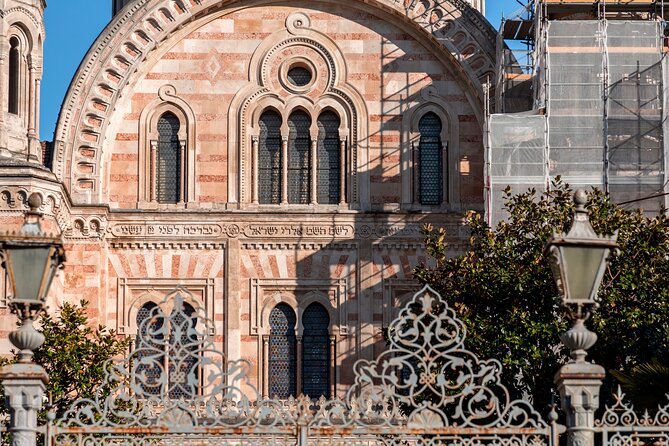
If you choose the 3-hour tour, this is where the experience becomes more hands-on. You’ll have skip-the-line ticket entry to the Great Synagogue and the Jewish Museum.
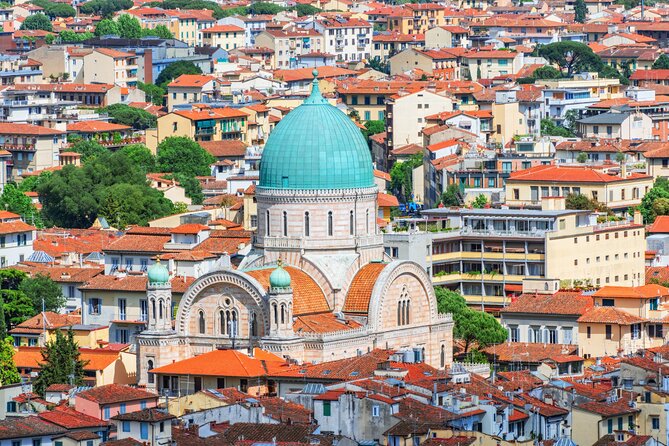
The Great Synagogue is described as one of the most important synagogues built in Europe during the age of Jewish emancipation. That matters because it frames the building not only as religious space, but as a symbol of a changing era. You’ll also get museum exhibits showing religious items and clothing, which is often the fastest way to make history feel tangible.
The museum also includes exhibits commemorating Holocaust victims. This is the part of the tour where the mood can turn serious. The value here is that it doesn’t stay on the level of stories. You’re given objects and exhibits that help you understand what was lost and what survived.
Synagogue etiquette you should plan for
The synagogue is an active place of worship. Interior access can be limited during scheduled events like Sabbath, prayer times, or concerts. The guide will still do their best, but you should expect possible limits depending on the day and schedule.
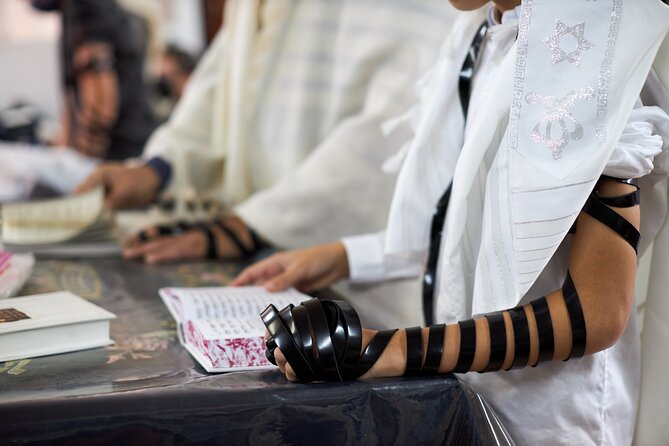
You’ll also want to dress appropriately and act respectfully. Yarmulkes are available on site free of charge, so don’t stress about bringing one.
The guide matters: Daniela’s approach and what to look for
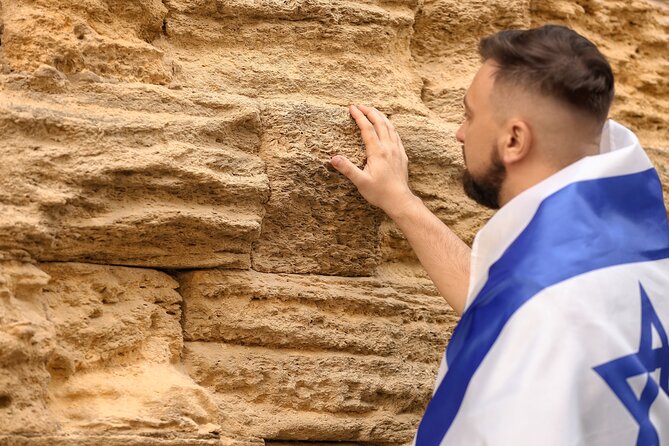
One 5-star review specifically highlighted Daniela as a guide who was very knowledgeable about the history of Jewish people in Florence. That same experience also praised how she added broader Florence context and pointed out a few quieter spots around the city center.
That gives you a clue about what you’re buying with a private walking tour: not just information, but interpretation. The best guides connect the stops so you don’t end up with a list of monuments. You get a story with transitions—what changed, what stayed, and why it mattered.
When you book, it helps to think about your own learning style. If you like asking questions and getting answers that match the street you’re standing on, this private format fits well.
Skip-the-line tickets: saving time where it actually counts

Time matters in Florence, and it matters even more for sites that can get crowded. The tour’s 3-hour version includes skip-the-line tickets that allow immediate entry at your booked time without waiting at the ticket office.
That’s a real value point. You’re not trying to squeeze a long museum visit in between other must-dos. Instead, you arrive, enter on schedule, and keep the pace of the tour intact—less waiting, more seeing.
If you’re deciding between 2 and 3 hours, this is part of the logic. The 2-hour option is more about the street route and outside landmarks tied to Jewish history. The 3-hour option adds the synagogue and museum depth.
Where to eat afterward: kosher options with local guidance
At the end of the walk, you’ll have restaurant ideas in your pocket. The tour notes that you can visit Balagan Café or another kosher restaurant recommended personally by your private guide.
That matters because Florence has choices, but not all are easy to find if you’re not looking in the right places. Having a guide’s recommendation saves time and helps you avoid ending up at something that’s technically nearby but not the vibe you want.
If you care about food, this is one of those “small” add-ons that can make the whole day feel complete.
How much walking is involved, and who this tour suits best
This is a 2–3 hour private walking tour, designed for the old-town streets around major landmarks. You’ll want comfortable shoes. Even if the route is paced for a group, Florence streets are what they are—uneven, tight, and best handled at a calm walking pace.
This tour suits you if:
- you want Jewish history tied to specific Florence buildings and squares
- you want the story told in plain language with a real guide
- you prefer asking questions instead of reading wall labels alone
- you plan to pair it with other major sights like Santa Croce or Florence Cathedral from the same general area
If your travel style is mostly “hit the landmark, take the photo, move on,” you might find the symbolism and historical context takes a little more attention than your usual approach. But if you’re curious, that’s exactly the point.
Price and time value: which option makes the most sense
I can’t price this for you without numbers, but I can help you judge value using what’s included.
Choose the 2-hour option if:
- you’re focused on the walking route, street-level context, and the symbolism on major landmarks
- you want to see the Jewish Quarter story and still keep your day flexible
- you’re pairing it with other big Florence sites and don’t want to commit extra time to museum interiors
Choose the 3-hour option if:
- you care about going inside the Great Synagogue and seeing the Jewish Museum
- you want the Holocaust-related exhibits included in your visit
- you want skip-the-line entry to reduce downtime
If you can only do one, I’d lean toward the 3-hour option for most people—because it adds the museum objects and exhibits that make the historical narrative feel real. The 2-hour version is still meaningful, but the interior experiences are where the emotional and educational weight often lands hardest.
Should you book this Florence Jewish Quarter private tour?
Book it if you want more than a standard sightseeing walk. This tour connects Jewish history to Florence’s most recognizable spaces—Cathedral, Santa Croce, central squares—so the story doesn’t feel like it belongs to someone else’s chapter.
Especially if you’re choosing between 2 and 3 hours, think about your goal. If your priority is the synagogue and museum exhibits, go for the 3-hour schedule. If your priority is building the “street map” of Jewish life and symbolism across the center, the 2-hour walk does that well.
Either way, you’ll come away looking at Florence differently: scanning facades for meaning, noticing how power and commerce shaped real lives, and understanding that the past is still written into the present city.
FAQ
FAQ
How long is the Florence Jewish Quarter History private walking tour?
The tour is listed as 2 to 3 hours. The exact number of stops depends on which option you book.
Where do we meet for the tour?
The guide meets at a convenient meeting point next to Florence Cathedral. The exact meeting point can vary depending on the option booked.
What’s the difference between the 2-hour and 3-hour options?
In the 2-hour option, tours inside the Great Synagogue and Jewish Museum are not included. The 3-hour option adds entry to both sites.
Are skip-the-line tickets included?
Skip-the-line entry tickets to the Great Synagogue and Jewish Museum are included for the 3-hour option. They grant immediate entry at your booked time without waiting at the ticket office.
Does the Great Synagogue visit include a guided tour inside?
The tour includes synagogue time on the 3-hour option. However, because it’s an active place of worship, interior access during scheduled events like Sabbath or prayer times can be limited.
What should I know about synagogue dress and etiquette?
You should dress and act appropriately. Yarmulkes are available on site free of charge.
Is the tour wheelchair accessible?
Yes, it’s listed as wheelchair accessible.
What languages are available for the live guide?
The live guide is available in English, French, Italian, Polish, Russian, and Spanish.
Is this a private tour?
Yes, it’s a private group experience.
What’s the guide setup for larger groups?
The tour notes that there is best comfort with 1 licensed guide per maximum of 25 guests. If there are 26 to 50 people, a second licensed guide is provided.
Can I cancel for a refund?
Free cancellation is available up to 24 hours in advance for a full refund.
More Florence Walks
- Florence: Highlights Walking Tour with Expert Guide
★ 4.6 · 4,662 reviews - Uffizi & Accademia Timed Entry: Small Group Duomo Walking Tour
★ 4.5 · 3,630 reviews - Florence: Duomo Complex with Tickets & City Walk Guided Tour
★ 4.7 · 2,057 reviews - Florence: Guided Walking Tour
★ 4.6 · 1,602 reviews - Florence: Renaissance and Medici Tales Guided Walking Tour
★ 4.8 · 1,549 reviews
More Florence Tours to Weigh Up
- The Best tour in Florence: Renaissance & Medici Tales – guided by a STORYTELLER
★ 5.0 · 12,316 reviews - The Best Tour in Florence: Renaissance and Medici Tales
★ 5.0 · 10,810 reviews - Florence: Chianti Wineries Tour with Wine Tasting
★ 4.5 · 10,071 reviews - Florence: Duomo Cathedral 60-Minute Guided Tour
★ 3.7 · 6,829 reviews - Florence: Hop-on Hop-off Bus Tour: 24, 48 or 72-Hour Ticket
★ 4.0 · 6,283 reviews
More Florence Tours We Have Reviewed
- Florence: Skip-The-Line Uffizi Gallery Timed Entry Ticket
★ 4.5 · 27,832 reviews - Tuscany Day Trip from Florence: Siena, San Gimignano, Pisa and Lunch at a Winery
★ 5.0 · 21,634 reviews - Florence: Timed Entry to Michelangelo’s David + Audio App
★ 4.6 · 19,496 reviews - Florence: Leonardo Interactive Museum Entry Ticket
★ 4.5 · 12,957 reviews - Florence: Michelangelo’s David Skip-the-Line Entry Ticket
★ 4.5 · 12,764 reviews
Fresh from our Florence review desk
- Small-Group Pasta Cooking Class and Market Tour in Florence★ 5.0 · 3 reviews
- Palatina Gallery and Pitti Guided Tour in Florence★ 5.0 · 3 reviews
- Tuscan Evening Tour: Fiat 500, 8:30 to 10 PM★ 5.0 · 3 reviews
- Journey into Art: Florence’s Accademia★ 4.5 · 3 reviews
- Paint and Drink Florentine Hills★ 5.0 · 3 reviews
- Truffle hunting and lunch experience, with Vinci and winery.★ 4.5 · 3 reviews
Historical Tours, compared.
 ★ 4.3Guided Medici Tour Florence: Discover Mysteries & HistoryFrom $571,077 reviews
 ★ 5.0Tipsy Tour: Guided Bar Crawl In Florence with Dark HistoryFrom $78271 reviews
 ★ 4.5Florence Cooking Course with Historic Local Market VisitFrom $95151 reviews
 ★ 4.9Florence to Fiesole golf cart tour:History & Panoramic viewsFrom $116121 reviews
 ★ 4.3Medici Family History TourFrom $13793 reviews
 ★ 3.5Historical Guided Tour of Florence’s Iconic CathedralFrom $1088 reviews
 ★ 4.2Fashion History Guided Walking Tour & Museum VisitFrom $9072 reviews
 ★ 5.0The History of Florence: The Renaissance Era Private TourFrom $19849 reviews
Browse the lists this tour appears in