
Reviewed · HISTORICAL TOURS
Florence: Walking Tour of the Essentials of the Historic City Center
Florence clicks faster when you walk it. This 2-hour tour strings together key Renaissance landmarks with clear, story-led explanations, starting in Piazza San Lorenzo. I especially loved the way the Medici Chapels are framed as a dynasty’s power-and-legacy project, and how the stop at the Piazza del Duomo area helps you make sense of the whole cathedral complex in one go.
You’ll also get a smart sequence of viewpoints and places that most first-timers hit, but with context that keeps it from feeling like a checklist. One potential drawback: this is a fast, stop-and-go format (short visits at multiple sights), so if you want long time inside churches or museums, you may feel a bit rushed.
In This Review
- Key highlights worth your time
- Why this Florence walking tour works for first-timers
- Starting in Piazza San Lorenzo: get your bearings fast
- Basilica of San Lorenzo: where art and Medici power overlap
- Palazzo Medici Riccardi: the dynasty’s statement in stone
- Medici Chapels: more than a mausoleum
- Florence Baptistery and the Gates of Paradise stop
- Piazza del Duomo: the spiritual center and the engineering icon
- House of Dante: a quick stop that adds a literary thread
- Piazza della Signoria and Palazzo Vecchio: power in an open-air setting
- Uffizi Gallery area: a quick art-world context moment
- Ponte Vecchio and the Vasari Corridor: romance with a real past
- Guides and languages: what to watch for
- Timing and pacing: short stops mean you should choose your priorities
- Value check: what you’re really paying for
- Who this tour suits best
- Should you book? My practical take
- FAQ
- How long is the Florence walking tour of the city center essentials?
- Where does the tour start, and how do I find the guide?
- What major sights are included in the tour?
- What languages are available for the live guide?
- Is the tour wheelchair accessible?
- Is there free cancellation?
- Is there a reserve and pay later option?
Key highlights worth your time
- San Lorenzo as the starting point: a practical launchpad into the city’s Renaissance story.
- Medici Chapels with dynasty context: not just marble, but why the family mattered.
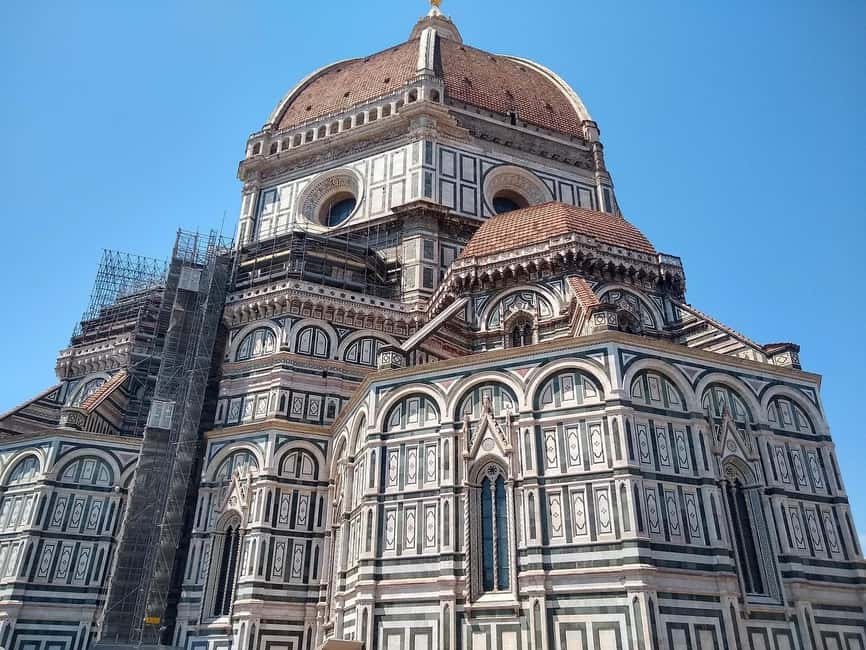
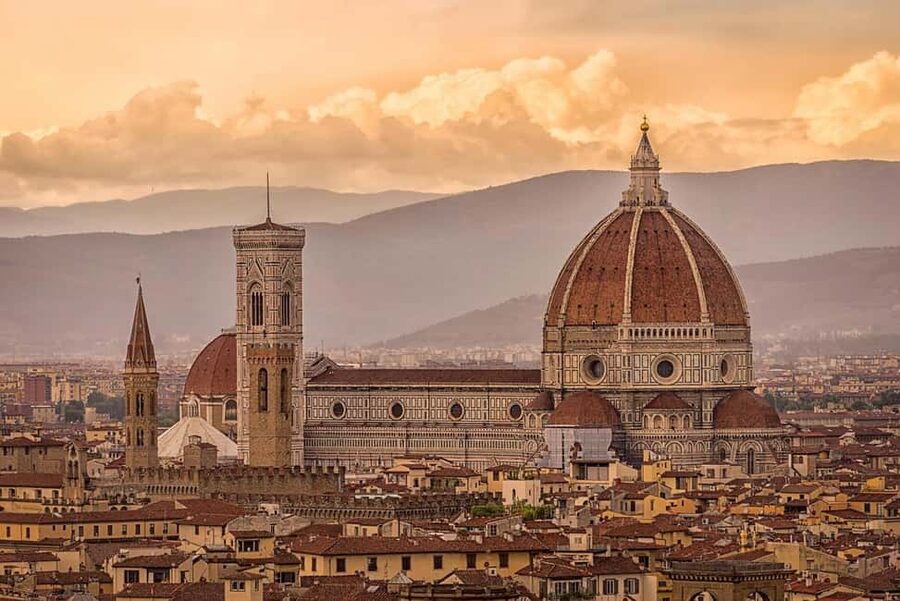
- The Duomo complex in one guided sweep: Santa Maria del Fiore, Giotto’s bell tower, and Brunelleschi’s Dome.
- Piazza della Signoria as an open-air museum: Palazzo Vecchio and the David replica stop for quick perspective.
- Ponte Vecchio and the Vasari Corridor angle: history above the river walk, with a real sense of place.
- Short, efficient guided segments: designed for a 2-hour window across multiple sites.
Stretch your legs on more Florence walking tours
Why this Florence walking tour works for first-timers
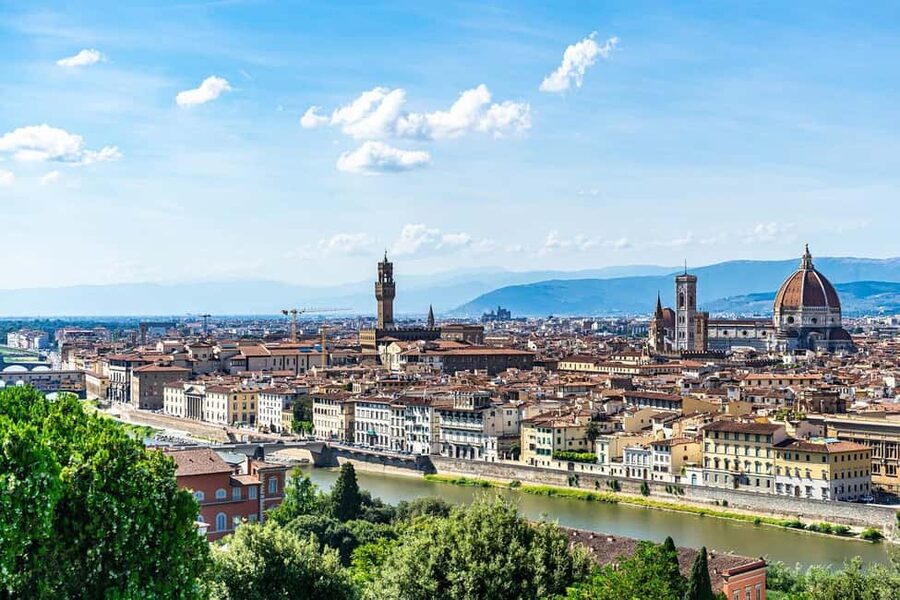
If Florence is your first stop in Tuscany, you want two things: orientation and meaning. This tour gives you both. You’re not stuck planning your own route between major landmarks. Instead, you follow a guided path that connects people, power, and art—so the buildings start explaining each other.
The format is also well-suited to real travel schedules. With a 2-hour duration and quick guided visits at each site, you can fit this into a day without sacrificing your whole afternoon to long museum lines or quiet self-guided wandering. If you like history but get bored when it turns into a lecture, this type of walking tour tends to hit the sweet spot.
I also like that the tour name is straightforward: it targets the essentials of the historic city center. You’ll cover the biggest “you’re really in Florence” sights—San Lorenzo, the Medici connection, the cathedral complex, and the river crossing—plus a few story-driven stops that help you understand why these places mattered.
One more practical note: guides are listed in Italian, Spanish, and English, and the tour is wheelchair accessible. That matters in Florence, where cobblestones and tight streets can make sightseeing feel harder than it needs to be.
Starting in Piazza San Lorenzo: get your bearings fast
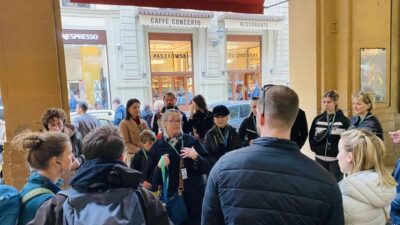
The tour meets in Piazza San Lorenzo, and you’ll spot the guide with an orange flag or umbrella. I like meeting at a place that’s already central to the action. It’s easy to find, and it sets the tone right away: Florence’s Renaissance identity starts nearby.
The first moments are about orientation. Once you’re standing in San Lorenzo’s area, you’ll see how the city’s story threads through religious spaces, political power, and family legacy. That early context helps later stops land better—especially once you’re looking at the Medici-related sites and then moving toward the Duomo complex.
Basilica of San Lorenzo: where art and Medici power overlap
Next comes the Basilica of San Lorenzo. Even if you’re not the kind of traveler who reads every plaque, this stop usually feels rewarding because it’s described as more than a church. The Medici connection is the key idea: it’s presented as a spiritual home for the Medici, linking religious authority to political influence.
What I like about this approach is that it saves you from guessing. In Florence, you’ll quickly learn that the big families were never just “important people.” They used art, architecture, and religious patronage to shape public memory. This stop gives you that lens early, so when you later encounter Medici Chapels, it won’t feel like an isolated attraction.
Palazzo Medici Riccardi: the dynasty’s statement in stone
From the basilica, the tour moves to Palazzo Medici Riccardi for a short guided segment. You’re told what matters most: this is tied to the Medici story, the same lineage that shows up repeatedly across the city.
A quick stop here works surprisingly well. You’re not trying to absorb every detail in ten minutes. Instead, you learn what to look for and why it’s connected to Florentine power. That makes the rest of the tour feel more coherent, because you’re not just moving between famous names—you’re tracing a single thread.
Medici Chapels: more than a mausoleum
The Medici Chapels are one of the tour’s headline moments. They’re presented as the birthplace of a legendary dynasty and a kind of mausoleum built to protect a legacy.
If you’ve visited other churches and chapels in Europe, you may already know how families use burial spaces as storytelling devices. This stop specifically leans into the idea that people were buried here, yes—but the deeper point is that legends were built through art and placement. You’re meant to walk away understanding the intention behind what you see.
The tour’s standout quality here is the balance between visual experience and meaning. You’re not forced to memorize dates. You’re given enough story to understand what the spaces are doing.
See more of Florence on another city tour

Florence Baptistery and the Gates of Paradise stop
Then you reach the Florence Baptistery. The highlight is the Baptistery of San Giovanni and its world-famous Gates of Paradise.
This segment is short, so you won’t get a long museum-style explanation of every panel. Instead, you get a guided framing of why these doors are so important to Florence’s reputation for art. If you’re the kind of traveler who enjoys catching the “why this is famous” explanation before you move on, this is a good stop.
Piazza del Duomo: the spiritual center and the engineering icon
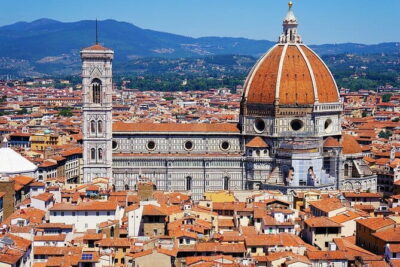
The tour’s next big zone is Piazza del Duomo, described as the spiritual soul of Florence. That wording is actually useful. It’s a reminder that the Duomo complex isn’t just one building—it’s a cluster where meaning matters as much as architecture.
You’ll see Santa Maria del Fiore, then connect the story to Brunelleschi’s Dome. The dome is treated as an eternal icon of human ingenuity—so the guide’s job here is less about giving you a technical lesson and more about helping you recognize what kind of achievement it represents.
Also in this area:
- Giotto’s bell tower is included, with the promise of great views.
- The tour route connects to the nearby cathedral-centered spaces so you can understand relationships between buildings rather than treating each as an isolated photo spot.
Even if you only spend ten minutes at each landmark, this guided sweep is helpful. You get a sense of scale and a sequence that you can later replicate when you explore on your own.
House of Dante: a quick stop that adds a literary thread
Next you’ll make a stop at the House of Dante. Even with a short visit, it adds another layer to your Florence understanding: the city wasn’t only about builders and bankers. It also shaped writers and ideas.
What I like here is that it prevents the tour from turning into purely “art and architecture, then done.” Adding Dante brings the Renaissance spirit into a more human, intellectual lane.
Piazza della Signoria and Palazzo Vecchio: power in an open-air setting
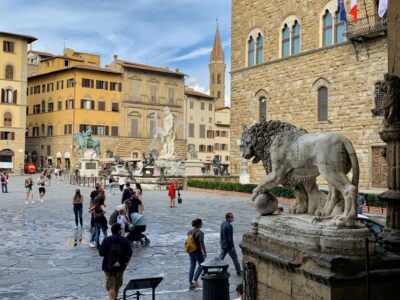
The tour moves into Piazza della Signoria, described as a monumental open-air museum. This is one of those places where Florence’s politics and art feel inseparable.
The stop includes Palazzo Vecchio, presented as the seat of Florentine power—along with a tone shift from religion toward governance and intrigue. If you enjoy the political side of Renaissance history, this is a satisfying segment because the place itself signals authority.
You’ll also encounter the ‘other’ Michelangelo’s David, specifically noted as a replica (still photogenic, just with the reminder that it’s not the original). That detail matters because Florence’s most famous sculptures are part of a bigger “how art was displayed” story, not just an individual masterpiece.
Uffizi Gallery area: a quick art-world context moment
The itinerary includes a stop tied to the Uffizi Gallery. In practice, this kind of segment is ideal if you’re curious about the museum’s role in Florence but you’re not trying to spend your whole day inside.
Because the tour information only guarantees guided segments at stops (not long museum time), I suggest treating this as context and orientation rather than expecting an in-depth gallery experience in the 2-hour window.
If your schedule allows, you can use this stop to decide later whether you want to plan a separate Uffizi visit on your own.
Ponte Vecchio and the Vasari Corridor: romance with a real past
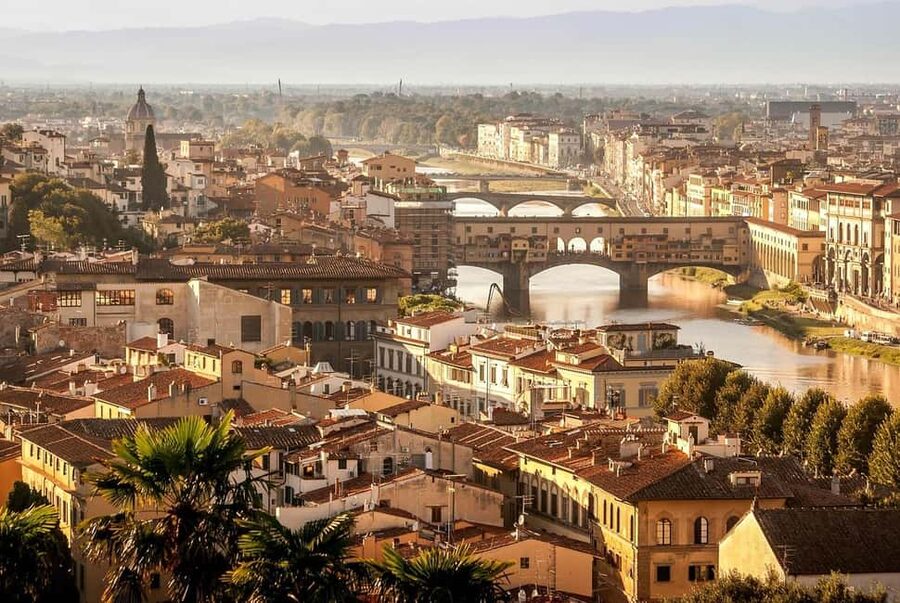
The tour ends with a walk across Ponte Vecchio, called the most romantic bridge in Italy. That romantic label is true for today’s views, but the tour also adds a more grounded historical detail: in its day, it smelled more like meat than roses.
You’ll also learn about the Vasari Corridor, which runs above our heads along the route. The guide explains the purpose of this passage—again, connecting architecture to power and movement rather than treating it as decoration. Seeing this during a river crossing makes the corridor feel less abstract.
When you finish the bridge walk, you’ll likely feel like you’ve covered Florence’s “big hits” without losing the thread. That’s the tour’s payoff: you don’t just see famous landmarks. You understand how they relate.
Guides and languages: what to watch for
The tour is offered in Italian, Spanish, and English, and the guide meets you with an orange flag or umbrella in Piazza San Lorenzo.
I also like knowing there are guides with strong performance energy. In the information I received, Maria and Giacomo are named for art-focused storytelling and an excellent guide presence. If you get a guide like that, the tour will feel like conversations with a local rather than a scripted walk.
Practical tip: because this is a timed 2-hour route with short segments, I’d show up a few minutes early. There’s been at least one instance where a guide didn’t arrive on time and the group ended up scrambling. You can’t control that, but you can reduce risk by arriving early and being ready to check in if something feels off.
Timing and pacing: short stops mean you should choose your priorities
The tour is built around many stops, with guided segments listed at about ten minutes each at major sites. That makes the itinerary efficient, but it also means you won’t have time for slow sketching, long quiet reading, or deep museum-level exploration inside.
This is perfect if:
- You want Florence essentials in a morning or afternoon block.
- You like history stories that help you navigate what you’re looking at.
- You prefer seeing more places rather than lingering at one.
It’s less ideal if:
- You’re the kind of traveler who needs 45 minutes alone in a church to absorb everything.
- You want full museum experiences at the Uffizi level within the same ticket day.
If you’re unsure, this is still a smart first step. You’ll learn what you want to revisit, and you’ll know where to focus your next hours.
Value check: what you’re really paying for
The price listed is $2.36 per person, which is extremely low for a guided 2-hour walk in Florence. I can’t tell you why it’s priced that way from the details provided, but I can tell you what you should do with that information.
At a bargain price, the main thing you should protect is the quality and timing of the guide experience. That means:
- be on time at Piazza San Lorenzo
- keep track of your language needs
- confirm the start location visually (orange flag or umbrella)
- plan to ask the guide one or two questions so you get your money’s worth even in a short format
If you approach it as a value-focused “orientation plus stories” tour, it can be a great deal. If you expect a slow, museum-grade experience with guaranteed long entry time, you might feel disappointed.
Who this tour suits best
I think this works best for:
- First-time Florence visitors who want the Duomo and Medici stories connected.
- Travelers who like a mix of art, politics, and city legends in a single route.
- People who have limited time and want a path that makes the city easier to explore later on your own.
If you’re traveling with someone who gets restless in long museum stops, this can be a good compromise. You get many “wow” moments without committing to one place for too long.
Should you book? My practical take
I’d book this tour if you want a fast, guided route that hits Florence’s core historic center and explains the meaning behind the big names. The itinerary focus on San Lorenzo, the Medici Chapels, the Duomo complex (including Giotto’s bell tower and Brunelleschi’s Dome), and the political heart of Piazza della Signoria makes it a strong way to build a mental map.
I’d hesitate only if you’re looking for long interior time, or if you can’t risk any start-time issues. If you do go, arrive early at Piazza San Lorenzo with your language ready and your questions preloaded.
FAQ
How long is the Florence walking tour of the city center essentials?
It lasts about 2 hours.
Where does the tour start, and how do I find the guide?
The meeting point is Piazza San Lorenzo. The guide will be waiting with an orange flag or umbrella.
What major sights are included in the tour?
You’ll visit stops connected to Basilica of San Lorenzo, Palazzo Medici Riccardi, the Florence Baptistery, the Florence Duomo complex (including Santa Maria del Fiore and Brunelleschi’s Dome), Giotto’s Bell Tower, House of Dante, Piazza della Signoria and Palazzo Vecchio, plus a stop at Uffizi Gallery, and you’ll cross Ponte Vecchio.
What languages are available for the live guide?
The live tour guide is offered in Italian, Spanish, and English.
Is the tour wheelchair accessible?
Yes, it is wheelchair accessible.
Is there free cancellation?
You can cancel up to 24 hours in advance for a full refund.
Is there a reserve and pay later option?
Yes. You can reserve now and pay later to keep your plans flexible.
More Florence Walks
- Florence: Highlights Walking Tour with Expert Guide
★ 4.6 · 4,662 reviews - Uffizi & Accademia Timed Entry: Small Group Duomo Walking Tour
★ 4.5 · 3,630 reviews - Florence: Duomo Complex with Tickets & City Walk Guided Tour
★ 4.7 · 2,057 reviews - Florence: Guided Walking Tour
★ 4.6 · 1,602 reviews - Florence: Renaissance and Medici Tales Guided Walking Tour
★ 4.8 · 1,549 reviews
More Florence Tours to Weigh Up
- The Best tour in Florence: Renaissance & Medici Tales – guided by a STORYTELLER
★ 5.0 · 12,316 reviews - The Best Tour in Florence: Renaissance and Medici Tales
★ 5.0 · 10,810 reviews - Florence: Chianti Wineries Tour with Wine Tasting
★ 4.5 · 10,071 reviews - Florence: Duomo Cathedral 60-Minute Guided Tour
★ 3.7 · 6,829 reviews - Florence: Hop-on Hop-off Bus Tour: 24, 48 or 72-Hour Ticket
★ 4.0 · 6,283 reviews
More Florence Tours We Have Reviewed
- Florence: Skip-The-Line Uffizi Gallery Timed Entry Ticket
★ 4.5 · 27,832 reviews - Tuscany Day Trip from Florence: Siena, San Gimignano, Pisa and Lunch at a Winery
★ 5.0 · 21,634 reviews - Florence: Timed Entry to Michelangelo’s David + Audio App
★ 4.6 · 19,496 reviews - Florence: Leonardo Interactive Museum Entry Ticket
★ 4.5 · 12,957 reviews - Florence: Michelangelo’s David Skip-the-Line Entry Ticket
★ 4.5 · 12,764 reviews
Fresh from our Florence review desk
- Small-Group Pasta Cooking Class and Market Tour in Florence★ 5.0 · 3 reviews
- Palatina Gallery and Pitti Guided Tour in Florence★ 5.0 · 3 reviews
- Tuscan Evening Tour: Fiat 500, 8:30 to 10 PM★ 5.0 · 3 reviews
- Journey into Art: Florence’s Accademia★ 4.5 · 3 reviews
- Paint and Drink Florentine Hills★ 5.0 · 3 reviews
- Truffle hunting and lunch experience, with Vinci and winery.★ 4.5 · 3 reviews
Historical Tours, compared.
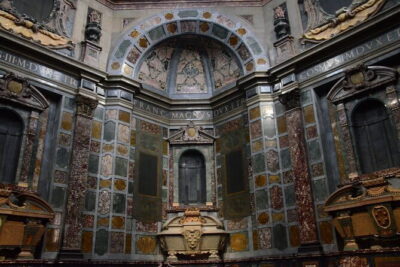 ★ 4.3Guided Medici Tour Florence: Discover Mysteries & HistoryFrom $571,077 reviews
 ★ 5.0Tipsy Tour: Guided Bar Crawl In Florence with Dark HistoryFrom $78271 reviews
 ★ 4.5Florence Cooking Course with Historic Local Market VisitFrom $95151 reviews
 ★ 4.9Florence to Fiesole golf cart tour:History & Panoramic viewsFrom $116121 reviews
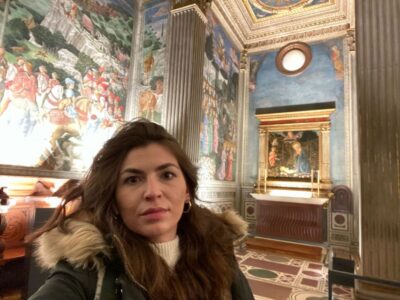 ★ 4.3Medici Family History TourFrom $13793 reviews
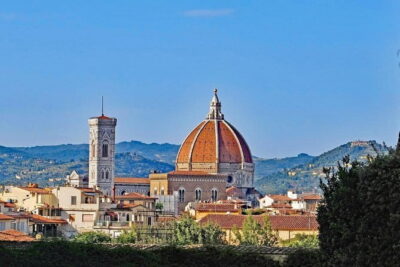 ★ 3.5Historical Guided Tour of Florence’s Iconic CathedralFrom $1088 reviews
 ★ 4.2Fashion History Guided Walking Tour & Museum VisitFrom $9072 reviews
 ★ 5.0The History of Florence: The Renaissance Era Private TourFrom $19849 reviews
Browse the lists this tour appears in